

Scale your CPA & accounting firm with elite offshore talent trusted by 1,000+ firms.
Thank you for your interest. Our due diligence checklist will be shared with you within 48 hours.

In the movie Margin Call, the firm that survives the financial crisis isn't the smartest one, it's the one that had a plan ready and the discipline to execute it before the chaos peaked.
Planning ahead, in structured sequences, with clear accountability, that's the difference between firms that develop their people on purpose and those that only train when the pressure is unbearable.
The relevant question is not simply what shall we do tomorrow, but rather what shall we do today in order to get ready for tomorrow.
Most accounting firms don't have a learning calendar. What they have is a collection of individual CPE deadlines.
Each credentialed person managing their own credit hours, selecting courses independently, satisfying license requirements without any coordination with firm priorities. And for the non-credentialed staff alongside them — bookkeepers, analysts, paralegals, unlicensed associates — no deadline exists at all, which often means no structured development happens.
A 12-month learning plan changes that entirely. It gives the firm a structured rhythm where credentialed staff meet CPE requirements through firm-aligned content, and non-credentialed staff receive the same quality of purposeful development on a parallel track. Everyone growing together, in one coherent system.

The start of the year aligns naturally with a technical reset. This is the time to ensure your people credentialed and non-credentialed alike have the foundation they need for the year ahead.
For CPAs, CMAs, and EAs, this is where firm-aligned CPE content begins: technical updates that count toward license requirements and serve firm development goals simultaneously. For non-credentialed staff, it's the anchor quarter for their structured role-relevant training.
Post-tax season, the pace eases for most firms. This window is ideal for the development that gets deprioritized during busy periods: management and leadership skills.
My job is not to be easy on people. My job is to make them better.
As summer progresses and audit season winds down, Q3 is the strategic development quarter — building the skills that expand firm capabilities and deepen client value.
Firms that train for advisory services earn measurably more per partner than firms focused primarily on compliance revenue and advisory revenue is growing faster than any other service segment. (CPA.com / AICPA CAS Benchmark Survey 2024)
End the year with forward-looking development. Q4 is about equipping your people for what's coming and reflecting on how learning contributed to firm performance.
A calendar is not enough. Three elements make a 12-month learning plan operational rather than aspirational:
An investment in knowledge pays the best interest.
Firms that run a structured annual learning calendar consistently report one striking outcome: they stop losing their best people to competitors who 'offer better development.' They become the firm that offers better development.
Working with 1,000+ accounting firms and enterprises, we've seen what separates firms that develop consistently from those that scramble. If your firm is navigating any of these challenges, let's have a conversation — no pitch, just perspective from a team that's helped firms build exactly what's described in this piece.


Amrit Singh is a business leader with 10+ years of experience in continuing education. Helping accounting, tax, and finance professionals stay compliant with ease, he began his journey as a consultant. Learning across industries before stepping into a leadership role, he is shaped by both successes and failures. Amrit is passionate about problem-solving, building products, exploring technology, and mentoring future leaders. He is dedicated to transform continuing education, making it simpler, smarter, and more meaningful. Through his blogs and talks, he shares insights on accounting careers, CPA compliance, and the future of continuing education.


Crack the Code: Unleashing Hidden Talents for Workplace Magic


.webp-1717773117 "Understanding Your Talent Development Function")
Understanding Your Talent Development Function


Fundamentals of Managing and Developing Talent
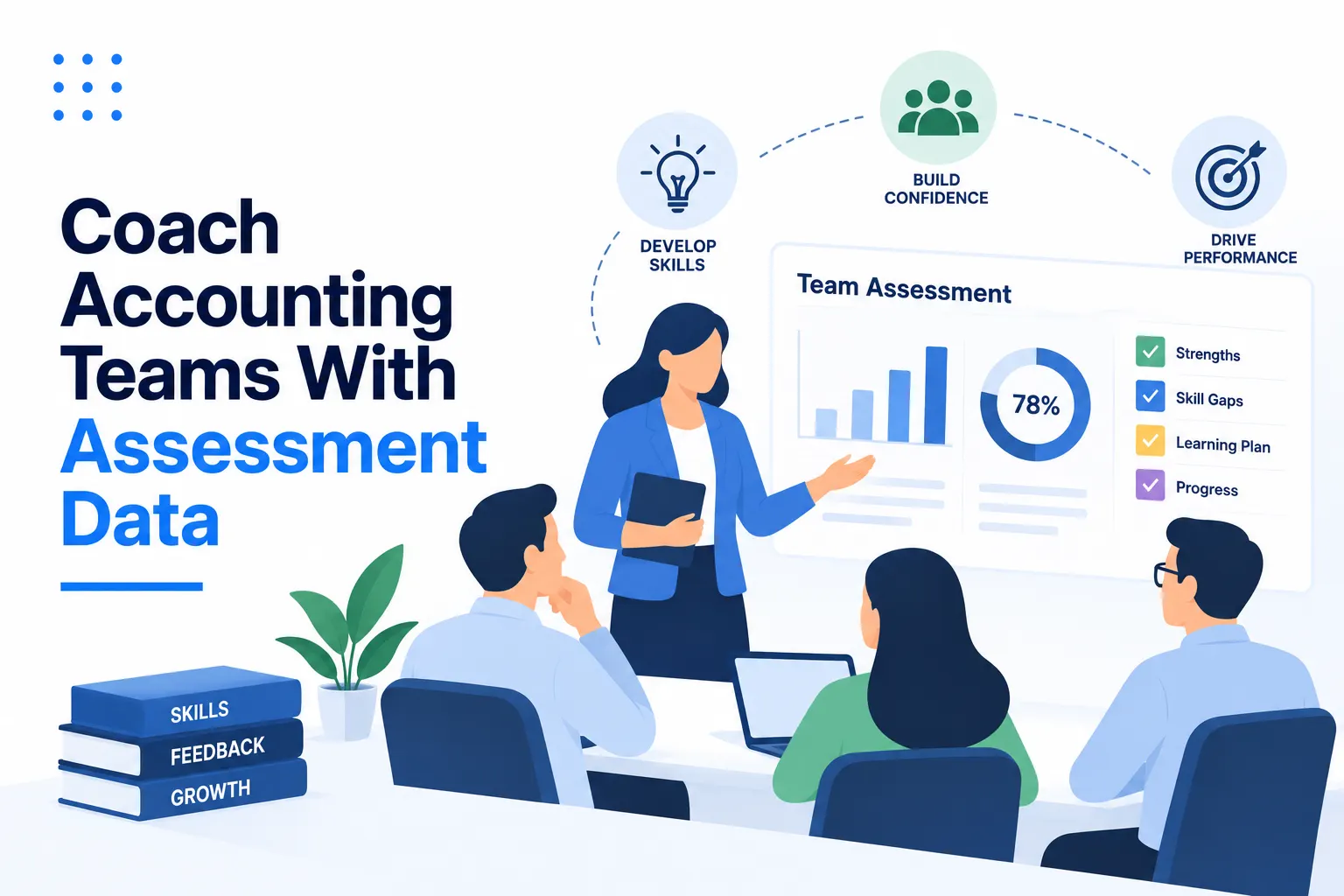
Manager’s Playbook: How to Coach Accounting Teams Using Assessment Data
Amrit Singh





