Scale your CPA & accounting firm with elite offshore talent trusted by 1,000+ firms.
Thank you for your interest. Our due diligence checklist will be shared with you within 48 hours.

Accounting firms lose top talent not just due to pay, but due to unclear career progression. This blog outlines a structured five-stage career path - from Associate to Partner - designed to improve retention, build leadership capability, and align training with promotion milestones. It highlights why most career frameworks fail and emphasizes the need for clear expectations, guided development, and accountability to keep high-performing professionals engaged and invested in long-term growth.
Remember the movie Up in the Air? George Clooney's character is a professional at helping companies let people go - and the most haunting scenes aren't the firings. They're the conversations with people who spent 20 years at a company and never knew where they stood or where they were headed.
That's the quiet crisis inside many accounting firms today. People aren't just leaving for more money. They're leaving because no one ever told them what their future looked like.
"Leadership is lifting a person's vision to higher sights, the raising of a person's performance to a higher standard, the building of a personality beyond its normal limitations." - Peter Drucker
The firms that answer the career question clearly - and back the answer with real structure - are the firms that keep their best people.


Focus: foundational technical accuracy, professional habits, team integration
Focus: independent execution, client-facing work, light supervision of associates
Focus: engagement management, team development, client relationship ownership
Focus: firm strategy, mentoring future managers, developing new client opportunities
Focus: firm growth, client portfolio ownership, leadership of practice areas
The most common failure is creating a career path on paper but not backing it with training and accountability to make it real. Promotion criteria exist somewhere in an employee handbook. Nobody references it. Nobody tracks it.
The second failure is treating all development as self-directed. 'We have a library of courses' is not a career path. A career path is: here is what you need to learn by when, here is how we'll support you in learning it, and here is how it connects to your next promotion.
"People don't leave companies. They leave managers - and the futures they couldn't see." - Marcus Buckingham, Author and Leadership Researcher
The most acute shortage in most mid-sized accounting firms isn't technical expertise - it's leadership capability. Firms promote technically excellent people to management and then wonder why they struggle.
The best retention strategy isn't a salary increase. It's a credible, well-supported growth path that makes people feel invested in - and invested in the firm's future.
Working with 1,000+ accounting firms and enterprises, we've seen what separates firms that develop consistently from those that scramble. If your firm is navigating any of these challenges, let's have a conversation - no pitch, just perspective from a team that's helped firms build exactly what's described in this piece.
Most accounting professionals leave due to a lack of clear career progression, not compensation. When employees don’t understand their future path or growth opportunities, engagement drops and turnover increases.
A structured career path clearly defines roles, skills, timelines, and promotion criteria from Associate to Partner, supported by targeted training and measurable milestones.
Firms can reduce turnover by creating transparent career paths, aligning training with promotion goals, and ensuring managers actively guide employee development.
They fail when they exist only on paper without real implementation—no tracking, accountability, or alignment between training and promotion decisions.
Strong leadership development prepares managers to lead effectively, improving team engagement, performance, and long-term retention of top talent.

Amrit Singh is a business leader with 10+ years of experience in continuing education. Helping accounting, tax, and finance professionals stay compliant with ease, he began his journey as a consultant. Learning across industries before stepping into a leadership role, he is shaped by both successes and failures. Amrit is passionate about problem-solving, building products, exploring technology, and mentoring future leaders. He is dedicated to transform continuing education, making it simpler, smarter, and more meaningful. Through his blogs and talks, he shares insights on accounting careers, CPA compliance, and the future of continuing education.
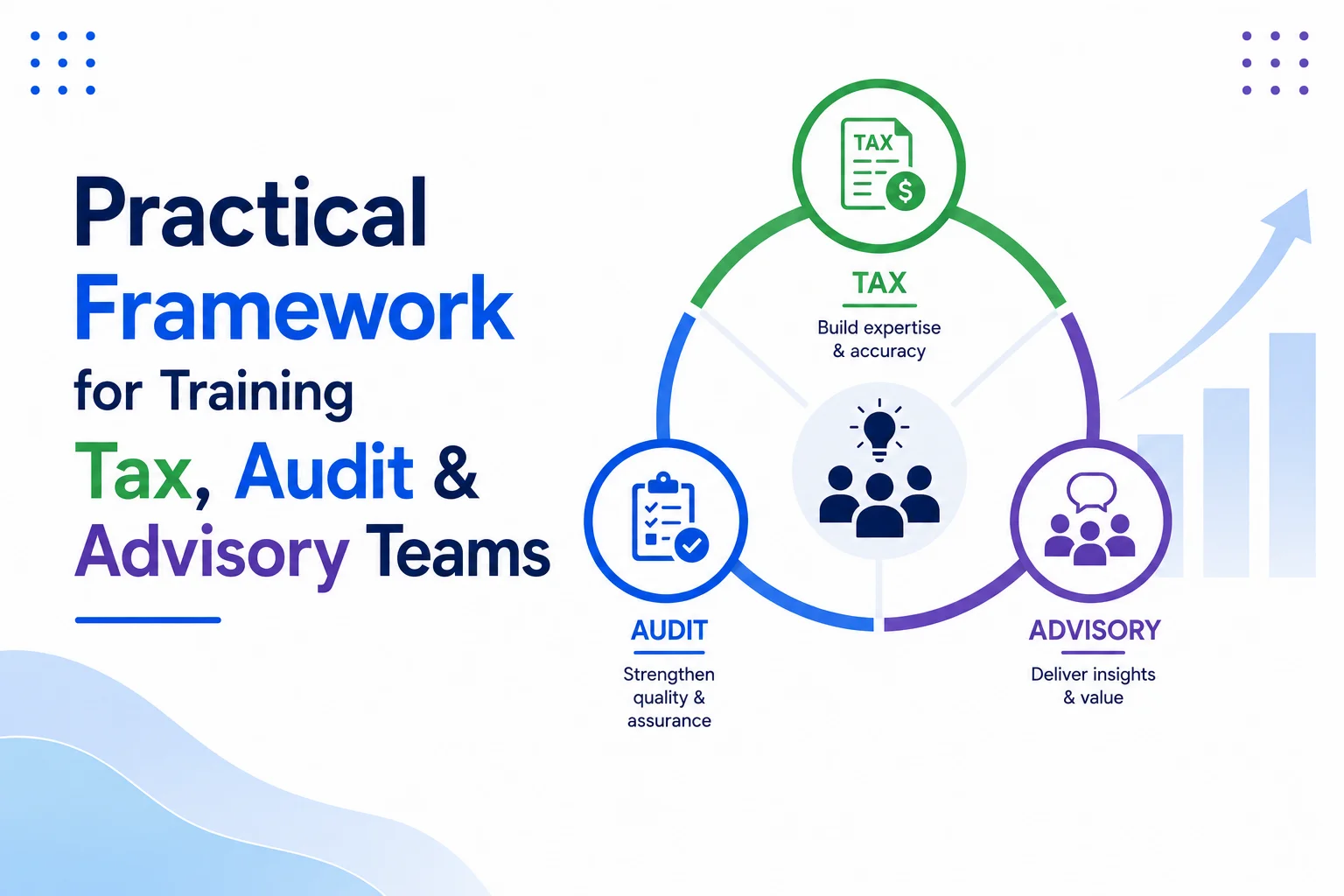
A Practical Framework for Training Tax, Audit, and Advisory Teams
Amrit Singh