
Scale your CPA & accounting firm with elite offshore talent trusted by 1,000+ firms.
Thank you for your interest. Our due diligence checklist will be shared with you within 48 hours.

CFOs today operate in one of the most volatile business climates in decades - balancing rising costs, tightening budgets, and growing pressure to deliver transformation results. About 90% of senior finance leaders say preparing their organizations for uncertainty is their top priority in 2024. Yet, many must do this with leaner teams and fewer resources than ever.
CFO pain points are changing faster than ever. Gartner's report shows that leading transformation efforts tops the priority list for CFOs. Yet 88% of them don't deal very well with capturing value from their technology investments. Talent shortages make these challenges even harder. Finding and keeping accounting talent has become tougher than before. On top of that, CFO worries about cybersecurity and risk management have taken center stage. An EY study that indicates over 50% of global financial leaders see these as their biggest challenges.
A practical solution to these pressing finance department problems exists. This piece explores how offshore teams provide a strategic way to tackle your most important financial operation challenges. These teams can support your transformation goals and help your organization stay agile in today's uncertain business environment.
Finance departments today face complex challenges that stretch their resources thin and test their operational resilience. Let's take a closer look at the biggest problems CFOs deal with every day.

A majority of finance leaders report budget constraints and talent shortages - 84% of CFOs say their teams lack experts, and 83% cite tight budgets.
CFOs report running their finance teams with minimal staff after years of budget cuts. The team's effectiveness suffers under reduced headcounts, which creates unsustainable workloads for everyone. Finance teams now handle expanding duties - from compliance to reporting, without extra personnel or resources.
This resource shortage creates dangerous situations. Teams working at full capacity lack the bandwidth to think strategically or respond to crises. Plus, staff burnout leads to a cycle of decreased efficiency and higher turnover rates.

Many finance teams still rely heavily on spreadsheets or disconnected ERP systems, despite available cloud solutions like NetSuite or Oracle Fusion.
Legacy systems create massive inefficiencies in finance departments. Staff members waste time with software that doesn't work together, and they must transfer data between platforms manually.
These fragmented technologies show up as delayed month-end closings, slow reporting, and data accuracy problems. Many finance departments still depend heavily on spreadsheets for their critical processes. This practice increases error risks and wastes valuable time through manual data entry and reconciliation work.
CFOs often describe hiring as their single biggest frustration. Even when they attract top candidates, retaining them is difficult amid competing offers, burnout, and hybrid work expectations.
Competition for skilled finance professionals has reached new heights. Companies struggle to find experienced accountants, financial analysts, and controllers in today's market. Even after securing talent, keeping them becomes a challenge as competitors offer better pay and flexible work options.
The team's knowledge base suffers greatly when experienced members leave. Constant recruitment efforts pull time and resources away from core financial duties.
Business growth and economic changes demand quick adaptation from finance operations. Most finance departments lack strong infrastructure to scale smoothly. Growing businesses struggle to process more transactions without hiring more people.
Economic downturns make it hard to adjust operations due to rigid finance structures. This scaling challenge becomes worse for businesses with seasonal changes or aggressive growth plans.
Offshore teams give finance departments powerful solutions to tackle talent and resource constraints. Modern CFOs face staff shortages and budget pressures, and global talent models offer great alternatives worth learning about.

The domestic accounting pipeline keeps shrinking, which makes global sourcing an attractive option for finance leaders. U.S. accounting graduates have declined over the last several years, and offshore talent gives access to specialized expertise that's hard to find locally. The numbers tell an interesting story - 62.5% of financial services professionals would take jobs in other countries, creating chances to tap into worldwide expertise.
Numbers show that 85% of CFOs want to make use of a more economical, global talent pool with the right skills. You'll find strong pockets of technical talent in Eastern Europe, Latin America, and Asia-Pacific. Eastern Europe stands out with over 500,000 experienced developers.
Budget-conscious CFOs find cost reduction the most appealing benefit. Companies save 40-70% compared to domestic hiring, and offshore accounting professionals cost 30-75% less than their U.S. counterparts.
Research shows companies save about $47,000 yearly per offshore accounting role. These savings come from:
Offshore recruiting cuts hiring timelines dramatically. Companies that use structured offshore recruitment strategies cut their time-to-hire by up to 65%. Finance departments can scale faster for projects or seasonal demands without long recruitment cycles.
On top of that, offshore staffing removes traditional hiring costs. Companies skip expensive recruitment fees - usually 20-25% of a $160,000 salary ($32,000 per hire) - plus payroll taxes, benefits, and office management costs.
Offshore teams bring more than cost savings - they offer specialized expertise. Many professionals have specialized accounting training and excel at complex tasks. These teams can handle everything from bookkeeping to tax preparation and financial analysis.
Companies that follow best practices see amazing results - 82% better retention and 50% higher productivity with their offshore teams. The secret lies in well-laid-out onboarding and clear processes to integrate specialized talent.
Technology inefficiencies drain valuable resources from finance departments. Offshore teams provide specialized technical expertise that can change clunky processes into optimized operations.
Offshore specialists excel at major finance platforms like Yardi, MRI, SAP, and Oracle Fusion. They easily connect with your existing systems through cloud-based solutions that enable up-to-the-minute data access for both onshore and offshore teams. These teams improve your technology stack through data integration systems that keep everyone working with the same, current information.
Month-end closing creates constant challenges for finance departments. Companies that use offshore support with automation have reduced their close times from 7-10 days to just 3.5 days. Offshore teams achieve this through standardized financial reporting frameworks, custom templates, and structured workflows that speed up the process while maintaining consistency across reports.
Manual processes create bottlenecks in finance operations. Offshore teams excel at implementing automation tools that handle data entry, invoice processing, and reconciliation with minimal human intervention. They use technologies like robotic process automation (RPA) to automate accounts payable/receivable, bank reconciliations, and payroll processing. This reduces operational costs and allows your in-house team to focus on strategic work.
Bad data quality hurts financial operations through inefficiencies, poor decisions, fraud risk, and regulatory breaches. Offshore specialists use multi-level controls including data profiling, validation, and deduplication to ensure accuracy. Their standardization efforts create uniform terminology and formats across data from various sources, which significantly improves overall quality.
CFOs lead organizational transformation efforts but find it hard to capture value from technology investments. Offshore teams speed up digital initiatives by providing quick access to specialized skills in automation, AI, and analytics. The cost savings can fund new digital initiatives, which creates a positive cycle of continuous improvement.
Offshore teams do more than just cut costs. They are powerful drivers of strategic growth and help businesses transform under the guidance of smart CFOs.
Smart CFOs know that sending routine tasks offshore lets their in-house team focus on what matters. When basic accounting work moves offshore, finance professionals can work on growth strategies and ways to better serve customers. Companies that lead their industries spend 53% more on outsourcing than average businesses, yet their total staff costs are 50% lower. This smart move puts skilled talent to work on activities that boost business growth instead of just keeping the lights on.
Teams working in different time zones create a finance department that never sleeps. Your offshore partners handle crucial accounting tasks while your local team rests. This ensures work flows smoothly with faster delivery times. The 24/7 setup means you can tackle urgent issues right away and keep operations running. Your offshore experts also set up systems that give you live financial data, which helps you grab market opportunities faster.
Finance teams backed by offshore support are great at pulling valuable customer insights from financial data. A retail company working with offshore analysts found that 73% of their customers bought items in the evening. This led them to change their staffing schedules and marketing timing. These expert teams use advanced analytics to spot patterns in customer value, when they interact, and how they buy - giving you useful insights without hiring more staff.
Offshore finance experts now help with complex strategic projects. They create detailed financial models to set budgets and plan scenarios while tracking cash flow. Companies looking to merge or acquire others use offshore teams to research deals, analyze opportunities, and prepare board presentations. This extra support becomes vital during complex deals when internal teams are busy.
Offshore teams provide affordable answers to the biggest challenges CFOs face today. This piece shows how global talent models help solve resource constraints, technology inefficiencies, and growth limitations that plague finance departments.
Financial leaders should look at offshore teams as more than ways to cut costs. These teams are valuable assets that reshape the scene of finance operations and create huge savings. Numbers tell the story clearly - costs drop by 40-70%, hiring speeds up by 65%, and month-end closing takes half the time.
CFOs who adopt offshore solutions gain a real edge over competitors. They get access to expert talent that's often hard to find locally. Their dedicated specialists make technology work better and boost data quality. Plus, internal teams can focus on strategic work instead of daily tasks.
Some worry about handling remote teams, but properly set up offshore alliances deliver real results. Success depends on smooth integration, open communication, and clear performance goals. While challenges exist, the good far outweighs any potential issues.
Finance keeps changing at breakneck speed. CFOs just need to use every tool available to handle growing demands with tight resources. Offshore teams offer a practical answer that tackles both current operations and future goals.
We've seen many finance departments improve dramatically with smart offshore strategies. Your department could achieve these results too. The real question isn't about whether offshore teams add value - it's about how soon you'll use this approach to fix your toughest finance challenges.
CFOs face unprecedented challenges in 2024, from talent shortages to technology inefficiencies. Offshore teams provide strategic solutions that go beyond cost-cutting to drive operational transformation and business growth.
The most successful CFOs view offshore teams as strategic partners rather than just cost-reduction tools. With proper integration and clear processes, these partnerships deliver measurable results that address both immediate operational needs and long-term transformation goals.
MYCPE ONE is a global partner to finance leaders and CFOs, helping over 300 businesses build and scale their global finance and accounting (F&A) back offices. With a decade of experience, a unified delivery platform, and 3,000+ professionals across 40+ offices, MYCPE ONE empowers organizations to optimize operations, enhance reporting accuracy, and drive sustainable growth.
Backed by SOC 2, ISO 27001, and GDPR certifications, MYCPE ONE ensures the highest standards of data security and client support for every firm.
CFOs today face challenges such as limited resources, disconnected systems, difficulty in hiring and retaining talent, and the inability to scale operations efficiently. They are also expected to lead transformation efforts while struggling to capture value from technology investments.
Offshore teams provide access to global talent pools, offer cost-effective staffing solutions, reduce hiring time and overhead, and allow for building specialized finance teams. This approach can lead to significant cost savings and improved operational efficiency.
Offshore teams can integrate with existing ERP systems, streamline month-end close and reporting processes, automate repetitive tasks, improve data accuracy and consistency, and support digital transformation goals. They bring specialized expertise that can transform clunky processes into streamlined operations.
Offshore teams free up internal staff for high-value work, enable real-time decision-making with better data, help gain insights into customer behavior, and support complex initiatives like M&A, forecasting, and planning. This allows companies to allocate high-caliber talent toward activities that directly impact business growth.
Implementing an offshore team strategy can result in 40-70% cost savings, 65% faster hiring processes, and significantly reduced month-end close times. It also provides access to specialized expertise, improves data accuracy, and allows internal teams to focus on strategic work rather than routine tasks.

Nemin Vora, a CA and Tax Attorney, leads Client Relations at MYCPE ONE. With 7+ years of experience at Big 4 and top public accounting firms across America, he helps U.S. firms scale globally through remote talent, offshoring, and cloud operations. Known for his sharp tax insights and practical approach to firm growth, Nemin is a dynamic speaker. He breaks down complex topics such as leadership, AI, global staffing, and practice expansion into relatable lessons that professionals actually enjoy learning. Beyond the strategy decks, Nemin is a learner at heart, a stage actor, and a tech enthusiast.


How to Scale CAAS (Client Accounting & Advisory Service) + VCFO with Offshoring!


How To Scale CFO And Advisory Services With Offshoring

Bursting myths around Offshoring for an Accounting firm


Best Offshore Staffing Companies for CPA Firms in the Philippines (2026)
 Christopher Rivera
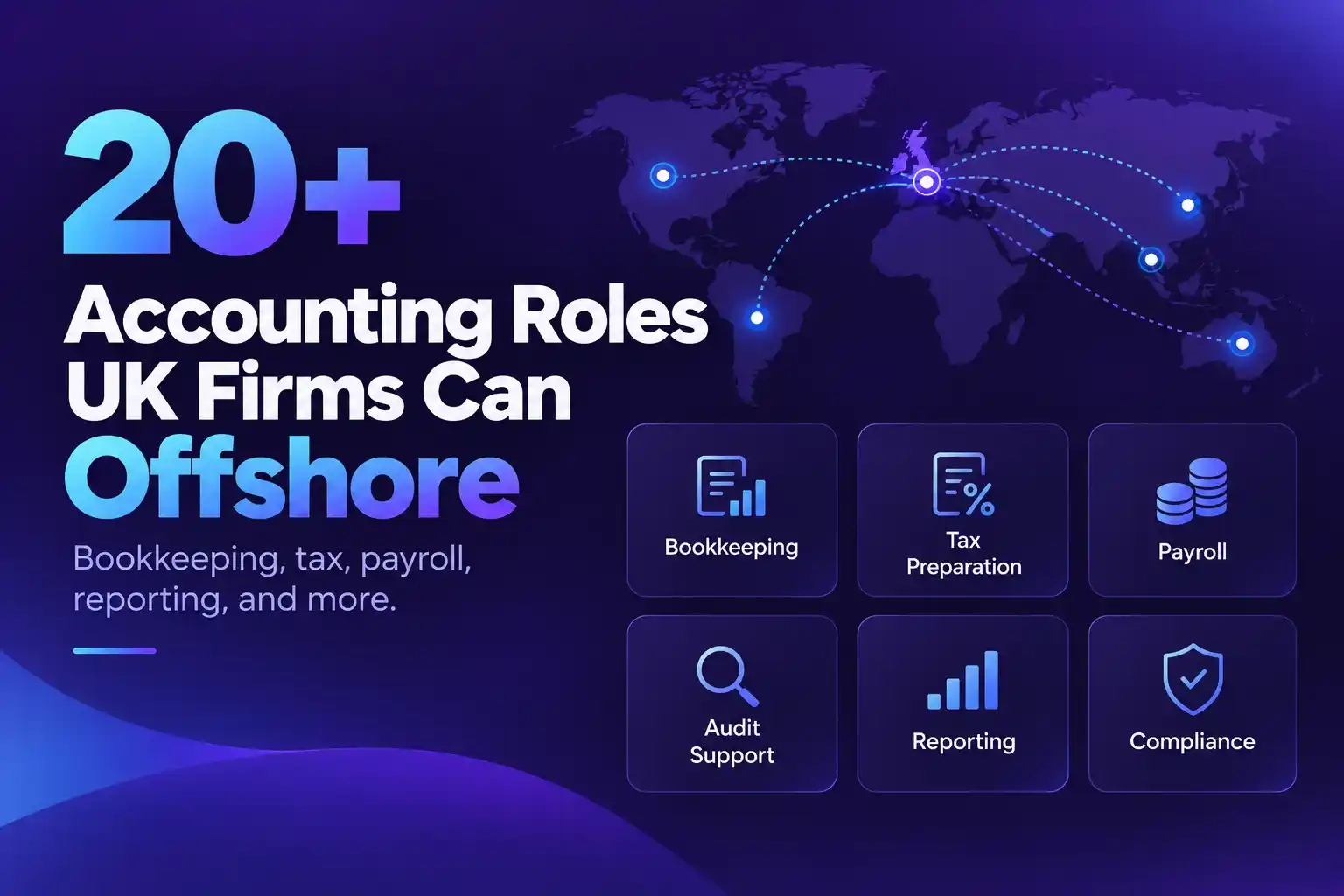
What Accounting Work Can UK Firms Offshore? 20+ Roles & Functions
 Amrit Singh