
Scale your CPA & accounting firm with elite offshore talent trusted by 1,000+ firms.
Thank you for your interest. Our due diligence checklist will be shared with you within 48 hours.

Accounting firms face unprecedented cybersecurity risks in 2026, with attackers targeting their valuable financial data and exploiting security gaps. Here are the critical insights every firm needs to implement immediately:
The cybersecurity landscape for accounting firms has fundamentally shifted. With ransomware attacks deliberately timed for tax season and AI democratizing attack capabilities, firms can no longer afford to treat cybersecurity as an afterthought.
The combination of valuable data, limited IT resources, and expanding attack surfaces through remote work creates a perfect storm that cybercriminals are actively exploiting. As a result, investing in cybersecurity services for accounting firms has become a business necessity rather than an optional safeguard.
Cyber security for accounting firms has never been more critical. U.S. victims lost $16.6 billion to cybercrime in 2024, a 33% jump from the previous year. Accounting firms face particular risk due to the sensitive financial data they handle, with more than half of severe outages costing over $100,000. Indeed, cybersecurity threats targeting CPA firms are growing faster than ever, and 2026 is shaping up to be one of the most challenging years yet.
In this guide, we'll explore why accounting firms are prime targets, the most critical threats you should prepare for, emerging cybersecurity trends, and practical strategies to protect your firm against evolving cyber attacks.
Accounting firms store exactly what cybercriminals need to profit: complete financial profiles, Social Security numbers, tax file numbers, banking credentials, and years of verified personal data. A single tax return contains full names, dependent information, income records, retirement account details, W-2s, 1099s, and corporate financials.
Unlike a stolen credit card that might fetch a few dollars on criminal marketplaces, a complete tax file can generate hundreds because it enables identity theft, refund fraud, loan fraud, and corporate impersonation.
The financial services sector now accounts for 18% of all cyber attacks. Cybercriminals view accounting firms as aggregators of both financial and personally identifiable information, making them particularly attractive targets. For attackers, this combination creates one of the most profitable and least defended segments of professional services.
Accounting firms maintain what cybercriminals call the "Holy Trinity" of identity theft: full names, Social Security numbers, and financial histories. Clients entrust their accountants with mortgage information, family details, business records, and superannuation data.
This complete financial profile holds significant value on the dark web, where verified personal and business data sells at a premium.
Small and medium-sized accounting firms operate with a fraction of the security budget that large banks possess, yet they store equally valuable data. Cybercriminals know smaller practices often lack dedicated IT staff, struggle with outdated infrastructure, and have limited resources for sophisticated defense systems. This resource gap makes them lower-hanging fruit for attackers who can exploit weaker security protections.
Cyber attacks targeting remote accounting practices surged 300% since the pandemic began. Remote employees connect to corporate networks from potentially unsafe environments, using unprotected home networks with default router passwords, personal devices without proper security controls, and public Wi-Fi connections.
Traditional risk analysis methods become less reliable when network traffic patterns shift to remote locations. In fact, 73% of executives believe remote workers pose greater cybersecurity risks than onsite employees.
Security extends only as far as the weakest vendor. Software vendors, cloud providers, and managed service providers often require privileged access to firm systems, yet many operate with inadequate security practices or delayed updates.
Third-party attacks involving SaaS applications have surged 3.8 times since 2022, with attackers frequently abusing OAuth tokens and API keys to move laterally after initial compromise.

Understanding these attack vectors helps you prioritize your cybersecurity for accounting firms strategy and allocate resources where threats pose the greatest operational and financial risk to your practice.

Cybercriminals adapt faster than most accounting practices can respond. The sophistication gap between attackers and defenders continues to widen as criminals weaponize emerging technologies while firms struggle with basic protections.
Phishing remains the leading cause of network compromise and accounts for 41% of all malware infections. Social engineering manipulates people into sharing credentials, downloading malware, or transferring funds by exploiting trust rather than technical vulnerabilities. Attackers impersonate the IRS, tax software vendors, clients, and executives with alarming precision.
AI-powered phishing tools now generate grammatically perfect emails that reference real client matters and mimic specific communication styles. During February 2026 alone, tax-themed phishing reached approximately 100 organizations, with campaigns delivering credential-harvesting malware disguised as W-2 documents.
Attackers deliberately strike before filing deadlines when firms face maximum pressure to restore access quickly. Average ransom demands now exceed $300,000, with system downtime ranging from 14 to 21 days. Tax season creates ideal conditions because high workloads reduce vigilance while the value of encrypted client data peaks.
Deepfake incidents caused $350 million in damages during Q2 2025 alone. Financial services experienced a 700% increase in deepfake incidents in 2023. Criminals use AI voice cloning and video manipulation to impersonate executives during wire transfer requests, making fraudulent instructions virtually indistinguishable from legitimate communications.
Remote work expanded attack surfaces dramatically, yet many firms neglected corresponding security measures. Unprotected home networks, personal devices without security controls, and insecure file-sharing practices create multiple entry points.
Third-party access accounted for 35.5% of all breaches in 2024, a 6.5% increase from the previous year. Software vendors and cloud providers with privileged access become backdoors into firm systems when their security fails.
Unencrypted email communications, unsecured client portals, and unprotected mobile devices expose sensitive financial data during transmission and storage. Yet encryption gaps persist across accounting and cybersecurity implementations.
What you'll learn: Understanding emerging cybersecurity for accounting firms trends helps you allocate resources effectively and prepare defenses before threats materialize. This section examines four critical trends reshaping accounting and cybersecurity: accelerating AI-powered attacks, stricter regulatory requirements, remote work compliance challenges, and the strategic shift toward security vendor consolidation.
IBM observed a 44% increase in attacks exploiting public-facing applications, largely driven by AI-enabled vulnerability discovery. Attackers use AI to speed research, analyze large data sets, and iterate on attack paths in real time.
Consequently, Gartner predicts over 60% of organizations will rely on cybersecurity platforms with AI-augmented automation in 2026, up from less than 20% in 2023. The barrier to entry for cybercrime has dropped significantly as AI democratizes attack capabilities.
Starting January 1, 2027, California businesses handling California consumer data must comply with CPPA regulations requiring annual cybersecurity audits, privacy risk assessments, and automated decision-making technology disclosures. These regulations fundamentally change cyber security for accounting requirements for firms meeting specific data processing and revenue thresholds.
Remote work introduces complex compliance challenges, particularly regarding GDPR and HIPAA standards. Data privacy becomes increasingly difficult as employees access corporate data from various locations and personal devices. Notably, 84% of cybersecurity decision-makers have seen more incidents due to hybrid work over the past 12 months.
Organizations currently employ 31.5 security tools on average. However, 40% of organizations have already begun consolidating their cybersecurity tools and vendors, with an additional 21% planning consolidation. This shift reduces management complexity, improves visibility, and strengthens vendor relationships.
What you'll learn: This section provides five actionable cybersecurity for accounting firms strategies you can implement immediately to protect client data, reduce breach risk, and ensure business continuity in 2026.
MFA makes you 99% less likely to be hacked. Yet implementation matters. Biometric MFA combined with phishing-resistant codes provides the strongest protection.
SMS-based codes remain vulnerable to interception, whereas hardware security keys or biometric authentication linked to pre-approved devices offer superior defense. Essentially, implement MFA across all access points, including tax software, email, remote access, and administrative accounts.
Firms without security awareness programs see 37.9% of employees fall for phishing attacks. After one year of training, that number drops to 4.7%. Phishing simulations test staff ability to recognize attacks in realistic settings. Run quarterly simulations using varied techniques and provide immediate feedback to employees who click malicious links.
Given that 35.5% of breaches originate from third-party compromises, cyber risk management requires persistent vendor monitoring. Use security ratings tools to track vendor security posture continuously. Assess vendors before engagement and monitor their security practices, incident recovery processes, and fourth-party risks throughout the relationship.
End-to-end encryption ensures only the sender and recipient can read information, not the service provider. Deploy encryption for emails, file sharing, client portals, and data storage. The IRS specifically states that data encryption is essential for protecting Federal Taxpayer Information.
Breaches take an average of 277 days to identify and contain. Written incident response plans should define roles, containment procedures, communication protocols, and recovery steps. Include IRS notification requirements, client communication templates, and system restoration priorities. Test plans through tabletop exercises and update them based on lessons learned.

Cyber security for accounting firms demands immediate attention, particularly as AI-powered attacks accelerate and regulations tighten throughout 2026. The threats are real and growing, yet you now have the knowledge to protect your practice effectively. Without doubt, implementing multi-factor authentication, conducting regular training, and establishing incident response plans will significantly reduce your risk exposure.
Cybercriminals count on firms postponing security improvements until after a breach occurs. Choose to act proactively instead. Your clients trust you with their most sensitive financial data, making robust cybersecurity not just a technical requirement but a professional responsibility.
Accounting firms store highly valuable financial data including Social Security numbers, tax returns, banking credentials, and complete financial profiles. This combination of personal and business information is extremely profitable on the dark web. Additionally, many smaller firms have limited IT resources and security budgets compared to banks, despite handling equally sensitive data, making them easier targets for attackers.
Remote work has expanded the attack surface significantly, with cyber attacks on remote accounting practices surging 300% since the pandemic. Employees often connect from unsecured home networks with default router passwords, use personal devices without proper security controls, and access public Wi-Fi. In fact, 73% of executives believe remote workers pose greater cybersecurity risks than onsite employees.
AI has dramatically accelerated cyber attacks by enabling criminals to create sophisticated phishing emails with perfect grammar, discover vulnerabilities faster, and analyze large data sets in real time. Deepfake technology powered by AI has caused $350 million in damages, with financial services experiencing a 700% increase in deepfake incidents. AI has essentially lowered the barrier to entry for cybercrime, making attacks more frequent and harder to detect.
Multi-factor authentication (MFA) makes you 99% less likely to be hacked. It adds an essential security layer beyond passwords by requiring additional verification such as biometric data or hardware security keys. This protection is crucial for all access points including tax software, email, remote access, and administrative accounts, significantly reducing the risk of unauthorized access to sensitive client data.
On average, breaches take 277 days to identify and contain, which represents a significant window of vulnerability. This extended timeframe highlights why having a written incident response plan is essential. Such plans should define roles, containment procedures, communication protocols, and recovery steps to minimize damage and reduce response time when a breach occurs.

Nemin Vora, a CA and Tax Attorney, leads Client Relations at MYCPE ONE. With 7+ years of experience at Big 4 and top public accounting firms across America, he helps U.S. firms scale globally through remote talent, offshoring, and cloud operations. Known for his sharp tax insights and practical approach to firm growth, Nemin is a dynamic speaker. He breaks down complex topics such as leadership, AI, global staffing, and practice expansion into relatable lessons that professionals actually enjoy learning. Beyond the strategy decks, Nemin is a learner at heart, a stage actor, and a tech enthusiast.


How to Scale CAAS (Client Accounting & Advisory Service) + VCFO with Offshoring!


How To Scale CFO And Advisory Services With Offshoring

Bursting myths around Offshoring for an Accounting firm

Offshore vs Nearshore Accounting: What's Right for Canadian Firms?
CA Nemin Vora
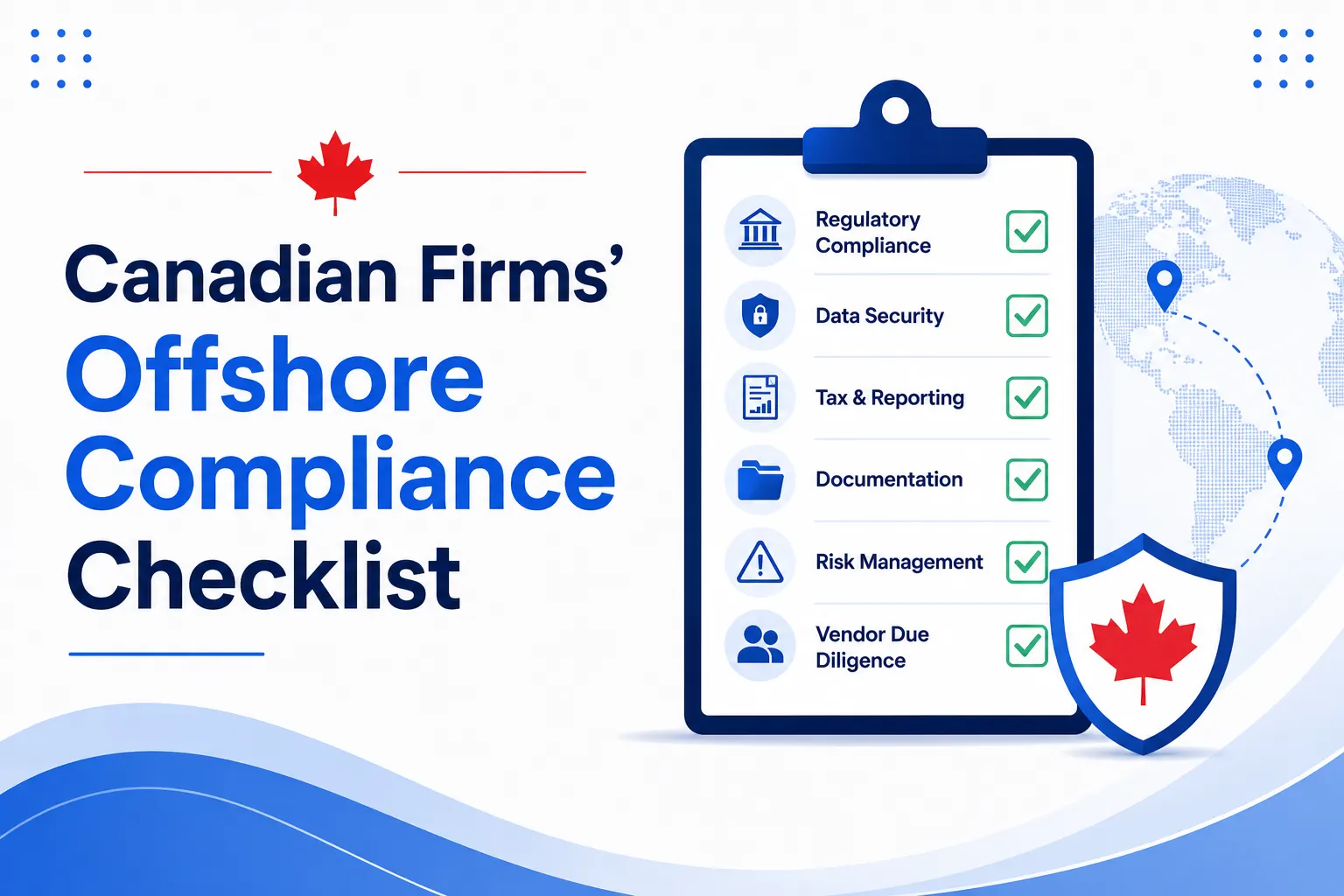
Offshore Accounting in India for Canadian CPA Firms: Compliance & GDPR Guide
 Christopher Rivera
Audit and Assurance Support Services in Canada: Complete Guide
Christopher Rivera