
©2026 - www.my-cpe.com All rights reserved
support@my-cpe.com7 Days Free Trial
for Enterprise Subscriptions
You have Not Selected the Monthly or Annual Plan

#1 Global Platform for Continuing Education
Create your Free Account | Get Unlimited Access only @$199/Year ( View Details )
Trusted by 250,000+ Professionals for Continuing Education
Create Your Account 1/2
Already have an account? Log In
To Continue using Trial, please verify your email address
Didn’t received verification email? Resend Email
You can cancel anytime during your trial period.
Become a
MYCPE ONE Member
@ $299 $199
33% Discount on Annual Subscription


Complete Access to 12,000+ Hours of Content
Trusted by 250,000+ Professionals
"Steven was knowledgeable and thorough…”
Steven was knowledgeable and thorough in his information about the product and what is offered. He was empathetic to my situation. He went above and beyond answering all of my many questions. Excellent service!

Crystal lovejoy
"Great Customer Service”
Great service and very patient as I asked several questions. Steven answered all my questions and helped me make the right decision in my subscription purchase. Thank you.

Lori corry
"It is what it advertised to be”
It is what it advertised to be. Professional quality training and CPE tracking and certificates; systems knows AZ CPA CPE requirements and categories. I've needed help on several occasions and the assistance was quick and effective; however, there were some problems with data entry. The assistance sometimes asks for input, but when I try to type it is dissallowed for some reason. On several occasions I had to close the popup to get it out of my way.

Brian Carey
"Great customer service”
Great customer service. Classes are pertinent. Great value

Steve

Trusted by 250,000+ Professionals
Trusted by 250,000+ Professionals
"Steven was knowledgeable and thorough…”
Steven was knowledgeable and thorough in his information about the product and what is offered. He was empathetic to my situation. He went above and beyond answering all of my many questions. Excellent service!
Crystal lovejoy
"Great Customer Service”
Great service and very patient as I asked several questions. Steven answered all my questions and helped me make the right decision in my subscription purchase. Thank you.
Lori corry
"It is what it advertised to be”
It is what it advertised to be. Professional quality training and CPE tracking and certificates; systems knows AZ CPA CPE requirements and categories. I've needed help on several occasions and the assistance was quick and effective; however, there were some problems with data entry. The assistance sometimes asks for input, but when I try to type it is dissallowed for some reason. On several occasions I had to close the popup to get it out of my way.
Brian Carey
"Great customer service”
Great customer service. Classes are pertinent. Great value
Steve
Subscribe Now at $199/ 12 Months
Topic of Interest
Select the topics of your interest to receive Webinars/Virtual Events/E-Books/Podcasts of your interest.
Selected Topics
Important: Course Deactivation Alert
Below mentioned Courses will be deactivated soon due to outdated content. Complete the course within the next 7 days to receive credits. After Expiry date, the course will be unavailable for credit. For assistance or inquiries, please contact our support team at support@my-cpe.com.
Course Name
Thank You.
If you work in government auditing, you already know that CPE is not mare a checkbox for your license. It's a separate, more demanding obligation set by the U.S. Government Accountability Office (GAO).
As a government auditor, one carries a different kind of responsibility. Not a watchdog but a protector of public trust in how taxpayer dollars get spent. That's why CPE for government organizations works differently than standard state board requirements.
80 CPE hours every two years, with at least 20 hours per year — all 80 hours cannot be completed in a single year, and excess hours do not carry forward.
24-hour government-specific component — must focus on government auditing standards, the government environment, or the unique environment of audited entities. Any combination of these three categories qualifies.
Document everything — program names, dates, subject matter, and hours earned. Compliance is verified through peer reviews and quality control systems.
Know what qualifies — group seminars, online courses, teaching, and publishing count. On-the-job training, personal development programs, and basic courses in areas you already know do not.
Government auditors have a separate CPE bar set by the GAO's Government Auditing Standards, known as the Yellow Book. The Yellow Book formerly called GAGAS since 1972 governs the audit profession. It sets out the framework for financial audits, performance audits, and attestation engagements involving federal, state, and local government entities, as well as organizations that receive government grants and awards.
Organizations performing GAGAS engagements must comply with the Yellow Book CPE requirement, and it isn't the same as your state's CPE requirement.
Government organizations don't operate under just one compliance framework. Sitting in three different intersections, the CPE obligations also differ. So, the Yellow Book sets an overarching standard as a common thread to tie the organizations.
A Single Audit is required for organizations that spend $1,000,000 or more in federal awards during a fiscal year. It combines a financial statement audit with a compliance audit of federal programs to ensure grant funds are used according to federal requirements. Since Single Audits are conducted under GAGAS (Yellow Book), auditors must also meet Yellow Book CPE requirements.
The Yellow Book (GAGAS) establishes the professional standards for audits of government entities and organizations receiving federal funding. It also defines the CPE requirements for government auditors, including 80 hours of CPE every two years, with at least 24 hours in government-related subjects, ensuring auditors maintain the knowledge and skills needed for high-quality government audits.
Nonprofits that receive significant federal funding may also be subject to Single Audit requirements, making compliance with Yellow Book standards essential. Auditors serving both government and nonprofit organizations should complete CPE covering government auditing, grant compliance, and nonprofit accounting to meet professional requirements and effectively handle engagements across both sectors.
80 hours of CPE every 2 years. That's the baseline for every auditor involved in planning, directing, performing field work, or reporting on a GAGAS audit or attestation engagement. All 80 hours must directly enhance professional proficiency.
One important rule: no carryovers. Hours earned beyond the 80-hour requirement in one period do not roll into the next. Each 2-year measurement period stands on its own.
At least 24 of the 80 hours must cover subjects directly related to government auditing, the government environment, or the specific environment of the audited entity. This isn't optional. The government-focused component exists to ensure auditors maintain specialized competence — the kind that general CPE simply cannot replace.
20 hours minimum per year. Completing all 80 hours in a single year does not satisfy the requirement. Audit organizations may set a standard 2-year period for all auditors — either on a fixed-year or rolling-year basis.
Auditors hired mid-period? Prorated requirements apply. Hours are calculated based on the number of full 6-month intervals remaining in the CPE period. Three full intervals remaining means 60 total hours (3/4 x 80) and 18 government hours (3/4 x 24).
Job titles don't determine eligibility. The nature of work does. These rules apply to any auditor or professional planning, directing, performing fieldwork, or reporting on financial, performance, or attestation engagements under GAGAS.
CPE requirements apply to both external and internal auditors — government and nongovernment alike. Both the 80-hour and 24-hour requirements apply.
The 24-hour government requirement covers three distinct subcategories. Earn your hours from any combination of them. No requirement to complete a specific hour in each subcategory.
What matters is the CPE content itself. The sponsoring organization, the presenter, or NASBA certification status of the sponsor does not determine eligibility.
A broad range of topics qualify here — all tied directly to how the government operates including.
Courses on measuring and reporting the results of government programs also count.

Government auditing CPE covers topics related to standards by GAGAS used when auditing a government entity. Other frameworks that auditors actually used in auditing the government entity also counts.
For example : a government entity using COSO's Internal Control – Integrated Framework allows auditors to count related CPE toward the 24-hour requirement. If neither the entity nor its auditors use that framework, the same CPE counts toward the remaining 56-hour general requirement instead.
Specific topics tied to audit engagements or functions within government entities are tied to it. If auditing Housing and Urban Development projects, school districts, or police departments, courses related to those unique environments qualify for CPE.
For example: auditing investments at a state retirement system, a course on how large institutions trade investments counts toward government CPE — even when most other attendees come from outside government work. The content determines eligibility. The audience in the room does not.
GAGAS accepts structured learning activities that improve the knowledge and skills needed for government auditing. Eligible programs can count toward either the 24-hour government-specific or 56-hour general CPE requirement, depending on the subject matter.
Qualifying activities include seminars, workshops, conferences, staff training, webinars, audio conferences, and accredited college courses. Internal training also qualifies when it follows a structured program with defined learning objectives.
Self-study formats, including online courses, webcasts, correspondence courses, and recorded learning programs, qualify for Yellow Book CPE. These options offer flexible, self-paced learning while meeting CPE requirements.
Professionals can earn CPE by teaching, speaking, developing course materials, or publishing professional content. Credit for published articles or books is limited to 20 hours per two-year reporting period.
Several activities are explicitly excluded under GAGAS:
Not every auditor carries the full obligation.
Audit organizations may also grant exemptions for ill health, maternity or paternity leave, extended family leave, sabbaticals, leave without pay, foreign residency, military service, or disasters. Workload, budget, or travel constraints do not qualify for exemptions.
Subscribe to MYCPE ONE – Start Your 30-Day Free Trial Today
Missed your hours? Audit organizations may grant up to 2 months immediately following the 2-year period to make up deficiencies. Hours completed during this window count toward the deficiency — not toward the next period. Auditors who remain non-compliant after the grace period cannot participate in GAGAS engagements until requirements are fully satisfied.
February 2024 Yellow Book Issued: The GAO released the 2024 revision of the Government Auditing Standards, the first major update since 2018.
December 15, 2025: The 2018 Yellow Book continues to apply until the 2024 version becomes effective.
On or After December 15, 2025: The 2024 Yellow Book applies to financial audits, attestation engagements, and performance audits for periods beginning on or after December 15, 2025.
December 15, 2025: Audit organizations must design and implement a System of Quality Management (SQM) that complies with the 2024 Yellow Book.
October 1 – November 12, 2025: Due to the federal government appropriations lapse, federal audit organizations were allowed to defer SQM implementation until March 16, 2026.
By December 15, 2026: Audit organizations must complete an evaluation of their Quality Management System by December 15, 2026.
Early Adoption: Organizations that are ready may adopt the 2024 Yellow Book before the mandatory effective date.

You now have everything you need to meet your Yellow Book CPE requirements with confidence. The 80-hour framework becomes much easier to manage once you understand which activities qualify and how to track your hours properly.
Stay on top of your 24-hour government CPE component, document your learning activities thoroughly, and maintain steady progress throughout each two-year reporting period. Your audit organization depends on your compliance, and your professional competence grows with every qualifying hour you complete.
With MYCPE ONE, you can access relevant Yellow Book and government auditing CPE courses in one convenient platform. Start your 30-day free trial today and take a simpler, more organized approach to meeting your continuing education requirements.
No. While many NASBA-approved courses qualify for CPE, Yellow Book eligibility depends primarily on the course content. To count toward the 24-hour government-specific requirement, the course must relate to government auditing, the government environment, or the audited entity's environment. No. While many NASBA-approved courses qualify for CPE, Yellow Book eligibility depends primarily on the course content. To count toward the 24-hour government-specific requirement, the course must relate to government auditing, the government environment, or the audited entity's environment.
Yes. A qualifying course may count toward both your state CPA CPE requirements and Yellow Book requirements if it meets the criteria established by both your state board and the Government Auditing Standards. Yes. A qualifying course may count toward both your state CPA CPE requirements and Yellow Book requirements if it meets the criteria established by both your state board and the Government Auditing Standards.
Yellow Book does not require a separate ethics course. However, ethics training related to government auditing or professional conduct may count toward the required CPE. Yellow Book does not require a separate ethics course. However, ethics training related to government auditing or professional conduct may count toward the required CPE.
Not always. The course should be relevant to the auditor's current or expected responsibilities. Topics should strengthen knowledge related to government auditing, government operations, Not always. The course should be relevant to the auditor's current or expected responsibilities. Topics should strengthen knowledge related to government auditing, government operations,
Government audits involve unique laws, regulations, funding requirements, and accountability standards. Specialized CPE helps auditors stay current with evolving requirements, improve audit quality Government audits involve unique laws, regulations, funding requirements, and accountability standards. Specialized CPE helps auditors stay current with evolving requirements, improve audit quality

Imtiaz Munshi, CPA (US), is the CFO at Azstec, LLC and a trusted advisor to high-net-worth entrepreneurs. A seasoned tax planner and a business strategist with his 25 years of experience, he helps businesses grow smarter and stronger. Imtiaz specializes in guiding entrepreneurs and enterprises through complex financial decisions with clarity and confidence. His passion lies in simplifying strategy, optimizing tax outcomes, and driving sustainable growth. Through his work and thought leadership, Imtiaz continues to empower CPAs and business owners to stay ahead in an evolving financial landscape shaped by AI, ESG, and data-driven change.
Table of Contents


Business Insights: Remote Work, Decision Bias & Wine Fraud



How AI Is Changing Marketing for CPA Firms
Agentic AI Workflows for Management Accountants

Compliance vs Compliance Plus: Pricing and Features Compared for Your Team
 Amrit Singh
Offshore Bookkeeping vs. In-House: What UK Accounting Firms Should Consider
 Christopher Rivera
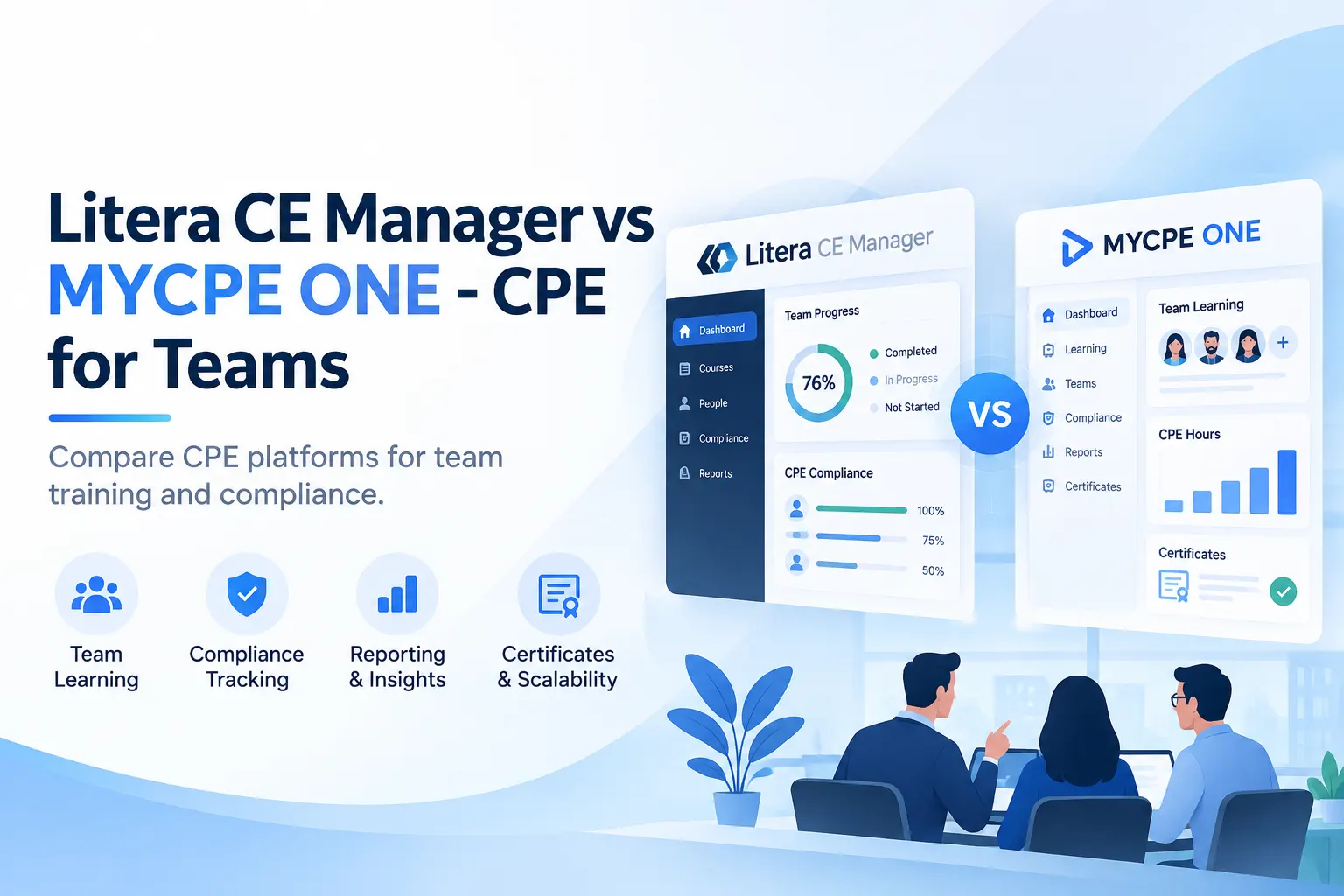

Registration Completed

Something Went Wrong!! Please Try Again.

Registration Completed

Please Update Your Profile to Claim Your Continuing Education Credits.

Thank you for subscribing 7 Days Free Trial.
Please upgrade your browser to use MYCPE ONE
Experience MYCPE ONE at its best! Upgrade your browser for a more interactive, user-friendly interface, and stay ahead in your professional development journey.
Upgrade NowHow did you find out about us?
We were looking so hard for you now that you are finally here, So would you tell us how you found out about us?

What is your primary purpose to use MYCPE ONE?

Thank you for submitting your inquiry! We will contact you soon.
CloseOur Promise






