
Scale your CPA & accounting firm with elite offshore talent trusted by 1,000+ firms.
Thank you for your interest. Our due diligence checklist will be shared with you within 48 hours.

Building a structured learning culture is essential for accounting firms aiming for sustained growth. MYCPE ONE fosters a unified, role-based learning approach that ensures every team member, from associates to partners, develops the skills they need to excel. This strategy goes beyond mere CPE compliance, aligning training with firm goals and enhancing leadership development. With clear learning paths and measurable outcomes, MYCPE ONE helps firms build a capable, engaged workforce that drives long-term success and client satisfaction.
Think about the movie Moneyball. The Oakland A's didn't win by outspending rivals. They won by building a system - a disciplined methodology that got more from every player in the roster. The accounting firms pulling ahead of their competition right now aren't the ones with the biggest CPE budgets. They're the ones with the best learning systems.
"Culture eats strategy for breakfast." — Peter Drucker, Father of Modern Management
Walk into almost any accounting firm and ask: 'What does your training program look like?' The most common answer: 'We have CPE. People complete their hours. We track that.' That's not a learning culture. That's compliance by default.
The firms that consistently attract top talent, develop strong managers, and scale without chaos share one thing in common - they treat learning as infrastructure, not an afterthought.
Most firms aren't neglecting CPE. Their people are completing it. The real problem is that CPE decisions are made individually - each credentialed staff member picks whatever courses satisfy their license renewal, chosen for convenience rather than relevance. The credits get logged. The firm's actual training needs go unmet.
And that's only half the picture. A significant portion of most accounting firm teams - bookkeepers, analysts, paralegals, operations staff, associates still on the path to licensure - aren't credentialed at all. They have no CPE requirement driving their development. Which means if the firm doesn't build deliberate training for them, they often receive none.
The result is a firm where compliance boxes are checked for licensed staff, non-credentialed staff develop unevenly, and capability gaps persist across both groups year after year.
94% of employees say they would stay longer at a company if it invested in their learning and development. (Harvard Business Review)
The opportunity is to align learning across the entire team - not just the credentialed staff. For those with credentials, CPE selection is guided so that required hours also serve firm development goals. For everyone else, structured training ensures they're growing in step with the firm's needs. One unified approach. Everyone covered. This is exactly where Learning and Development for Accounting Firms plays a critical role in aligning individual growth with firm-wide performance.

The most effective firms design learning by role, not by individual preference. A first-year associate needs different training than a manager preparing to make partner. When learning is role-mapped, development becomes predictable and measurable.
High-performing firms don't just train people on tax law updates - they also invest in the skills that allow technical experts to become great managers and advisors. Client communication, business development, delegation, and conflict resolution are not 'nice to haves.' For a firm trying to scale, they're survival skills.
70% of the variance in team engagement is directly attributable to the manager. (Gallup) - which means leadership development isn't a soft investment. It's a performance lever.
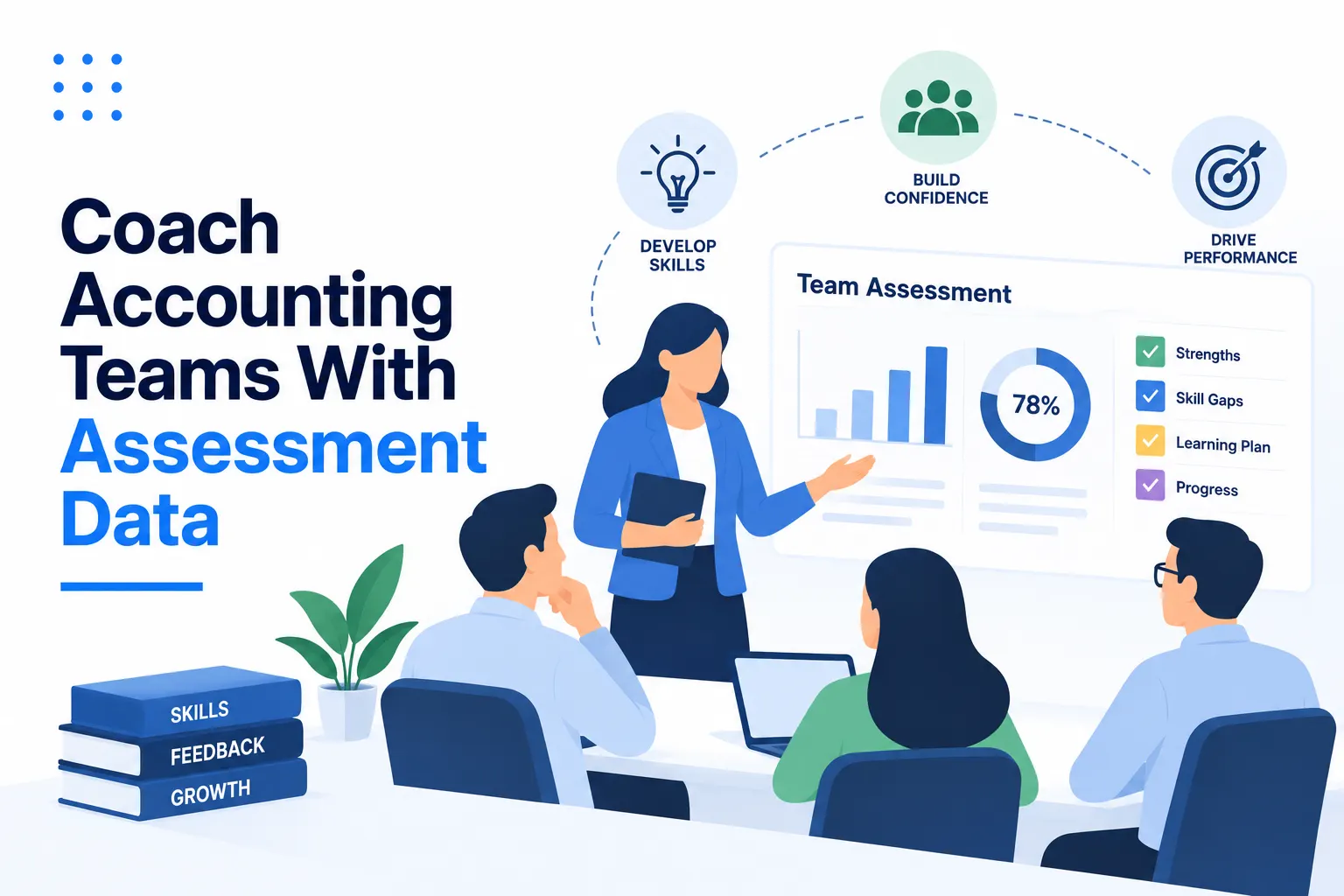
Learning without accountability fades quickly. Firms that succeed build accountability into their workflow: learning milestones tied to performance reviews, manager-assigned training plans, and visible progress dashboards. When a managing partner can see at a glance who completed what, which teams are behind, and where gaps exist, training becomes part of firm management.
The question isn't 'did they finish the course?' It's 'did it change how they work?' Outcome-focused firms track how training correlates with client satisfaction, review time, staff retention, and promotion readiness. As Drucker also said: 'What gets measured gets managed.'
"Before you are a leader, success is all about growing yourself. When you become a leader, success is all about growing others." — Jack Welch, Former CEO of General Electric
The shift isn't from CPE to something else. It's from fragmented, individually-driven learning to firm-aligned development that covers everyone. For credentialed staff, CPE course selection is guided so required hours simultaneously fulfill firm development priorities - compliance and growth in one motion. For non-credentialed staff, structured training ensures they're developing in step with the firm, even without a license requirement pushing them.
The firms that build this across their whole team - not just the CPAs - are the ones where every person, at every level, is becoming more capable every year. That's what a learning culture actually looks like.
Working with 1,000+ accounting firms and enterprises, we've seen what separates firms that develop consistently from those that scramble. If your firm is navigating any of these challenges, let's have a conversation - no pitch, just perspective from a team that's helped firms build exactly what's described in this piece.
A structured learning culture in accounting firms involves developing a unified, firm-wide approach to training that aligns learning with business goals. It focuses on role-based learning paths for all staff, including credentialed and non-credentialed employees. This approach ensures consistent growth and development at every level, with structured training for both technical and leadership skills. The goal is to transform learning from a compliance-driven activity into a strategic initiative for firm growth and employee retention.
Role-based learning ensures that employees receive training tailored to their specific career stage and responsibilities. For example, associates need foundational skills, while senior staff and managers require advanced technical knowledge and leadership development. By designing learning paths around roles, accounting firms can provide clear, measurable development milestones and ensure staff are prepared for the challenges at each level, contributing to better firm performance and scalability.
Leadership development is crucial in accounting firms because high-performing teams are directly influenced by effective management. Research shows that 70% of team engagement variance is attributable to the manager. Investing in leadership training allows firms to improve management capabilities, enhance client communication, resolve conflicts, and drive business development. This leads to better client satisfaction, staff retention, and overall firm success.
CPE (Continuing Professional Education) compliance is about meeting minimum requirements for credentialed staff, often through individual course selection. However, a learning culture goes beyond compliance by aligning training with firm-wide goals. It ensures that learning is purposeful, relevant, and part of a long-term strategy for growth. While CPE fulfills legal requirements, a structured learning culture builds a more capable, engaged team by integrating learning into every employee's development.
Firms can measure training effectiveness by tracking outcomes, not just course completion. Key metrics include improvements in client satisfaction, reduction in review times, staff retention rates, and the readiness of employees for promotions. By linking training to measurable business outcomes, firms can ensure their learning initiatives are having a tangible impact on performance and growth, making training an integral part of firm management.

Amrit Singh is a business leader with 10+ years of experience in continuing education. Helping accounting, tax, and finance professionals stay compliant with ease, he began his journey as a consultant. Learning across industries before stepping into a leadership role, he is shaped by both successes and failures. Amrit is passionate about problem-solving, building products, exploring technology, and mentoring future leaders. He is dedicated to transform continuing education, making it simpler, smarter, and more meaningful. Through his blogs and talks, he shares insights on accounting careers, CPA compliance, and the future of continuing education.


Crack the Code: Unleashing Hidden Talents for Workplace Magic


.webp-1717773117 "Understanding Your Talent Development Function")
Understanding Your Talent Development Function


Fundamentals of Managing and Developing Talent
Manager’s Playbook: How to Coach Accounting Teams Using Assessment Data
Amrit Singh