Scale your CPA & accounting firm with elite offshore talent trusted by 1,000+ firms.
Thank you for your interest. Our due diligence checklist will be shared with you within 48 hours.

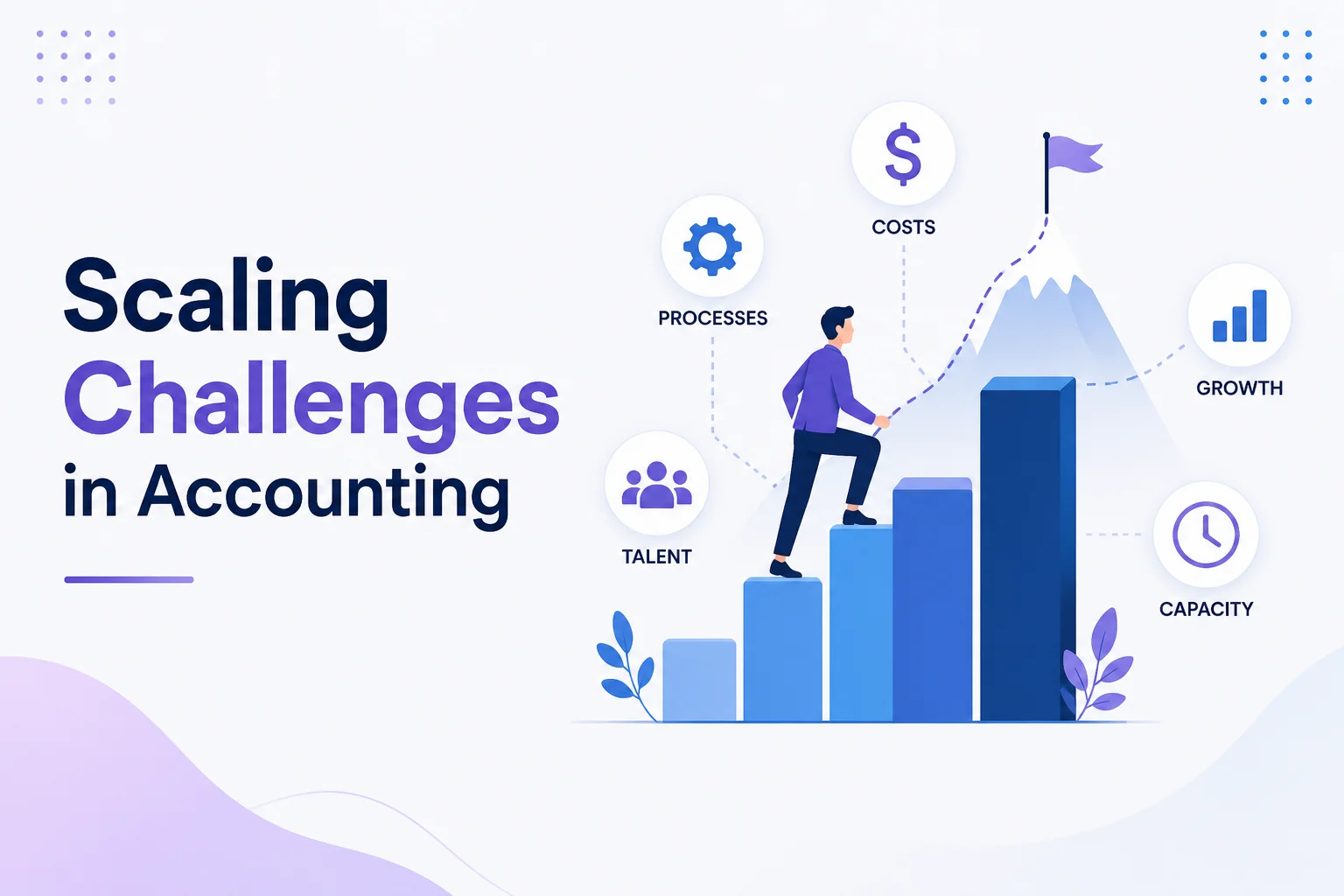
Scaling an accounting firm beyond 50 employees requires more than hiring - it demands a structured learning infrastructure. This blog outlines four key pillars: an LMS, role-based curriculum, accountability systems, and leadership development. Together, these systems transform training into measurable performance, ensuring compliance, improving productivity, and building future leaders. Firms that invest in learning infrastructure gain a competitive edge by aligning employee growth with business strategy and long-term scalability.
Think of the movie Apollo 13. Three astronauts, impossibly far from home, surviving on system thinking. The mission didn't fail despite a catastrophic equipment failure - it succeeded because the infrastructure on the ground was sophisticated enough to improvise under pressure.
When an accounting firm crosses 50 people, the informal systems that worked at 20 start to break down in exactly the same way: suddenly, improvisation isn't enough. You need real infrastructure.
"Only three things happen naturally in organizations: friction, confusion, and underperformance. Everything else requires leadership." - Peter Drucker
The firms that break through growth ceilings don't just have more staff - they have better systems. Learning infrastructure is one of the highest-leverage investments a growing firm can make.

The LMS is the foundation - the platform where training is housed, assigned, tracked, and reported. A critical point that many firms overlook: the LMS needs to serve the entire team, not just credentialed staff.
A 50-person firm typically includes CPAs, CMAs, and EAs who need CPE credit tracking, alongside bookkeepers, analysts, paralegals, and associates in progress who need structured development without a compliance framework driving them.
A good firm LMS handles both populations cleanly: CPE compliance tracking and credit reporting for credentialed staff; role-based learning plans and progress dashboards for everyone else.
Role-based access, designation-based user management, integration with existing HR systems, and support for all learning formats - video, audio, live virtual events, in-person sessions — are table stakes.
Most firms have this pillar. The gap is usually in configuration - the LMS exists but isn't structured to serve the full team operationally.

The platform means nothing without the right content and structure. A structured curriculum answers: what does each role need to learn, in what sequence, and how does that connect to firm strategy? The answer looks different depending on who you're designing for.
For credentialed staff, the curriculum aligns CPE course selection to firm development priorities - so required credits are earned through content that actually builds the capabilities the firm needs.
For non-credentialed staff, the curriculum provides the structured development they'd otherwise have no system to receive. Both populations, one coherent approach.
This is the pillar most firms are missing. Knowing that training exists is different from knowing whether people are completing it, what they're learning from it, and how it's affecting their work.
Accountability infrastructure includes: automated reminders for compliance deadlines, manager dashboards showing team progress, firm-wide compliance and completion reporting, and learning milestones tied to performance reviews.
"What gets measured gets managed." - Peter Drucker
Without this pillar, even the best LMS becomes a parking lot for content nobody uses.
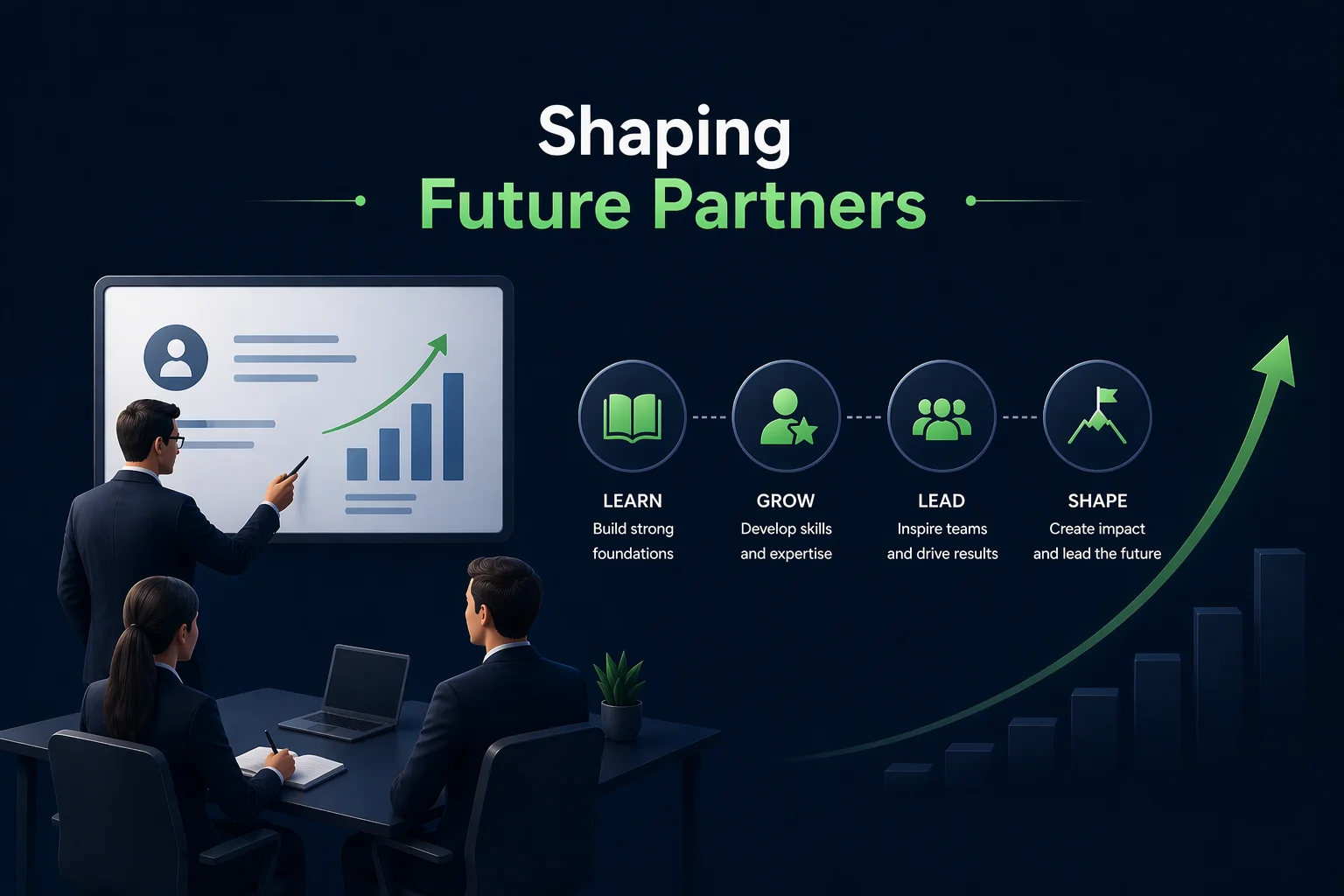
The fourth pillar is often absent entirely. Technical training is easy to justify and easy to find. Leadership and management development requires more intentionality. Who is your partner pipeline? What are they learning about business development and people leadership? If the answer is 'not much,' that's a future capacity problem.
The majority of 50+ person firms have Pillar 1. A meaningful subset has elements of Pillar 2. Very few have Pillars 3 and 4 fully built out. That imbalance explains a lot: why managers struggle after promotion, why CPE compliance is met but performance doesn't improve, why the same gaps appear year after year.
Learning infrastructure isn't a training department initiative. It's an operations decision - and for firms at scale, it's one of the highest-leverage investments available.
Working with 1,000+ accounting firms and enterprises, we've seen what separates firms that develop consistently from those that scramble. If your firm is navigating any of these challenges, let's have a conversation - no pitch, just perspective from a team that's helped firms build exactly what's described in this piece.
Learning infrastructure in an accounting firm refers to the systems, processes, and tools - like a Learning Management System (LMS), structured curriculum, and performance tracking - that enable continuous employee development at scale. It goes beyond training to align learning with business goals, compliance, and performance outcomes.
Accounting firms need an LMS to manage compliance training (like CPE), standardize onboarding, and track employee development across roles. Over 83% of organizations use LMS platforms, and many report improved efficiency, compliance readiness, and productivity.
Firms that invest in structured learning systems see measurable business impact - such as higher employee productivity, improved retention, and stronger margins. Research shows companies with strong training programs can achieve up to 24% higher profit margins and 218% higher revenue per employee.
A scalable learning infrastructure typically includes:
Without these components, even the best LMS can fail due to low engagement and poor adoption.
The best LMS for accounting firms should include:
Choosing the right LMS is critical because it acts as the backbone of your learning strategy, directly impacting scalability and talent development.

Amrit Singh is a business leader with 10+ years of experience in continuing education. Helping accounting, tax, and finance professionals stay compliant with ease, he began his journey as a consultant. Learning across industries before stepping into a leadership role, he is shaped by both successes and failures. Amrit is passionate about problem-solving, building products, exploring technology, and mentoring future leaders. He is dedicated to transform continuing education, making it simpler, smarter, and more meaningful. Through his blogs and talks, he shares insights on accounting careers, CPA compliance, and the future of continuing education.
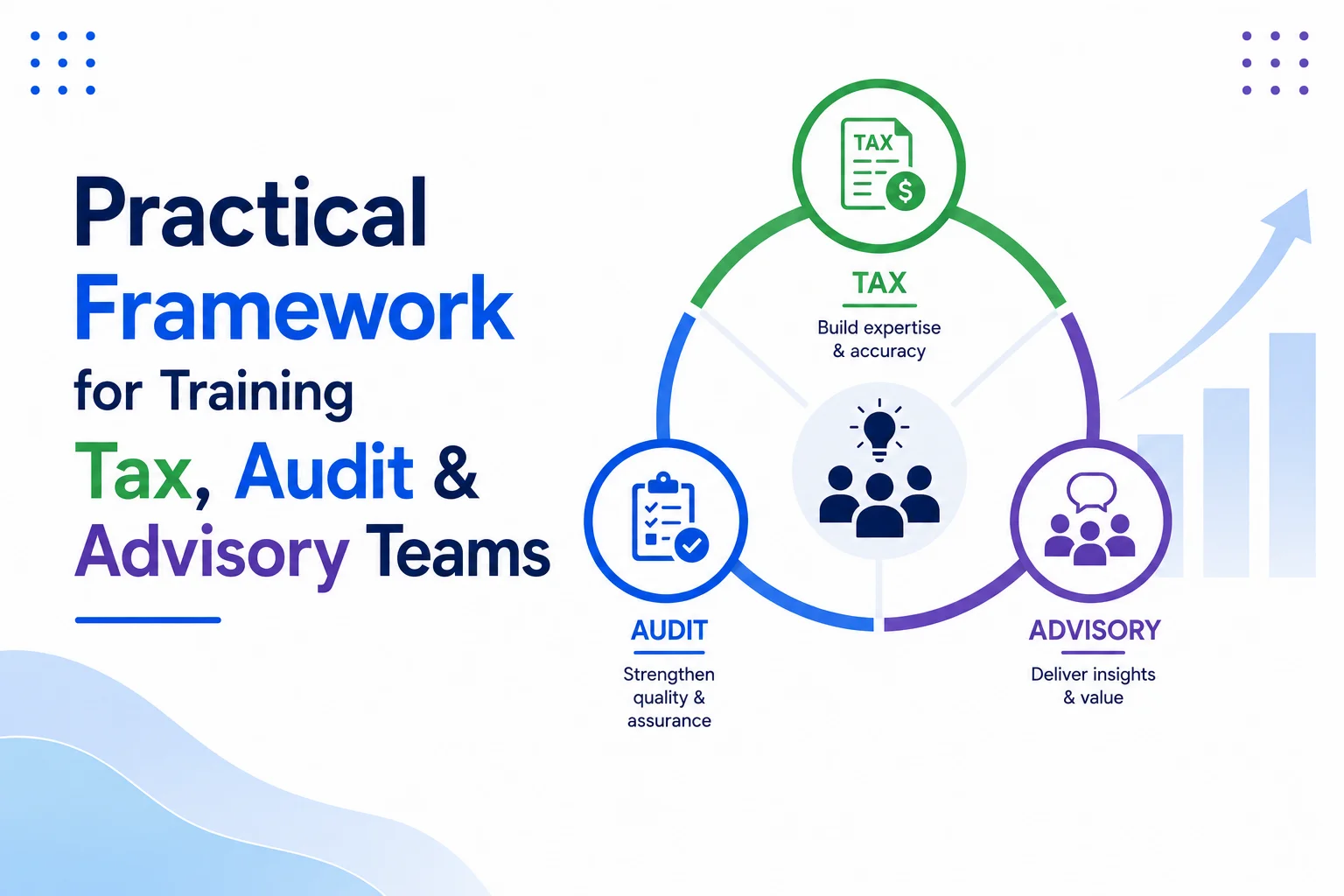
A Practical Framework for Training Tax, Audit, and Advisory Teams
Amrit Singh