©2026 - www.my-cpe.com All rights reserved
support@my-cpe.com7 Days Free Trial
for Enterprise Subscriptions
You have Not Selected the Monthly or Annual Plan

#1 Global Platform for Continuing Education
Create your Free Account | Get Unlimited Access only @$199/Year ( View Details )
Trusted by 250,000+ Professionals for Continuing Education
Create Your Account 1/2
Already have an account? Log In
To Continue using Trial, please verify your email address
Didn’t received verification email? Resend Email
You can cancel anytime during your trial period.
Become a
MYCPE ONE Member
@ $299 $199
33% Discount on Annual Subscription


Complete Access to 12,000+ Hours of Content
Trusted by 250,000+ Professionals
"Steven was knowledgeable and thorough…”
Steven was knowledgeable and thorough in his information about the product and what is offered. He was empathetic to my situation. He went above and beyond answering all of my many questions. Excellent service!

Crystal lovejoy
"Great Customer Service”
Great service and very patient as I asked several questions. Steven answered all my questions and helped me make the right decision in my subscription purchase. Thank you.

Lori corry
"It is what it advertised to be”
It is what it advertised to be. Professional quality training and CPE tracking and certificates; systems knows AZ CPA CPE requirements and categories. I've needed help on several occasions and the assistance was quick and effective; however, there were some problems with data entry. The assistance sometimes asks for input, but when I try to type it is dissallowed for some reason. On several occasions I had to close the popup to get it out of my way.

Brian Carey
"Great customer service”
Great customer service. Classes are pertinent. Great value

Steve

Trusted by 250,000+ Professionals
Trusted by 250,000+ Professionals
"Steven was knowledgeable and thorough…”
Steven was knowledgeable and thorough in his information about the product and what is offered. He was empathetic to my situation. He went above and beyond answering all of my many questions. Excellent service!
Crystal lovejoy
"Great Customer Service”
Great service and very patient as I asked several questions. Steven answered all my questions and helped me make the right decision in my subscription purchase. Thank you.
Lori corry
"It is what it advertised to be”
It is what it advertised to be. Professional quality training and CPE tracking and certificates; systems knows AZ CPA CPE requirements and categories. I've needed help on several occasions and the assistance was quick and effective; however, there were some problems with data entry. The assistance sometimes asks for input, but when I try to type it is dissallowed for some reason. On several occasions I had to close the popup to get it out of my way.
Brian Carey
"Great customer service”
Great customer service. Classes are pertinent. Great value
Steve
Subscribe Now at $199/ 12 Months
Topic of Interest
Select the topics of your interest to receive Webinars/Virtual Events/E-Books/Podcasts of your interest.
Selected Topics
Important: Course Deactivation Alert
Below mentioned Courses will be deactivated soon due to outdated content. Complete the course within the next 7 days to receive credits. After Expiry date, the course will be unavailable for credit. For assistance or inquiries, please contact our support team at support@my-cpe.com.
Course Name
Thank You.
Artificial intelligence (AI) is transforming the accounting profession. Accounting has long been an early adopter of technology, and AI is no exception. Accounting firm adoption AI jumped from 9% in 2024 to 41% in 2025 alone. One of the earliest AI-like systems in the profession was TAXMAN (1977), the first Tax law analysis and reasoning system.
AI is now an everyday part of accounting, from automating routine bookkeeping tasks to assisting with tax research, audit testing, financial analysis, and client advisory services.
Regulators are paying close attention to AI CPE learning. CPE requirements are evolving as well. Though traditional subjects like accounting, auditing, taxation, ethics, and other approved fields are still the primary focus.
The accounting profession has always adapted to technological change. Cloud accounting, automation software, and data analytics have already transformed how professionals work. AI represents the next major shift.
Organizations increasingly adopt AI-powered tools. Modern AI tools can:
This is creating growing demand for AI-focused CPE programs.
One of the biggest changes is the growing number of AI-related CPE courses available to accounting professionals.
Professionals learn how AI can support common accounting functions, including:


Regulators are paying close attention to how AI affects professional responsibilities. Although AI CPE is not a mandated requirement for license renewal. Still, accounting, auditing, taxation, ethics, and other approved fields are the primary focus. Industry expects professionals to be technologically competent. The requirements are becoming increasingly important over time.
Historically, professional competency in accounting centered on technical accounting knowledge and regulatory compliance.
Today, competency increasingly includes:
These evolving expectations are influencing the types of CPE programs professionals choose each year.
The future of continuing professional education will likely combine traditional accounting expertise with technology-focused learning.
Tax, audit, ethics, and financial reporting will remain foundational subjects. However, AI, automation, data analytics, and digital transformation topics are expected to occupy a growing share of professional development programs.
As accounting continues evolving transactional work toward advisory and strategic services, ongoing education will play a critical role in helping professionals adapt.
Those who embrace AI learning early will be better positioned to lead, innovate, and deliver greater value to clients and employers.
Subscribe to MYCPE ONE - Unlimited Access for $199/year
Adding AI-focused learning to your annual CPE strategy can provide several advantages.

AI is not replacing accounting professionals, but it is changing how they work. As organizations increasingly adopt AI-powered tools, accountants must develop new skills that complement their traditional technical expertise.
While most licensing boards have not yet introduced mandatory AI CPE requirements, the profession is clearly moving toward greater technology competency. AI-focused education is becoming an important part of career development, firm training strategies, and long-term professional success.
For today's accountants, integrating AI learning into a well-rounded CPE plan is no longer just an option—it is becoming a practical investment in staying relevant, competitive, and prepared for the future of the profession.
No, most state boards do not currently require AI-specific CPE. However, AI-related training is becoming increasingly valuable.
AI can mprove efficiency, automate repetitive tasks, and help accountants provide better insights to clients.
Yes, many approved providers offer AI courses that count toward CPE requirements, depending on state board guidelines.
Many firms include AI training to improve productivity, support digital transformation, and prepare employees for future technologies.
Choose courses that focus on accounting applications, practical use cases, compliance considerations, and hands-on learning.

Imtiaz Munshi, CPA (US), is the CFO at Azstec, LLC and a trusted advisor to high-net-worth entrepreneurs. A seasoned tax planner and a business strategist with his 25 years of experience, he helps businesses grow smarter and stronger. Imtiaz specializes in guiding entrepreneurs and enterprises through complex financial decisions with clarity and confidence. His passion lies in simplifying strategy, optimizing tax outcomes, and driving sustainable growth. Through his work and thought leadership, Imtiaz continues to empower CPAs and business owners to stay ahead in an evolving financial landscape shaped by AI, ESG, and data-driven change.

Compensation & Incentive Plans: Design, Cost & Governance



Succession Planning for Family Business & Wealth Transfer


Agentic AI in Audit and Assurance
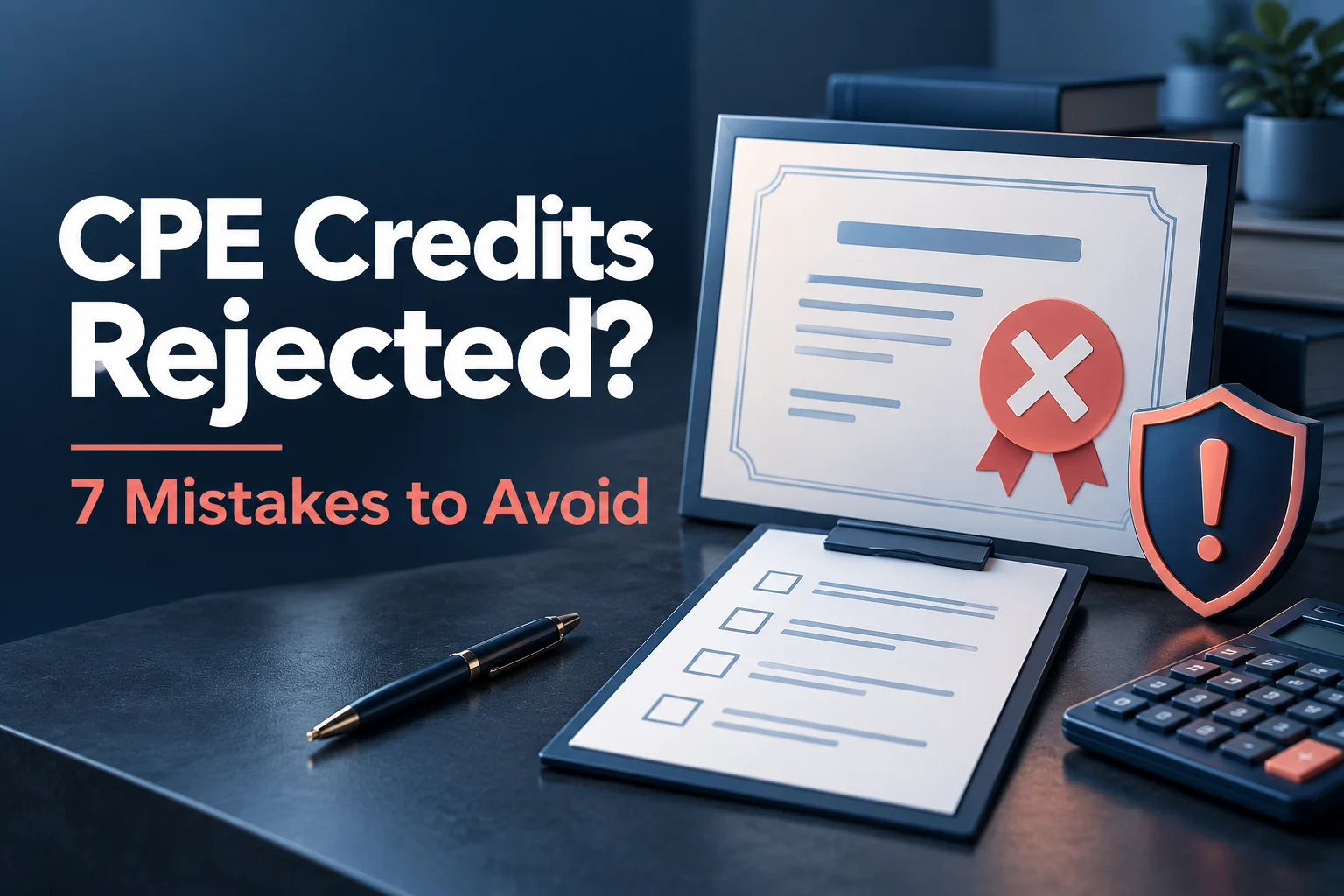
Can Your CPE Credits Be Rejected? 7 Mistakes That Could Put Your CPA License at Risk
Imtiaz Munshi, CPA

Registration Completed

Something Went Wrong!! Please Try Again.

Registration Completed

Please Update Your Profile to Claim Your Continuing Education Credits.

Thank you for subscribing 7 Days Free Trial.
Please upgrade your browser to use MYCPE ONE
Experience MYCPE ONE at its best! Upgrade your browser for a more interactive, user-friendly interface, and stay ahead in your professional development journey.
Upgrade NowHow did you find out about us?
We were looking so hard for you now that you are finally here, So would you tell us how you found out about us?

What is your primary purpose to use MYCPE ONE?

Thank you for submitting your inquiry! We will contact you soon.
CloseOur Promise