©2026 - www.my-cpe.com All rights reserved
support@my-cpe.com7 Days Free Trial
for Enterprise Subscriptions
You have Not Selected the Monthly or Annual Plan

#1 Global Platform for Continuing Education
Create your Free Account | Get Unlimited Access only @$199/Year ( View Details )
Trusted by 250,000+ Professionals for Continuing Education
Create Your Account 1/2
Already have an account? Log In
To Continue using Trial, please verify your email address
Didn’t received verification email? Resend Email
You can cancel anytime during your trial period.
Become a
MYCPE ONE Member
@ $299 $199
33% Discount on Annual Subscription


Complete Access to 12,000+ Hours of Content
Trusted by 250,000+ Professionals
"Steven was knowledgeable and thorough…”
Steven was knowledgeable and thorough in his information about the product and what is offered. He was empathetic to my situation. He went above and beyond answering all of my many questions. Excellent service!

Crystal lovejoy
"Great Customer Service”
Great service and very patient as I asked several questions. Steven answered all my questions and helped me make the right decision in my subscription purchase. Thank you.

Lori corry
"It is what it advertised to be”
It is what it advertised to be. Professional quality training and CPE tracking and certificates; systems knows AZ CPA CPE requirements and categories. I've needed help on several occasions and the assistance was quick and effective; however, there were some problems with data entry. The assistance sometimes asks for input, but when I try to type it is dissallowed for some reason. On several occasions I had to close the popup to get it out of my way.

Brian Carey
"Great customer service”
Great customer service. Classes are pertinent. Great value

Steve

Trusted by 250,000+ Professionals
Trusted by 250,000+ Professionals
"Steven was knowledgeable and thorough…”
Steven was knowledgeable and thorough in his information about the product and what is offered. He was empathetic to my situation. He went above and beyond answering all of my many questions. Excellent service!
Crystal lovejoy
"Great Customer Service”
Great service and very patient as I asked several questions. Steven answered all my questions and helped me make the right decision in my subscription purchase. Thank you.
Lori corry
"It is what it advertised to be”
It is what it advertised to be. Professional quality training and CPE tracking and certificates; systems knows AZ CPA CPE requirements and categories. I've needed help on several occasions and the assistance was quick and effective; however, there were some problems with data entry. The assistance sometimes asks for input, but when I try to type it is dissallowed for some reason. On several occasions I had to close the popup to get it out of my way.
Brian Carey
"Great customer service”
Great customer service. Classes are pertinent. Great value
Steve
Subscribe Now at $199/ 12 Months
Topic of Interest
Select the topics of your interest to receive Webinars/Virtual Events/E-Books/Podcasts of your interest.
Selected Topics
Important: Course Deactivation Alert
Below mentioned Courses will be deactivated soon due to outdated content. Complete the course within the next 7 days to receive credits. After Expiry date, the course will be unavailable for credit. For assistance or inquiries, please contact our support team at support@my-cpe.com.
Course Name
Thank You.
Artificial Intelligence is rapidly transforming tax preparation. From a novel tool, it has now evolved as an essential component in managing daily tax workflows.
The tools had fastened the manual entry process by 60–70%, reducing manual data entry error up to 90%. AI acts as a strategic partner enabling professionals to automate data entry, identify tax-saving opportunities, and ensure real-time regulatory compliance.
In accounting there are basically two distinct approach that drives the integration of innovation. One traditional machine learning and second generative AI technology.
Machine Learning makes tax preparation faster by automatically extracting data, reducing errors, and forecasting tax liabilities.

Unlike traditional automation machine learning, Generative AI creates new content based on pre-trained models. It is flexible and suitable for broader applications in tax research, regulatory interpretation, scenario analysis, and forecasting.
Buddle this together, and you get an extraordinary tool to automate routine tasks, enhances analytical capabilities, and simplify the complex process.
CPAs manage the most valuable and sensitive information of any organization like tax ID numbers, social security numbers, and P&L. Data security remains a critical concern. Uploading sensitive client information into public AI models can breach privacy.
The average cost of a data breach in the United States is $10.22 million, in 2025 a surge of 9% compared to 2024.
Generative AI can fabricate and present incorrect tax law or information confidently, leading to significant penalties if not verified.
AI lacks contextual insight and cannot understand the nuances entirely, which leads to misinterpretation. So, it requires human review to evaluate the accuracy of any output. Tools like ChatGPT, Copilot, Perplexity, and TaxGPT assist with tax research, but their accuracy depends on precise prompts and professional oversight.
Complacency may lead to missed errors, and entry-level staff may not develop necessary foundational skills if AI performs all routine work.
AI algorithms trained on biased data can produce unfair outcomes. There are some cases of AI being biased, and different tools may produce inconsistent, flawed results.
CPAs must navigate regulatory frameworks that govern professional responsibilities when using AI technologies. AICPA and IRS clearly state the guidelines and provisions when using AI.
The recent update in Statements on Standards for Tax Services (SSTSs) incorporated the crucial AI-related provisions for tax professionals.
Section 1.3: Mandatory effort to safeguard taxpayers' data beyond basic security measures, and ensure:
Section 1.4: “Use of the tool does not absolve the member of their professional obligations".
A CPA or tax professional acting in the authority of tax work is ultimately responsible for all work and outcomes, even if the AI tools have generated it.
Several provisions of Circular 230 directly impact the tax professionals' AI usage.
Section 10.22 Due Diligence: When preparing tax return professional must exercise due diligence. When using AI must inquire if the provided information are correct, consistent and complete.
Section 10.37 Written Advice: Prohibit giving false opinions knowingly, recklessly, or in gross incompetence. When advising a client based on the AI generated response, validate against authoritative sources.

| Courses | Link | Credit | Review |
|---|---|---|---|
| AI in Tax & Audit: Efficiency Meets Compliance | Click Here | 1 | 4.3 |
| ChatGPT and Taxation Law Research for Professionals | Click Here | 2.5 | 4.7 |
| Real Estate Assets Planning & AI Impact On It | Click Here | 2 | 4.7 |
| AI in Taxes: Innovations, Challenges, and Opportunities | Click Here | 1 | 4.6 |
| Code Breakers: Tax Research for the 21st Century | Click Here | 1 | 4.7 |

The role of the CPA is shifting from "bean counter" to "financial architect," where the professional interprets AI outputs, advises on strategy, and ensures ethical compliance, ultimately creating a more strategic, efficient, and valuable
AI for tax preparers automates routine tasks and enhances analytical capabilities. The Future of Professionals Report shows that tax and accounting professionals could gain approximately four hours per week within one year through AI-powered automation. Professionals currently use AI for drafting emails, reviewing documents, summarizing information, and conducting basic research.
AI can automate data extraction from invoices and forms, error detection and anomaly identification, tax liability forecasting, document categorization, compliance review, email drafting, and basic document organization. These applications free professionals to focus on strategy and client advisory work.
AI can support tax compliance by identifying patterns, checking inconsistencies, and summarizing regulations. But outputs may be incomplete, outdated, or incorrect, especially with complex jurisdiction rules. So, the CPAs must review and validate all AI-generated work.
Intelligent Data Capture (OCR) reads and categorizes tax documents (W-2s, 1099s, K-1s) with 95-99% accuracy. It eliminates manual data entry, automatically map invoices and forms directly into tax software.
NLP allows AI to understand tax laws, IRS notices, and client queries. It can be used for tax research, chatbot support, regulatory interpretation, and responding to client questions.
Always start with low-risk tasks like data extraction, organizing, and email drafting. When you get an appropriate and relevant outcome, start with the repetitive task. When satisfied and confident, then gradually expand into research and planning with proper review.

Imtiaz Munshi, CPA (US), is the CFO at Azstec, LLC and a trusted advisor to high-net-worth entrepreneurs. A seasoned tax planner and a business strategist with his 25 years of experience, he helps businesses grow smarter and stronger. Imtiaz specializes in guiding entrepreneurs and enterprises through complex financial decisions with clarity and confidence. His passion lies in simplifying strategy, optimizing tax outcomes, and driving sustainable growth. Through his work and thought leadership, Imtiaz continues to empower CPAs and business owners to stay ahead in an evolving financial landscape shaped by AI, ESG, and data-driven change.
Table of Contents


Business Insights: Remote Work, Decision Bias & Wine Fraud



How AI Is Changing Marketing for CPA Firms
Agentic AI Workflows for Management Accountants
Compliance vs Compliance Plus: Pricing and Features Compared for Your Team
 Amrit Singh
Offshore Bookkeeping vs. In-House: What UK Accounting Firms Should Consider
 Christopher Rivera
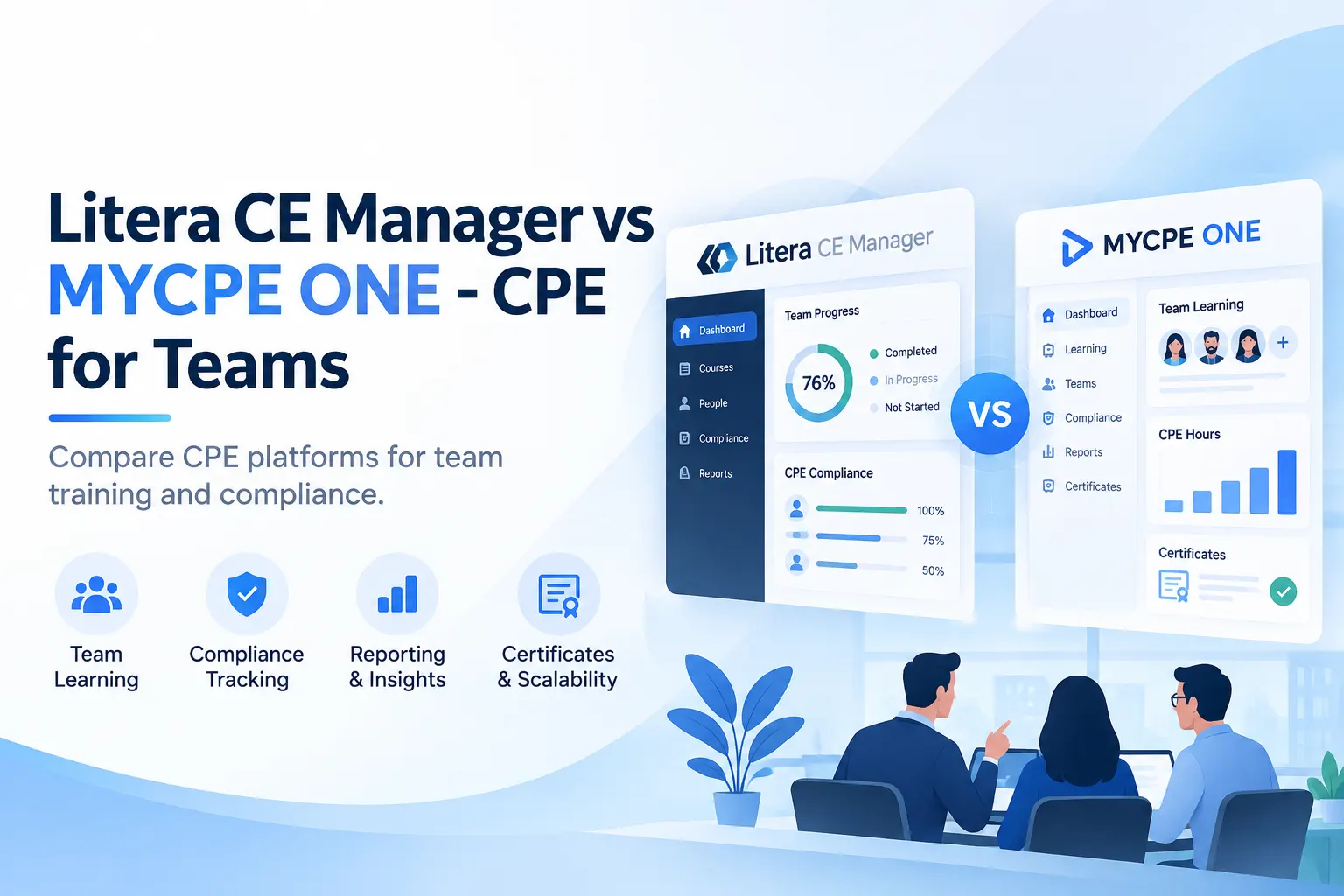

Registration Completed

Something Went Wrong!! Please Try Again.

Registration Completed

Please Update Your Profile to Claim Your Continuing Education Credits.

Thank you for subscribing 7 Days Free Trial.
Please upgrade your browser to use MYCPE ONE
Experience MYCPE ONE at its best! Upgrade your browser for a more interactive, user-friendly interface, and stay ahead in your professional development journey.
Upgrade NowHow did you find out about us?
We were looking so hard for you now that you are finally here, So would you tell us how you found out about us?

What is your primary purpose to use MYCPE ONE?

Thank you for submitting your inquiry! We will contact you soon.
CloseOur Promise