©2026 - www.my-cpe.com All rights reserved
support@my-cpe.com7 Days Free Trial
for Enterprise Subscriptions
You have Not Selected the Monthly or Annual Plan

#1 Global Platform for Continuing Education
Create your Free Account | Get Unlimited Access only @$199/Year ( View Details )
Trusted by 250,000+ Professionals for Continuing Education
Create Your Account 1/2
Already have an account? Log In
To Continue using Trial, please verify your email address
Didn’t received verification email? Resend Email
You can cancel anytime during your trial period.
Become a
MYCPE ONE Member
@ $299 $199
33% Discount on Annual Subscription


Complete Access to 12,000+ Hours of Content
Trusted by 250,000+ Professionals
"Steven was knowledgeable and thorough…”
Steven was knowledgeable and thorough in his information about the product and what is offered. He was empathetic to my situation. He went above and beyond answering all of my many questions. Excellent service!

Crystal lovejoy
"Great Customer Service”
Great service and very patient as I asked several questions. Steven answered all my questions and helped me make the right decision in my subscription purchase. Thank you.

Lori corry
"It is what it advertised to be”
It is what it advertised to be. Professional quality training and CPE tracking and certificates; systems knows AZ CPA CPE requirements and categories. I've needed help on several occasions and the assistance was quick and effective; however, there were some problems with data entry. The assistance sometimes asks for input, but when I try to type it is dissallowed for some reason. On several occasions I had to close the popup to get it out of my way.

Brian Carey
"Great customer service”
Great customer service. Classes are pertinent. Great value

Steve

Trusted by 250,000+ Professionals
Trusted by 250,000+ Professionals
"Steven was knowledgeable and thorough…”
Steven was knowledgeable and thorough in his information about the product and what is offered. He was empathetic to my situation. He went above and beyond answering all of my many questions. Excellent service!
Crystal lovejoy
"Great Customer Service”
Great service and very patient as I asked several questions. Steven answered all my questions and helped me make the right decision in my subscription purchase. Thank you.
Lori corry
"It is what it advertised to be”
It is what it advertised to be. Professional quality training and CPE tracking and certificates; systems knows AZ CPA CPE requirements and categories. I've needed help on several occasions and the assistance was quick and effective; however, there were some problems with data entry. The assistance sometimes asks for input, but when I try to type it is dissallowed for some reason. On several occasions I had to close the popup to get it out of my way.
Brian Carey
"Great customer service”
Great customer service. Classes are pertinent. Great value
Steve
Subscribe Now at $199/ 12 Months
Topic of Interest
Select the topics of your interest to receive Webinars/Virtual Events/E-Books/Podcasts of your interest.
Selected Topics
Important: Course Deactivation Alert
Below mentioned Courses will be deactivated soon due to outdated content. Complete the course within the next 7 days to receive credits. After Expiry date, the course will be unavailable for credit. For assistance or inquiries, please contact our support team at support@my-cpe.com.
Course Name
Thank You.
The role of accountants has shifted. The role has now shifted from basic data entry to high-level strategic advising. Thomson Reuters reports that about 10% of tax and accounting professionals actively use ChatGPT. PwC is deploying Claude to build technology. Around 82% to 98% of accounting firms and professionals report utilizing AI or automation tools for daily workflows.
Artificial intelligence is transforming accounting by automating routine tasks and shifting the role of accountants from basic data entry to high-level strategic advising. The shift is real. The numbers are backed up. This reshapes core accounting processes, professional roles, measurable benefits, and the challenges that come with it.
AI in accounting is not the only single tool. It is a set of interconnected technologies. Computer systems learn from data, make decisions, and improve over time.
Three core technologies drive most of what is happening in accounting today: machine learning, natural language processing, and robotic process automation. Each handling a different layer of financial work.

Days of manual effort now take minutes. That's the practical reality of AI across core accounting functions. Financial data moves faster, errors are detected earlier, and professionals spend less time on data analysis and advisory work.
Accountants' roles are changing. They now play a more prominent and critical role in observing and analyses. They are no more an operator but decision makers or the ones who can understand and influence decisions.
Firms preparing their teams for these changing responsibilities can use structured AI CPE training for CPA firms to build practical AI knowledge across the organization.

When its AI is hitting the industry, you are not more responsible for daily manual tasks but authority for managing the task.
AI is not simply eliminating accounting work; it is changing the type of work accountants perform. As firms adopt AI, automation, data analytics, and cloud-based systems, new roles are emerging.

AI is reshaping accounting. From processing transactions to serving clients, AI plays a crucial role. They are helping accountants deliver faster closes, lesser errors, and stronger advisory capacity. Having the advantages, the limitation of implementation costs, skills gaps, and data security concerns are real.
A proper utility of AI requires agile planning, not just enthusiasm. AI is not replacing the accountants rather a highly effective collaborative tool that can bring some real marvelous outcome when paired with human judgement.
Start small, identify repetitive tasks, explore tools built for those specific needs, and develop your technical AI literacy. The goal is steady, strategic adoption, not some overnight transformation.
Small steps first. The smaller the firms the smaller the step will be. Start with the daily repetitive, low-risk processes. Invoice processing, reconciliations, and document capture is a great starting point to expanding AI adoption across broader accounting workflows.
AI primarily reduces the accountants who are solely involved in managing the repetitive administrative work. But do not eliminate accounting roles. Professionals remain essential for judgment, client communication, financial interpretation, compliance, and reviewing AI-generated outputs.
AI can reduce operational costs by automating repetitive activities, improving processing speed, and minimizing manual errors. However, implementation, software, training, and integration are a costly process, especially in their experimental and trial error phase. So, implementation is essential, but before heading it should be thoroughly evaluated.

Imtiaz Munshi, CPA (US), is the CFO at Azstec, LLC and a trusted advisor to high-net-worth entrepreneurs. A seasoned tax planner and a business strategist with his 25 years of experience, he helps businesses grow smarter and stronger. Imtiaz specializes in guiding entrepreneurs and enterprises through complex financial decisions with clarity and confidence. His passion lies in simplifying strategy, optimizing tax outcomes, and driving sustainable growth. Through his work and thought leadership, Imtiaz continues to empower CPAs and business owners to stay ahead in an evolving financial landscape shaped by AI, ESG, and data-driven change.
Table of Contents

Emotional Intelligence for Internal Auditors


-1790094849.webp-1792148247 "Executing Skills-Based Workforce Planning")
Executing Skills-Based Workforce Planning

Decision-Making with Scenario Planning & Sensitivity Analysis

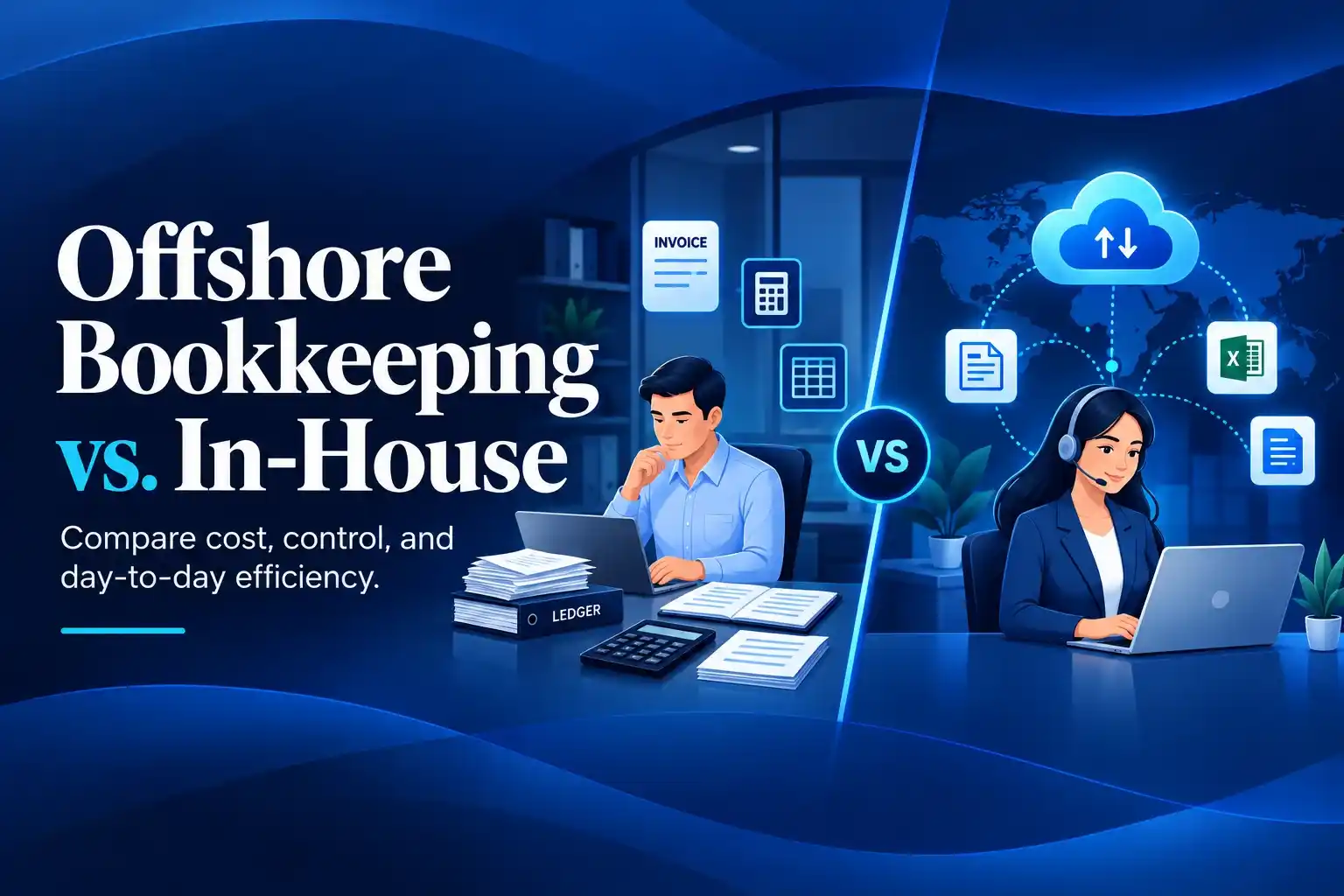
Offshore Bookkeeping vs. In-House: What UK Accounting Firms Should Consider
 Christopher Rivera

Registration Completed

Something Went Wrong!! Please Try Again.

Registration Completed

Please Update Your Profile to Claim Your Continuing Education Credits.

Thank you for subscribing 7 Days Free Trial.
Please upgrade your browser to use MYCPE ONE
Experience MYCPE ONE at its best! Upgrade your browser for a more interactive, user-friendly interface, and stay ahead in your professional development journey.
Upgrade NowHow did you find out about us?
We were looking so hard for you now that you are finally here, So would you tell us how you found out about us?

What is your primary purpose to use MYCPE ONE?

Thank you for submitting your inquiry! We will contact you soon.
CloseOur Promise