

Scale your CPA & accounting firm with elite offshore talent trusted by 1,000+ firms.
Thank you for your interest. Our due diligence checklist will be shared with you within 48 hours.

Real estate firms operate in a business where speed, precision, and client service directly determine profitability. Brokers and property managers must handle listings, leasing, client communications, and compliance without fail, all while margins tighten.
This is where offshoring for real estate has proven transformative. It gives brokers and property managers the leverage to scale without inflating payroll, so your local team can focus on showings, negotiations, owner relationships, and growth.
For deeper context on when to build vs. buy and how to staff fast, read Offshore vs. In-House Accounting: Which is Right for Your Firm?
Done right, it’s not a handoff; it’s a hybrid model where client-facing moments stay local while a offshore team in real estate runs the high-volume, rules-based work (listings, leasing admin, maintenance triage, AR, reporting) with consistency and speed.
You gain extended hours, standardized SOPs, and measurable SLAs. That means faster listing launches, same-day maintenance scheduling, tighter month-end closes, and clearer owner updates, without asking your onshore staff to work late or do double duty.
PropTech and collaboration tools make the handoffs seamless; disciplined QA keeps quality high; and cost per unit trends down as volume grows.
This property management outsourcing guide will show you:
Offshoring for real estate refers to engaging skilled professionals outside your domestic market to manage repetitive or back-office tasks. These offshore teams integrate with your existing systems (CRM, MLS, property management platforms) and handle everything from listings and leasing inquiries to bookkeeping and compliance support.


The cost of offshoring for Real Estate varies with certain factors. It includes the services required, the size of the property portfolio, and the specific firm chosen for outsourcing.
Most firms typically charge a percentage of the rental income from the properties they manage. While this may seem like an added cost at first glance, it’s important to weigh it against the long-term financial benefits. These can include increased operational efficiency, reduced vacancy rates, expert compliance handling, and improved tenant satisfaction, all of which contribute to stronger ROI over time.
MYCPE ONE takes a different approach. We offer clear, fixed monthly management fees for a wide range of real estate outsourcing roles, with no link to property size or fluctuating rental income. This gives you transparent, predictable costs and the confidence to plan your growth without worrying about hidden charges or variable percentages.

This section explains how offshoring for real estate creates leverage, beyond generic “benefits” by changing the way work flows through your firm.
Repeatable tasks (listing ops, application completeness checks, AP batching) are ideal for SOPs, templates, and QA scorecards. Standard work reduces variance and error rates.
Dedicated coordinators clear high-volume queues (inquiries, tickets, updates) continuously, cutting wait times and preventing end-of-day/week backlogs.
Follow-the-sun coverage enables same-day scheduling, next-morning owner updates, and near-real-time listing refreshes—shrinking days on market and boosting lead conversion.
Teams that live in AppFolio/Buildium/Yardi, MLS tools, and CRM/telephony systems execute faster with fewer clicks and cleaner audit trails.
Ticketing + call recording + dashboards create a measurable data trail (SLA adherence, first-contact resolution, DOM impact) so you can coach with facts, not anecdotes.
Modern stacks (PMS + CRM + telephony + ticketing) make distributed delivery reliable and auditable—from scripted responses to automated escalations.
Industry research confirms that outsourcing and offshoring are now mainstream growth drivers:
What that means for your operations: offshoring isn’t just a cost play, it’s a mainstream operating model that scales capacity, tightens SLAs, and lifts quality.
1. Cost-effectiveness without compromising quality
Offshore teams execute standardized work at a lower fully loaded cost. Savings often fund better marketing, improved make-readies, or growth hires locally.
2. Access to specialized expertise
You get specialists in property accounting, leasing ops, maintenance coordination, and listing ops who do this every day - faster start, fewer mistakes, better compliance.
3. Enhanced flexibility & scalability
Real estate is cyclical. Scale up for leasing season or acquisitions and scale back when it’s quiet, without adding permanent headcount.
4. Improved focus on core activities
Your onshore team stays with owners, residents, tours, and negotiations- work that actually moves revenue and retention.
5. Extended Service Hours & Faster SLAs
Different time zones mean same-day scheduling, quicker updates, and fewer inbox backlogs; owners and residents feel the difference.
Even with clear advantages, offshoring can create hurdles. Here’s how to solve them:
Problem 1: Poor project management
Solution: Move everything into a shared inbox/ticketing system; publish escalation paths.
Problem 2: Vague Task Instructions
Solution: Provide screen-recorded guides, “definition of done” checklists, and structured task templates with scope and deadlines.
Problem 3: Unrealistic timelines
Solution: Roll out in phases, use SLA tiers, and set workload benchmarks so teams know what’s achievable.
Problem 4: Cultural & Compliance Gaps
Solution: Train staff on compliance, standardize brand voice, and route sensitive data through approved systems only.
Choosing a real estate outsourcing partner is a strategic decision that impacts cost, service quality, compliance, and resident/owner experience. Use this quick, practical framework to select with confidence.
List the workflows you’ll hand off first (e.g., maintenance triage, leasing inquiry response, application processing, renewals, AR/AP basics, owner reporting, listing ops, resident support). Define success in plain numbers: volume, hours of coverage, SLA targets, and quality bars.
Want a week-by-week feel for onboarding? What Happens in the First 90 Days with an Outsourced Bookkeeping Team walks through setup milestones, QA cadence, and the nesting period so you can mirror it for leasing or resident-care pods.
Offshoring for real estate is no longer optional for firms that want to thrive in a competitive market. With the right provider, a structured onboarding plan, and disciplined SOPs, firms can unlock faster growth, happier clients, and healthier margins.
Start small, measure often, and build from proven workflows using this guide and MYCPE ONE’s offshoring resources as your blueprint.
MYCPE ONE is the trusted partner for over 3,000 CPA and accounting firms worldwide, empowering them to scale, innovate, and achieve operational excellence. With a decade of experience, a unified platform, and 3000+ team members across 40+ offices, MYCPE ONE delivers comprehensive offshoring, CPE and L&D, website solutions, digital marketing services, M&A advisory, and daily news insights - all designed to help firms attract top talent, maintain compliance, and drive sustainable growth.
Backed by SOC 2, ISO 27001, and GDPR certifications, MYCPE ONE ensures the highest standards of data security and client support for every firm.
Maintenance intake & scheduling; then application processing and AR basics. They’re high-volume, rule-driven, and easy to measure.
Use local caller IDs, shared inboxes, approved templates, and clear SLAs. What they notice is faster responses and clearer updates.
Start with a 2–3 person pod (PM coordinator, maintenance coordinator, bookkeeper). Add a leasing associate and analyst as metrics stabilize.
MFA/SSO, least-privilege access, device posture checks, audit trails, and segregation of duties; QA-sample 5–10% weekly.
Most firms see cycle-time and backlog improvements within the first 6–8 weeks; cost per unit and CSAT trends typically follow in quarter one.

Shalin (Shawn) Parikh, CA, is the Co-Founder and CEO of MYCPE ONE, a global platform empowering 3,000+ CPA firms through innovative CPE solutions, offshoring, marketing, M&A, and beyond. With over 15 years of experience, Shawn helps accounting and tax professionals scale smarter, a visionary entrepreneur, value investor, and hardcore believer in using tech and education to drive change. Passionate about innovation and growth, he continues to inspire firms worldwide to embrace AI, strategic thinking, and long-term success. Beyond business, Shawn drives social impact through the Social Eye Foundation, advocating for accessible education and stronger communities.


How to Scale CAAS (Client Accounting & Advisory Service) + VCFO with Offshoring!


How To Scale CFO And Advisory Services With Offshoring

Bursting myths around Offshoring for an Accounting firm


Best Offshore Staffing Companies for CPA Firms in the Philippines (2026)
 Christopher Rivera
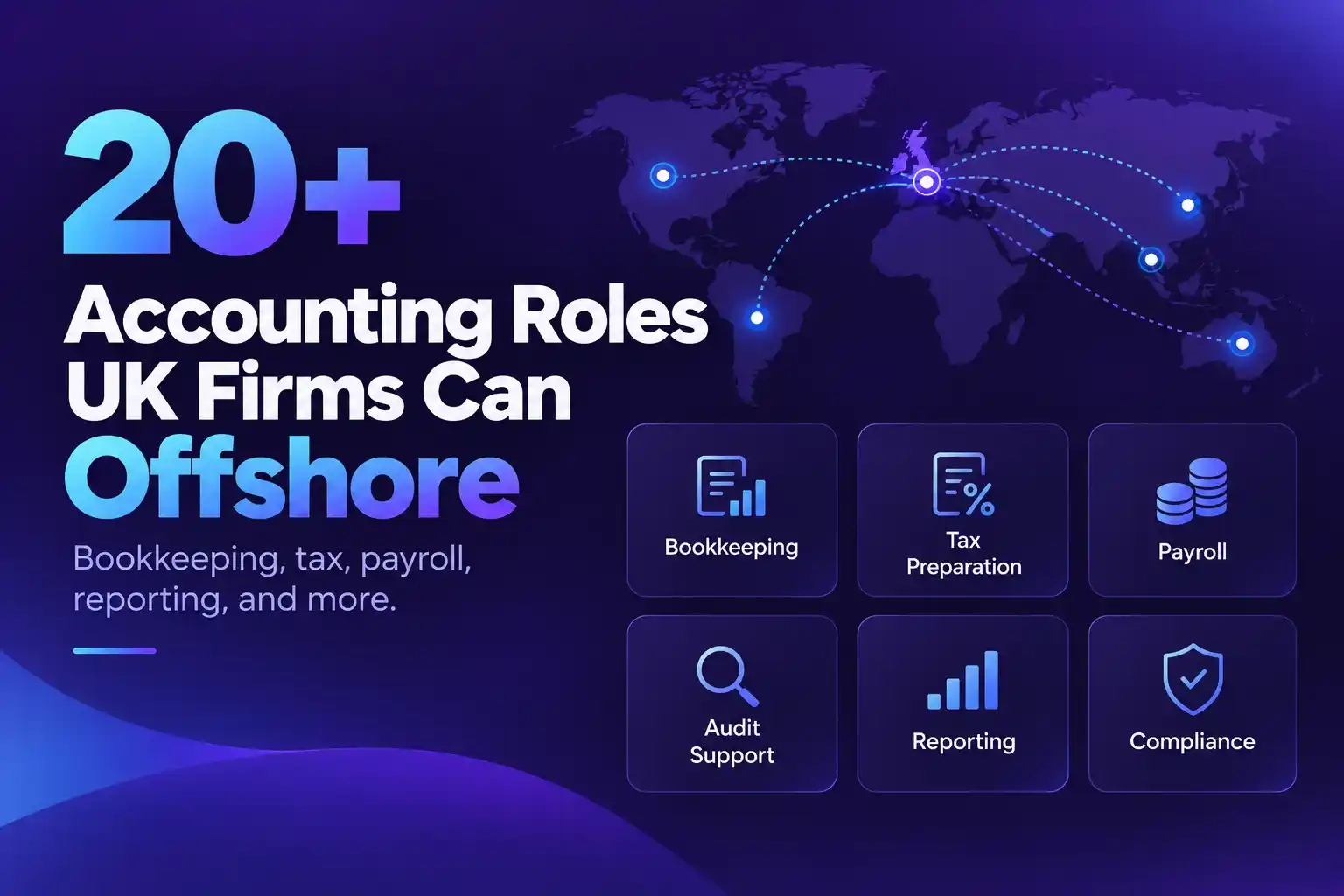
What Accounting Work Can UK Firms Offshore? 20+ Roles & Functions
 Amrit Singh





