Scale your CPA & accounting firm with elite offshore talent trusted by 1,000+ firms.
Thank you for your interest. Our due diligence checklist will be shared with you within 48 hours.

Finance and accounting outsourcing (FAO) is when a company hands finance functions like payroll, accounts payable, reconciliations, reporting, and tax support to an external or offshore team, while the CFO keeps strategy in-house. It's no longer just a cost-cutting move. CFOs use it to reduce operating costs by 20% to 60%, gain specialized expertise, and scale finance operations on demand.
This guide covers what to outsource, how to choose the right partner, and how to build a hybrid finance model without losing control.
CFO support outsourcing refers to engaging external professionals or firms to handle specific finance and accounting functions that traditionally sit under the CFO’s domain.
Instead of relying solely on an in-house team, organizations partner with CFO outsourcing companies or offshore service providers to manage activities such as reporting, payroll, reconciliations, compliance, or even specialized areas like tax structuring and ESG reporting.
This model doesn’t replace the CFO; it strengthens their hand by offloading routine or resource-intensive work to experts who bring both scale and technology. For many businesses, especially those navigating growth or resource constraints, hire virtual CFO solutions provide access to strategic financial leadership without the cost of a full-time executive, enabling greater efficiency, flexibility, and growth.
The CFO's job now extends far beyond simply keeping the books and preparing reports. Today's CFOs must operate effectively, drive digital growth, and manage risks effectively. They must ensure the numbers are accurate, but also help the company make informed financial decisions, navigate market fluctuations, and comply with all relevant regulations.
This expanding mandate makes outsourcing critical. It addresses persistent challenges such as the shrinking talent pool of accounting graduates in the U.S., the rising cost of compliance, and the demand for advanced analytics capabilities.
Outsourcing provides access to skilled professionals, often in offshore locations, who can take on transactional or specialized tasks, freeing CFOs and their internal teams to focus on higher-order priorities.
Outsourcing doesn't mean giving up control. On the other hand, the CFO takes on the job of architect and steward, making sure the outsourced model fits with company goals and risk frameworks. This involves mapping which processes to retain in-house and which to delegate, modeling the long-term economics of outsourcing, and setting strict guardrails around compliance and data security.
The CFO must also act as the chief integrator. Outsourcing works best when external teams are treated as an extension of the enterprise rather than a siloed vendor. This calls for set KPIs planned governance checks, and getting people on board with the culture.
In other words, the CFO has to balance saving money with keeping things together, making sure outsourced work makes the finance team better, not splits it apart.

The benefits of outsourcing are multi-dimensional. The most obvious is cost efficiency. Salaries, benefits, recruitment, and infrastructure costs make in-house finance functions expensive.
By contrast, outsourcing shifts these expenses into a variable cost model where you pay for services as you use them. Many organizations report 30–50% reductions in their finance operating expenses after transitioning to an outsourced model.
Equally important is access to specialized expertise. Few mid-sized firms can afford in-house experts in areas such as multi-jurisdiction tax, IFRS reporting, or ESG compliance. Outsourcing partners often maintain dedicated teams for these disciplines, allowing CFOs to tap into capabilities they might otherwise lack.
Scalability is another major benefit. Finance workloads are not static; they fluctuate with audits, fundraising, acquisitions, or market entry. Outsourced teams can be expanded or scaled down far more quickly than internal staff.
Finally, outsourcing brings technology and process maturity. Leading providers deploy automation platforms for reconciliations, forecasting, and anomaly detection. These tools, bundled with delivery, help clients modernize without requiring heavy internal investment.
Almost every finance process is now considered eligible for outsourcing, though the scope varies by company maturity and risk appetite. Transactional tasks like accounts payable, payroll, and reconciliations are the most common entry points. As comfort grows, firms often extend into financial reporting, forecasting, audit preparation, and tax strategy support.
For CFOs mapping scope, our comprehensive guide on 100+ Tasks Accounting Firms Can Outsource offers a detailed starting point.
While outsourcing offers clear advantages, in-house teams still play a vital role. An in-house CFO provides immediacy, cultural alignment, and direct control - traits essential when finance is deeply embedded in daily operations, such as product pricing or treasury policy. Outsourced teams, on the other hand, offer cost efficiency, access to diverse expertise, and scalability.
Increasingly, CFOs are adopting a hybrid model, where strategic leadership and governance remain internal while transactional or specialized tasks are right-shored. This approach maintains accountability close to the business while unlocking the flexibility of offshore teams.
At MYCPE ONE, we've seen up close how outsourcing changes finance teams. Our Remote CFO Services combine embedded leadership with offshore delivery pods, allowing clients to keep governance close while outsourcing execution.
We’ve worked with more than 200 CFOs and enterprises, deploying over 3,000 staff across global delivery centers. Collectively, these partnerships have delivered more than $300 million in cost savings, alongside improvements in speed, accuracy, and scalability.
Read how MYCPE ONE helps a US-based mid-sized business, where a geo-diversified team achieved a 60% faster turnaround, zero missed validations, and $1.4 million in savings over two years. The client reduced onshore hiring by 60% while scaling offshore staff to 15, with no compromise on compliance or predictability.
This illustrates the essence of our model: strategy in-house, execution right-shored with governance, security, and continuity built in from the start.
Selecting a provider is about more than price. CFOs should evaluate a partner’s track record in their industry, the maturity of their technology stack, and their approach to compliance and data security. Contracts should include clear performance metrics and explicit requirements for cybersecurity standards such as SOC 2, ISO, or GDPR compliance.
Cultural fit also matters. Finance leaders often underestimate the impact of shared communication styles, working norms, and definitions. The most successful outsourcing partnerships are those where the provider feels like an extension of the finance team rather than a distant contractor.
For a detailed framework, see our full guide on How to Identify the Right Outsourcing Partner.
Additional factors CFOs should weigh include:
When these elements align, outsourcing becomes less of a vendor relationship and more of a true extension of your finance function.

Outsourcing itself is evolving.
For CFOs considering outsourcing, a phased approach works best. Begin with a process assessment, identifying repetitive or high-volume tasks that can be transitioned with low risk. From there, pilot a limited scope, such as payroll or reconciliations, before expanding into reporting, forecasting, or tax.
During this transition, governance is key. Establish performance metrics such as first-pass yield, cycle time reductions, and compliance accuracy. Schedule regular reviews to monitor performance and refresh playbooks as the scope expands.
By building gradually, CFOs ensure outsourcing delivers not just savings but also lasting process improvement and risk resilience.
For modern finance leaders, finance and accounting outsourcing is more than an efficiency play; it is a foundation for resilience and growth. When designed well, it creates cost savings, unlocks specialized expertise, and equips CFOs to focus on innovation and strategic direction.
The choice isn’t about replacing in-house teams with offshore ones. It’s about creating a balanced operating model, where strategic leadership stays close to the business while repeatable or specialized work is handled by expert partners.
Whether through outsourcing firms or Remote CFO Services like those offered by MYCPE ONE, the objective remains the same: a finance function that is lean, agile, and future-ready.
For additional perspective on how organizations balance in-house vs. offshore setups, see our related article: In-House vs. Offshore: What CFOs Need to Know Before Building Their Finance Teams.
MYCPE ONE is the trusted partner for over 3,000 CPA and accounting firms worldwide, empowering them to scale, innovate, and achieve operational excellence. With a decade of experience, a unified platform, and 3000+ team members across 40+ offices, MYCPE ONE delivers comprehensive offshoring, CPE and L&D, website solutions, digital marketing services, M&A advisory, and daily news insights - all designed to help firms attract top talent, maintain compliance, and drive sustainable growth.
Backed by SOC 2, ISO 27001, and GDPR certifications, MYCPE ONE ensures the highest standards of data security and client support for every firm.
Finance and accounting outsourcing (FAO) means hiring external professionals or offshore providers to handle finance functions that normally sit under the CFO. Examples include payroll, accounts payable, reconciliations, financial reporting, and tax support. It doesn't replace the CFO. It frees the finance team to focus on strategy, capital allocation, and growth.
Companies typically save 20% to 60% on finance operating costs by outsourcing. Many report 30–50% reductions after the transition. The savings come from turning fixed costs like salaries, benefits, recruiting, and infrastructure into a variable model. Other gains include faster cycle times, better compliance accuracy, and the ability to scale teams on demand.
The most common starting points are transactional tasks: accounts payable, accounts receivable, payroll, bank reconciliations, and bookkeeping. Once those run smoothly, CFOs often expand into financial reporting, forecasting, audit preparation, tax compliance, and specialized work like IFRS reporting or ESG compliance. Strategic decisions, governance, and treasury policy usually stay in-house.
Yes, if the provider holds recognized certifications like SOC 2, ISO 27001, and GDPR compliance, and the contract includes explicit data protection clauses. CFOs should also confirm role-based access controls, secure ERP integration, and third-party risk reviews. Security needs to be built into the vendor's delivery model from day one, not added later.
CFOs should look beyond price. The key criteria are:
Partners that operate as an extension of the finance team usually deliver the strongest results.

Nemin Vora, a CA and Tax Attorney, leads Client Relations at MYCPE ONE. With 7+ years of experience at Big 4 and top public accounting firms across America, he helps U.S. firms scale globally through remote talent, offshoring, and cloud operations. Known for his sharp tax insights and practical approach to firm growth, Nemin is a dynamic speaker. He breaks down complex topics such as leadership, AI, global staffing, and practice expansion into relatable lessons that professionals actually enjoy learning. Beyond the strategy decks, Nemin is a learner at heart, a stage actor, and a tech enthusiast.


How to Scale CAAS (Client Accounting & Advisory Service) + VCFO with Offshoring!


How To Scale CFO And Advisory Services With Offshoring

Bursting myths around Offshoring for an Accounting firm
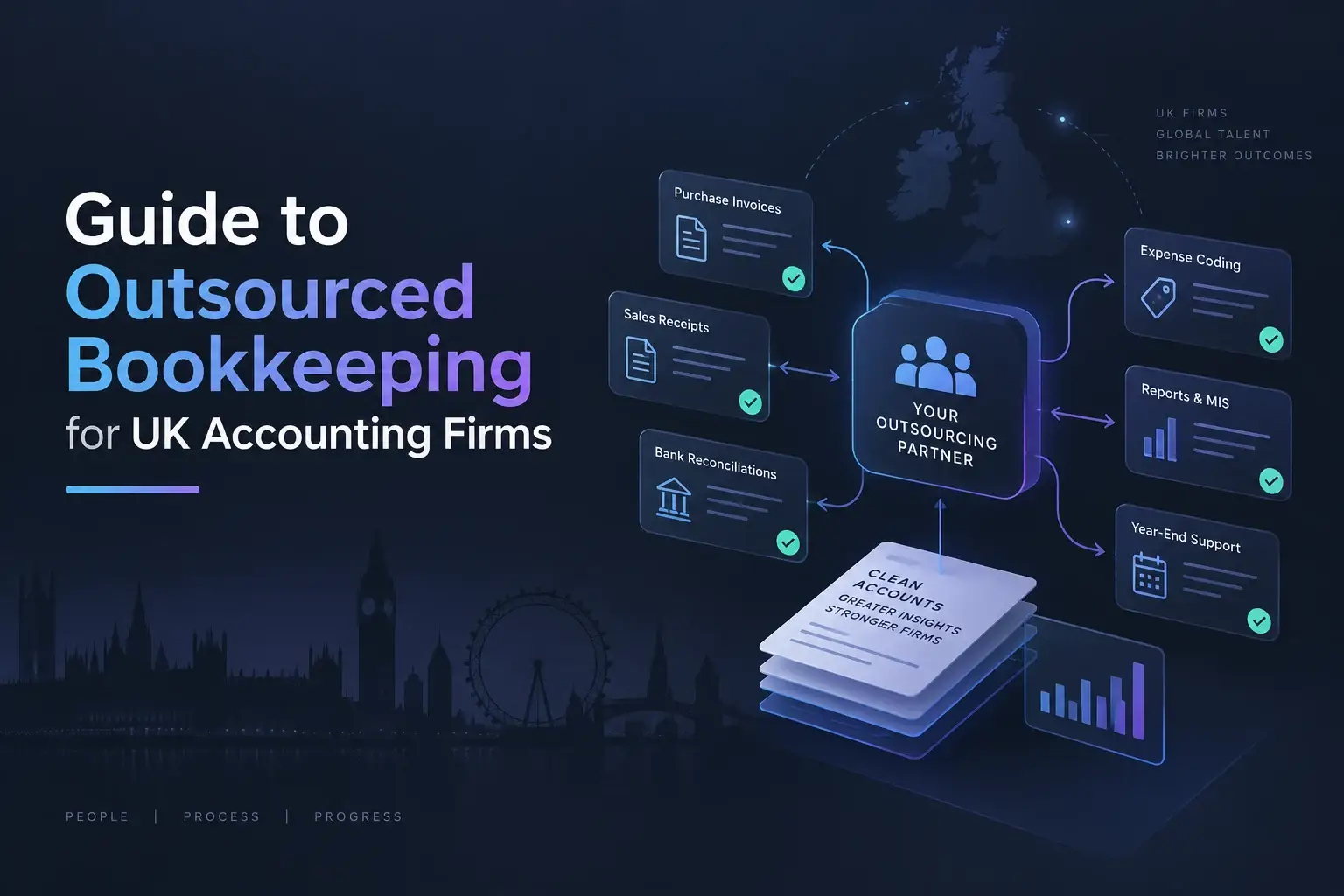
Complete Guide to Outsourced Bookkeeping Services for UK Accounting Firms
CA Nemin Vora