
Scale your CPA & accounting firm with elite offshore talent trusted by 1,000+ firms.
Thank you for your interest. Our due diligence checklist will be shared with you within 48 hours.

To hire offshore accountants in the Philippines, define the roles you need, choose a staffing partner with SOC 2 Type II controls and IRS 7216 support, get client consent before any tax data goes offshore, and onboard the hire into your own software and review process.
The talent pool is large and regulated. The Philippine IT-BPM industry ended 2025 with about $40 billion in export revenue and roughly 1.9 million workers, according to IBPAP. The country also licenses its own CPAs: 6,616 candidates passed the two 2025 CPA Licensure Examinations run by the PRC Board of Accountancy (3,156 in May and 3,460 in October).
Filipino accountants who serve US firms typically work in US GAAP, QuickBooks Online, Xero, and US tax software such as UltraTax CS, Lacerte, and Drake, and many work US-aligned shifts.
Many firms have adopted offshore accounting teams because of their ease of use, cost efficiency, and greater operational effectiveness. As remote work has become mainstream and convenient software that allows for asynchronous communication has emerged, it has become much more straightforward to form and manage an offshore accounting department.
Setting your goals and needs for your offshore accounting team will assist significantly during the recruitment process. Having tangible goals will allow you to identify the specific skills that you need in each position. Consider budget, time zone compatibility, and cultural fit when setting your goals.
Shortlist providers that work only or mainly with CPA firms, then run due diligence on security certifications (SOC 2 Type II, ISO 27001), IRS 7216 support, tax software experience, and client references. Our roundup of the top accounting outsourcing companies in the Philippines is a good starting list.
Companies specializing in recruiting remote employees give access to highly qualified candidates simply without going through the lengthy and tiresome process of sourcing and screening them.
Interview shortlisted candidates yourself. Test English communication, US GAAP basics, and the exact software your firm uses (for example, QuickBooks Online, UltraTax CS, or Lacerte) with a short practical assessment before you commit.
When you select your team members, for optimum productivity and operational flow, assign clear roles and responsibilities that every member must adhere to to avoid ambiguity. As a result, setting performance targets becomes more manageable while fostering accountability becomes effortless within your offshore accounting team.
Before bringing on an offshore accounting team, make sure everyone’s roles and responsibilities clearly defined. Give them the right training materials and resources so they can do their jobs effectively from day one.
For your offshore accounting team to thrive, make time for regular catch-ups. A quick video call or a shared project board can go a long way in keeping everyone on track and in sync.

Working accountants from the Philippines function as offshored employees who work independently as part of your team and adapt to your work procedures and internal workflows. This approach improves teamwork, increases communication, and instills a strong sense of ownership, enabling better coordination and efficiency within the company.

The Philippines has many professionally prepared accountants because of its drive to promote accounting and finance literacy in the education sector, which has led to an influx of graduates.
The Philippines has regulated accountancy for over a century. Its first accountancy law, Act No. 3105, was passed in 1923, and the profession is now governed by the Philippine Accountancy Act of 2004 (RA 9298) and the PRC Board of Accountancy. In 2025 alone, 6,616 candidates passed the CPA Licensure Examination.
For US CPA firms dealing with retirements and a thin graduate pipeline, Filipino accountants add capacity without competing in the local hiring market.
Offshore accounting in the Philippines is much cheaper than in Australia or New Zealand. This is primarily due to differences in wages and the cost of living. It is easy to see why the Philippines offers more than 70 percent savings in offshore accounting services.
Global offshoring and accounting functions have found an international center in the Philippines. The government is conscious of the economic gains from the sector, which is why numerous incentives and even infrastructure development are meant to grow the industry.
Moreover, the government has enacted policies to ensure the safekeeping and protection of the data, as well as intellectual property and international compliance as stipulated in the Data Privacy Act 2012, thereby securing the confidence of companies that outsource their accounting to the Philippines.
Access Pre-Vetted Accounting Talent from the Philippines — Schedule a Free Call.
Dealing with an offshore accounting unit is a delicate process that requires extensive planning and communication. However, improving remote accountants’ onboarding into your firm processes will increase productivity, accuracy, and collaboration. Using strategies built for remote teams does not pose a challenge regarding time zones and culture.

Make sure every team member knows exactly what their job involves and what’s expected of them. Break down their key tasks so there’s no confusion about priorities. Work with them to set clear goals they can actually achieve — ones that fit their skills, have a deadline, and make a real difference to the firm’s bigger plans.
Check in often to see how things are going, share honest feedback, make changes when needed. This way, everyone stays motivated, knows where they’re headed, and feels connected to the team’s success.
Keep one shared board (Karbon, Canopy, TaxDome, Asana, or Monday.com) that shows what is in progress, what is next, and what is done. Track rough time per task, not to micromanage, but to spot work running long before it turns into a deadline crunch.
Schedule regular meetings and check-ins with remote employees via Slack, Zoom, or Microsoft Teams. Ensure that remote team members can raise their ideas, questions, or challenges over the communication platform without fear of receiving negative feedback. Open communication builds trust, surfaces problems early, and makes offshore staff feel like part of the firm rather than an outside vendor.
Use regular staff training to build your member's skills. Make it a point to have your team participate in programs, webinars, online information resources, and accounting forms that update the specialist to modern accounting innovations and information.
Continuous learning keeps skills current and morale high. Offshore staff placed through MYCPE ONE get access to the MYCPE ONE CPE library, so they train on the same updates as your US team.
Encourage team members to celebrate every achievement, big or small, to stimulate an inclusive and positive team culture. Organize virtual team-building exercises to give team members a sense of belonging and ease. Thank your remote team for their efforts and foster an inclusive, respect-driven atmosphere where everyone feels appreciated, whether in-house or overseas. A cohesive team culture leads to enhanced job satisfaction and retention.
The world of accounting firms has become fiercely competitive, making it necessary to stay productive and alert. Offshore accounting enables companies to acquire highly skilled professionals at a fraction of the cost. Depending on their needs, firms can hire virtual assistant support for administrative and accounting-related tasks, allowing internal teams to focus on higher-value responsibilities.

Offshore bookkeepers manage daily bookkeeping, including income, expenses, bank reconciliations, and month-end close, and prepare financial reports for review. Learn more about how firms outsource bookkeeping to the Philippines.
Offshore accountants can effectively manage invoices, payments, and collections. Offshore teams use special tools to handle all accounts payable and receivable correctly.
Offshore tax preparers in the Philippines prepare federal and state returns (1040, 1120, 1120-S, 1065) in your firm's software, while your US CPAs or EAs keep final review and signing authority. Firms adding busy-season capacity can hire an offshore tax preparer in the Philippines or read our guide to hiring a virtual tax accountant in the Philippines.
Payroll doesn’t have to be a headache. Offshore teams can step in to make sure everyone gets paid the right amount, on time — whether it’s regular wages, bonuses, or other perks. They also keep an eye on tax rules and local laws, so you don’t have to worry about compliance.
Offshore accountants can help you with your detailed financial goals by creating realistic budgets and other forecasts for expansion. Their in-depth knowledge allows them to analyze valuable financial data and make informed decisions to achieve all firm objectives.
Offshore staff can prepare workpapers, pull samples, chase confirmations, and organize PBC lists, so your audit seniors spend more time on judgment areas. This also covers the "auditing" claim made in the conclusion.
Yes, as long as you get the right client consent and work with a partner that has proper safeguards. Three sets of US rules apply:
On the Philippine side, the Data Privacy Act (RA 10173) governs how your partner handles personal data. For a side-by-side view, read our breakdown of IRS, AICPA, and FTC outsourcing requirements.
Hiring offshore accountants in the Philippines works best when you treat it as a team build, not just a cost cut. Scope the roles clearly, put 7216 consent in place, choose a partner with SOC 2 Type II controls, and run offshore work through the same review process as your US staff.
MYCPE ONE builds dedicated offshore teams for CPA firms from its Philippines offices in Manila and Pampanga, with a 2-week free look-in period. Hire offshore accountants in the Philippines and schedule your free strategy call.
Hiring offshore accountants in the Philippines gives CPA firms skilled talent, lower labor costs, and reliable scalability. Filipino accountants are English-proficient, trained in U.S. GAAP/tax workflows, and available across extended hours - helping firms clear backlogs and improve turnaround times. With strong work ethic, cultural alignment, and access to a deep talent pool, firms can reduce operational pressure while maintaining high-quality output and year-round productivity.
Expect $1,000-$2,500 monthly depending on experience level, representing 70% savings versus US rates. Most businesses achieve full ROI within 3-6 months while eliminating expenses for office space, equipment, and benefits hiring accountants from Philippines.
Set clear expectations, use project management tools to track tasks, and schedule regular video calls to maintain communication. Establish overlapping work hours when possible and recognize good performance to build strong working relationships hire offshore accountants Philippines.
You add busy-season capacity at a lower cost while your US reviewers keep control of quality and sign-off. Offshore tax preparers work in your tax software and follow your checklists, and you need 7216 consent from clients before sharing their return data.
To hire offshore accountants in the Philippines, define your firm needs, choose a reputable outsourcing provider, and ensure proper onboarding for smooth integration into your operations.
Most firms hire Filipino talent for bookkeeping, AP/AR management, payroll processing, financial reporting, tax preparation, audit support, and financial planning. Many teams also support CFO services, client advisory (CAS), and management accounting.
Yes. The Philippines follows a curriculum aligned with US GAAP, IFRS, and global tax concepts. Many accountants have BPO experience serving U.S. CPA firms, making them familiar with QuickBooks, Xero, UltraTax, CCH, Lacerte, Drake, and other major platforms.
The Philippines offers a 12–15 hour time zone advantage, enabling overnight turnaround and faster client deliverables. Many firms operate fully in U.S. shifts, ensuring real-time collaboration and availability during business hours.
To hire offshore accountants in the Philippines, define your firm needs, choose a reputable outsourcing provider, and ensure proper onboarding for smooth integration into your operations.

Shalin (Shawn) Parikh, CA, is the Co-Founder and CEO of MYCPE ONE, a global platform empowering 3,000+ CPA firms through innovative CPE solutions, offshoring, marketing, M&A, and beyond. With over 15 years of experience, Shawn helps accounting and tax professionals scale smarter, a visionary entrepreneur, value investor, and hardcore believer in using tech and education to drive change. Passionate about innovation and growth, he continues to inspire firms worldwide to embrace AI, strategic thinking, and long-term success. Beyond business, Shawn drives social impact through the Social Eye Foundation, advocating for accessible education and stronger communities.


How to Scale CAAS (Client Accounting & Advisory Service) + VCFO with Offshoring!


How To Scale CFO And Advisory Services With Offshoring

Bursting myths around Offshoring for an Accounting firm

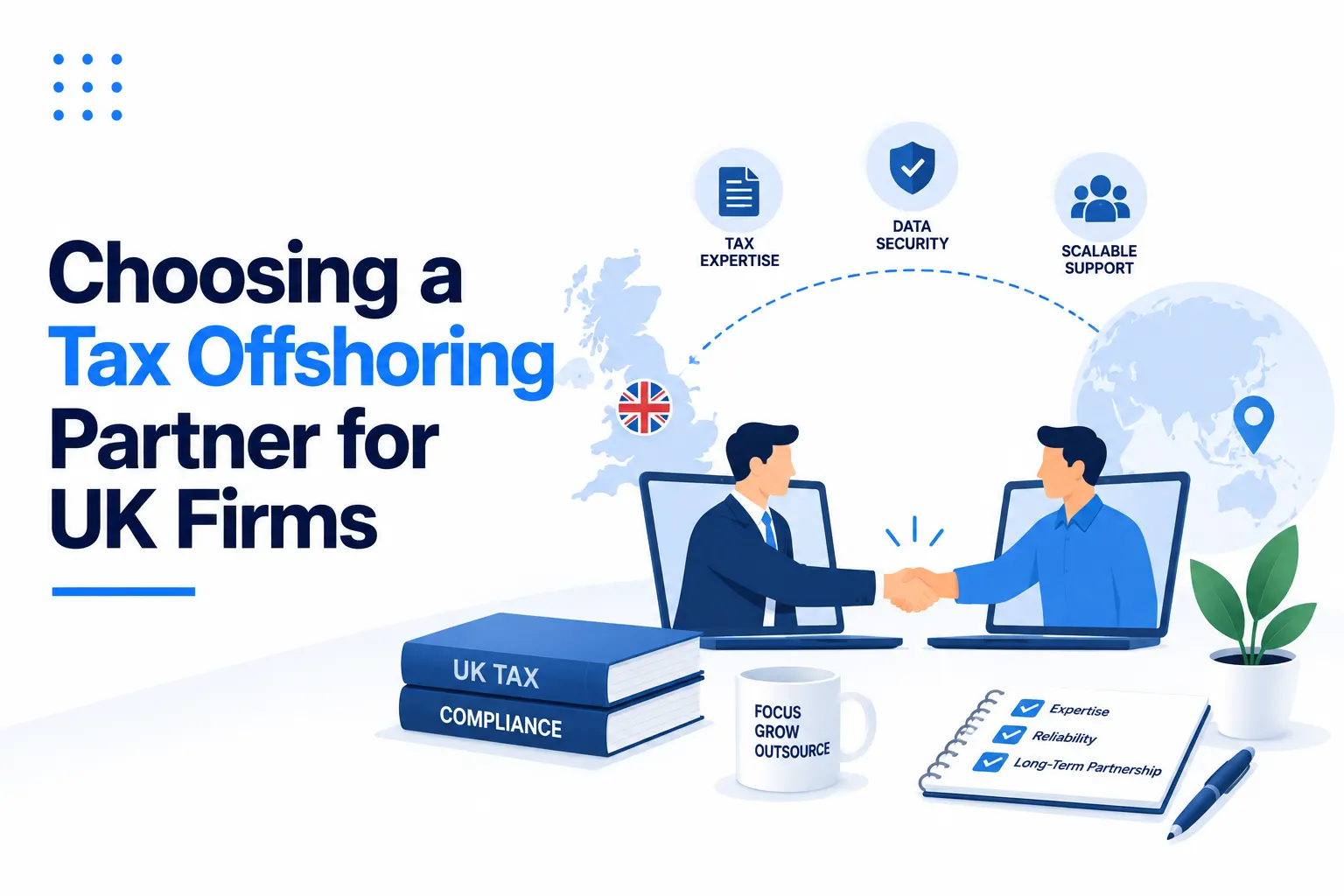
How to Choose the Right Tax Offshoring Partner for Your UK Accounting Firm
 CA Nemin Vora