Scale your CPA & accounting firm with elite offshore talent trusted by 1,000+ firms.
Thank you for your interest. Our due diligence checklist will be shared with you within 48 hours.

GDPR for UK accounting firms does not stop at your office door. When you offshore bookkeeping, payroll, tax preparation, or audit support, your firm stays the data controller and remains legally responsible for every client record your offshore team touches.
To offshore compliantly, you need four things in place: an Article 28 data processing agreement, a valid transfer mechanism (usually the IDTA or UK Addendum), a documented transfer assessment, and security controls you can evidence to the ICO.
This guide gives UK practice owners and compliance leads a practical checklist they can work through before onboarding an offshore team, and review every year after.
UK GDPR, alongside the Data Protection Act 2018, governs how your firm collects, stores, and shares personal data. Accounting files are dense with it: names, addresses, National Insurance numbers, bank details, payslips, and sometimes health or family information buried in tax and payroll records.
Offshoring creates two legal events at once. First, you appoint a processor to handle data on your behalf, which triggers Article 28 contract requirements. Second, personal data becomes accessible from outside the UK, which counts as a restricted transfer under Chapter V (Articles 44 to 49).
The penalties are not theoretical. The ICO can fine up to £17.5 million or 4% of annual worldwide turnover, whichever is higher. For most firms, the bigger risk is reputational: a single leaked client file can cost relationships that took a decade to build.
In almost every offshore staffing model, your UK firm is the controller and the offshore provider is the processor. The provider only acts on your documented instructions.
If the provider decides how or why data is used, for example by reusing client data for its own analytics, it may become a controller in its own right. Your contract should rule that out.
Yes, provided you use a valid transfer mechanism. The UK has adequacy regulations (sometimes called "data bridges") for the EEA and a limited list of other countries, but India, the Philippines, and South Africa are not on that list at the time of writing. Check the ICO's current list before every new engagement.
For non-adequate countries, UK firms typically rely on one of two tools, both in force since March 2022:
Note that remote access counts as a transfer. Even if files never leave a UK server, an offshore accountant viewing them on screen in Ahmedabad or Manila is accessing personal data from abroad.
The Data (Use and Access) Act 2025 (DUAA) received Royal Assent on 19 June 2025, and most of its data protection changes took effect on 5 February 2026. Three changes matter for offshoring firms:

Existing IDTAs signed before February 2026 remain valid. New transfers, even on your old template, need an assessment against the new test.
Work through each section before go-live. For every item, ask the provider for evidence, not just a yes.

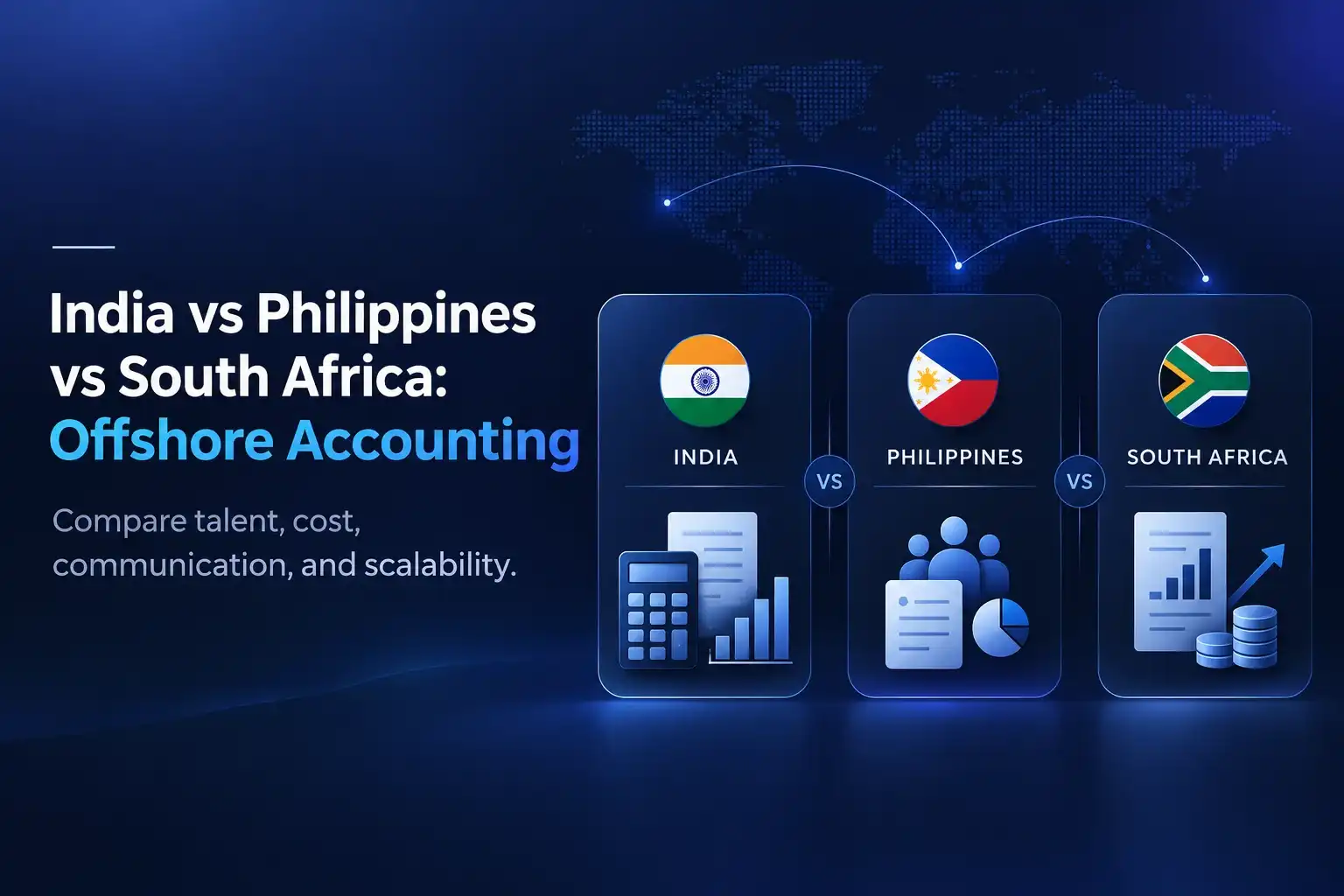
All three popular offshoring destinations now have national data protection laws. None replaces your UK GDPR obligations, but a mature local regime makes your transfer assessment easier to justify
| Factor | India | Philippines | South Africa |
|---|---|---|---|
| Main law | Digital Personal Data Protection Act 2023 | Data Privacy Act 2012 | POPIA 2013 |
| Regulator | Data Protection Board of India | National Privacy Commission | Information Regulator |
| Status | Rules notified November 2025, phased rollout | Long established, active regulator | Fully enforceable since July 2021 |
| UK adequacy | No | No | No |
| UK transfer tool | IDTA or UK Addendum | IDTA or UK Addendum | IDTA or UK Addendum |
| What to verify | Provider certifications and VDI setup; DPDP is still bedding in | Provider registration and NPC compliance | Provider POPIA compliance and information officer |
Ask these questions in your first call. A credible provider answers each one with a document, not a promise.
Offshoring and GDPR compliance work together when you treat data protection as part of the setup, not an afterthought. Get the contracts right, keep data on your systems, lock down access, and document everything. Firms that do this well find it strengthens client trust instead of weakening it.
Ready to build a GDPR-ready offshore team? MYCPE ONE provides offshore accounting services to UK accounting firms, helping them set up dedicated offshore accountants, bookkeepers, and tax preparer with appropriate security controls and documentation to support their compliance requirements. Speak to our UK team to get started.
Not always. MCQs can be sufficient for a focused knowledge check, but roles that require independent execution often benefit from job-relevant practical evidence as well.
A work sample asks the person to perform a real or closely related job task. A simulation recreates a realistic job situation in a controlled assessment environment. Both are designed to gather evidence about application rather than only answer selection.
The pattern may indicate an application gap, but the task design, role relevance, instructions, and the candidate's comparable work experience should be checked before concluding why the scores differ.
Not necessarily. A simulation is most useful when practical execution is important to the role and the task reflects a competency expected when the person enters the position.
Weight the result according to job relevance and the quality of the task. Then combine it with knowledge results, interviews, relevant work evidence, and manager judgment rather than using it alone.

Amrit Singh is a business leader with 10+ years of experience in continuing education. Helping accounting, tax, and finance professionals stay compliant with ease, he began his journey as a consultant. Learning across industries before stepping into a leadership role, he is shaped by both successes and failures. Amrit is passionate about problem-solving, building products, exploring technology, and mentoring future leaders. He is dedicated to transform continuing education, making it simpler, smarter, and more meaningful. Through his blogs and talks, he shares insights on accounting careers, CPA compliance, and the future of continuing education.


How to Scale CAAS (Client Accounting & Advisory Service) + VCFO with Offshoring!


How To Scale CFO And Advisory Services With Offshoring

Bursting myths around Offshoring for an Accounting firm

Best Offshore Staffing Companies for CPA Firms in the Philippines (2026)
 Christopher Rivera
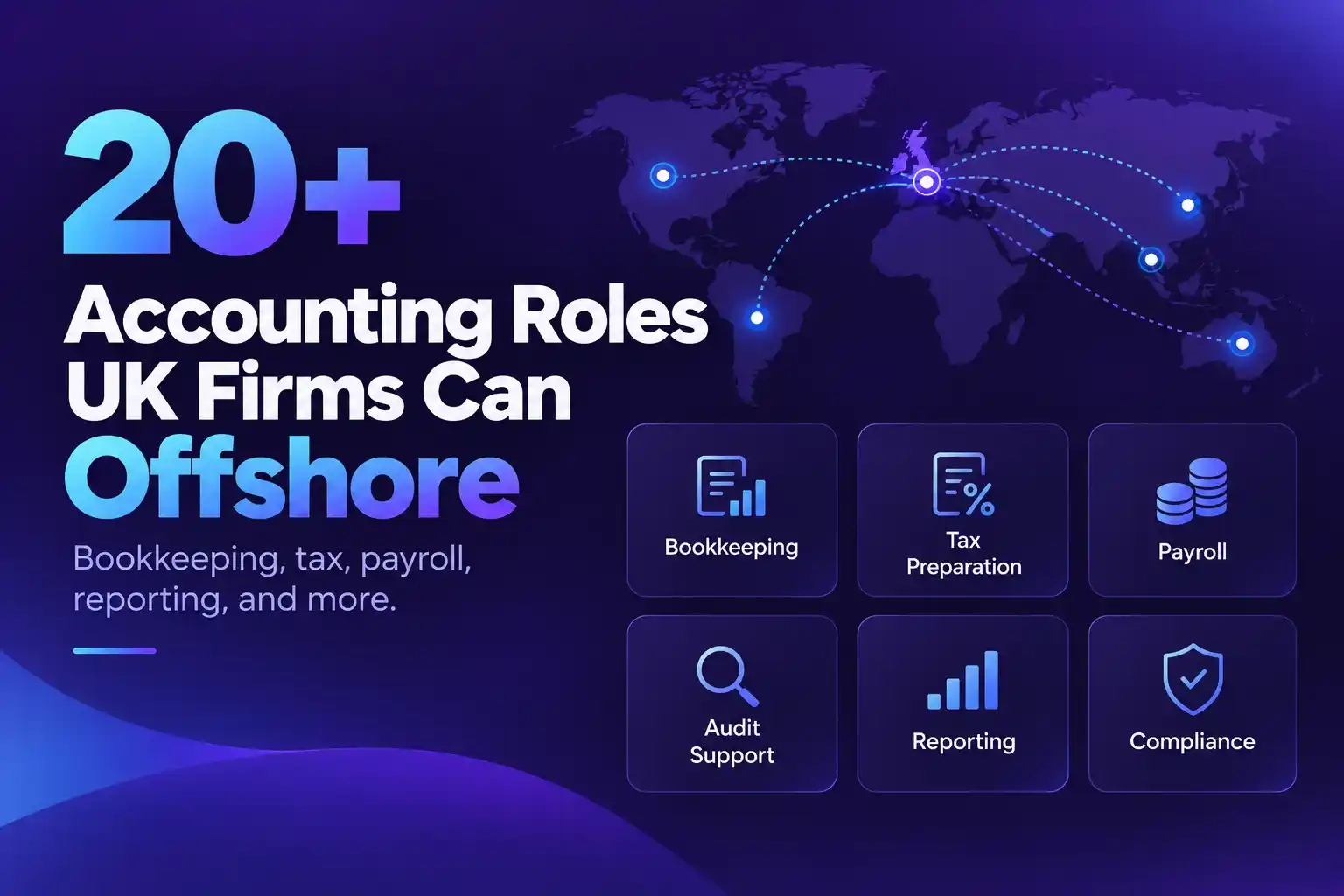
What Accounting Work Can UK Firms Offshore? 20+ Roles & Functions
Amrit Singh