

Scale your CPA & accounting firm with elite offshore talent trusted by 1,000+ firms.
Thank you for your interest. Our due diligence checklist will be shared with you within 48 hours.

Outsourced bookkeeping Canada is no longer just a cost-cutting move; it is a full strategic shift. In 2026, Canadian CPA firms are using bookkeeping outsourcing to manage growing client workloads, reduce overhead, and maintain GST/HST compliance without burning out in-house teams. This guide explains how it works, which tools power it - QuickBooks Online and Xero; what the real costs look like, and how to choose the right offshore partner for your firm.
Canadian CPA firms are at a crossroads right now. Client expectations are rising. Skilled bookkeepers are harder to hire locally. And the cost of keeping everything in-house keeps going up. We are seeing more and more firms ask the same question: Is outsourced bookkeeping the smarter path forward?
The short answer is yes. But the longer answer - the real story is more interesting. Let us walk through it.
Outsourced bookkeeping in Canada means hiring trained bookkeeping professionals, typically offshore, to handle day-to-day financial record-keeping tasks on behalf of your clients. This is not about losing control. It is about extending your team. The outsourced bookkeeper works under your firm's supervision. They follow your workflows, use your software, and report to your team. You stay client-facing. They handle the back-end volume.
Common tasks handled offshore include:
The talent gap in Canada is real. According to CPA Canada, the accounting profession is facing a significant shortage of skilled professionals, especially at the bookkeeping and junior accountant levels. At the same time, firms are growing. More clients. More complexity. More deadlines. To understand how Canadian firms are adapting right now, read How Canadian Accounting Firms Are Using Offshore Staff in 2026.
Think of it the way Nick Fury approached the Avengers - he did not try to build one super-soldier who could do everything. He assembled specialists. Each is exceptional at exactly one thing. Together, unstoppable. That is exactly what bookkeeping outsourcing for CPA firms in Canada is doing in 2026. Stop trying to find one person who does it all locally. Build the right team across borders instead.
Here is what firms are gaining:
The signal is clear. Outsourcing is not a distraction. It is a compounding competitive advantage.
This is where many firms pause. GST/HST rules are specific to Canada. Can an offshore team really handle them? Yes, if they are properly trained.
Leading outsourcing providers specifically train their teams on Canadian tax compliance, including:
The key is choosing a partner who trains their staff on GST/HST bookkeeping outsourcing specifically, not just generic bookkeeping. Your role becomes review and sign-off. Their role is preparation. Compliance responsibility stays with your firm. The workload does not. Also read: Outsourcing Tax Preparation: A Guide for Canadian Accounting Firms

Cloud accounting made outsourcing possible at scale. The two dominant platforms for Canadian firms are:
Both platforms allow your offshore bookkeeper to work in real time without being in the same room, or the same country. Supporting tools commonly used: Dext and Hubdoc for receipt capture, Plooto for payments, Wagepoint for payroll, and TaxCycle for final CPA review.
Numbers matter. So let us be direct.
| Role | Canada Fully Loaded Cost (CAD) | Offshore Cost (CAD) | Savings |
|---|---|---|---|
| Junior Bookkeeper | $65,000–$85,000/yr | $18,000–$28,000/yr | 55–70% |
| Senior Bookkeeper | $85,000–$110,000/yr | $28,000–$42,000/yr | 50–65% |
For a firm with five bookkeeping staff, this can translate to $200,000+ in annual savings - capital that can be redeployed into advisory services, technology, or growth. Beyond salary, you also save on benefits, office space, recruitment fees, and training cycles. Compounding these savings over three to five years changes the entire economics of running a CPA firm. That is not noise. That is the marathon paying off.
Not all outsourcing is equal. Patience in selection saves headaches in execution. Here is what to look for:
A wrong partnership is a marathon run in the wrong direction. Take the time to vet properly.
The story of Canadian CPA firms in 2026 is one of doing more with less - more clients, more complexity, but tighter local hiring markets and growing cost pressure.
Outsourced bookkeeping Canada is not a shortcut. It is a strategy. Firms that build smart, integrated offshore teams now will compound those advantages for years to come.
The signal is there. The question is whether we act on it.
Finding the right talent is becoming more challenging than ever, especially in a world where firms increasingly need professionals who are not just technically strong, but also AI-savvy and adaptable to modern workflows. At MYCPE ONE, we help CPA firms, Accounting firms, Businesses, and Enterprises build high-quality offshore teams across accounting, tax, audit, advisory, back-office functions, and several other functions.
If you'd like to explore more, schedule a call with us.
Yes, when done with the right partner and the right safeguards. Choose a provider with strong data security protocols, signed NDAs, and encrypted file transfer. Client data should never be stored on unsecured personal devices. Reputable outsourcing partners follow GDPR-aligned and CPA Canada-compatible data handling practices. Always ensure your engagement letter with the outsourcing firm clearly outlines confidentiality and data responsibilities before work begins.
Yes. Many offshore bookkeeping teams are specifically trained in Canadian tax compliance, including GST/HST filing periods, Input Tax Credits, and CRA payroll processing. The CPA firm retains final review and sign-off responsibility, while the offshore team handles preparation and reconciliation. This division of responsibility is widely used by mid-sized and growing Canadian firms today, and works effectively when workflows and review cycles are clearly defined.
QuickBooks Online Canada and Xero are the two most commonly used platforms for bookkeeping outsourcing in Canada. Both are cloud-based, allowing offshore teams to access client files securely without physical document handover. QBO is dominant among SME clients, while Xero is favored for its multi-user access and integration ecosystem. Supporting tools like Dext, Hubdoc, and Plooto further streamline document capture and approval workflows between onshore and offshore teams.
Most firms report a full onboarding period of four to eight weeks. The first two weeks cover workflow documentation and tool access setup. Weeks three and four involve supervised live work with structured review cycles. By weeks six to eight, most offshore bookkeepers operate independently under light supervision. Choosing a provider with a structured onboarding process, rather than a self-guided setup, significantly reduces this timeline and lowers the risk of early errors.

Christopher is the Director of Client Relations and Business Development at MYCPE ONE, a leader known for his energy and people-first approach. Chris leads from the front mentoring teams, driving growth, and building lasting client relationships. With over a decade of experience in sales, coaching, and business strategy, he has helped 5,000 CPAs nationwide overcome challenges and discover new opportunities. Chris is a familiar presence at major accounting conferences, representing MYCPE ONE and shaping meaningful industry partnerships. Passionate about leadership and professional growth, he continues to inspire teams and professionals to reach their highest potential.


How to Scale CAAS (Client Accounting & Advisory Service) + VCFO with Offshoring!


How To Scale CFO And Advisory Services With Offshoring

Bursting myths around Offshoring for an Accounting firm


Best Offshore Staffing Companies for CPA Firms in the Philippines (2026)
Christopher Rivera
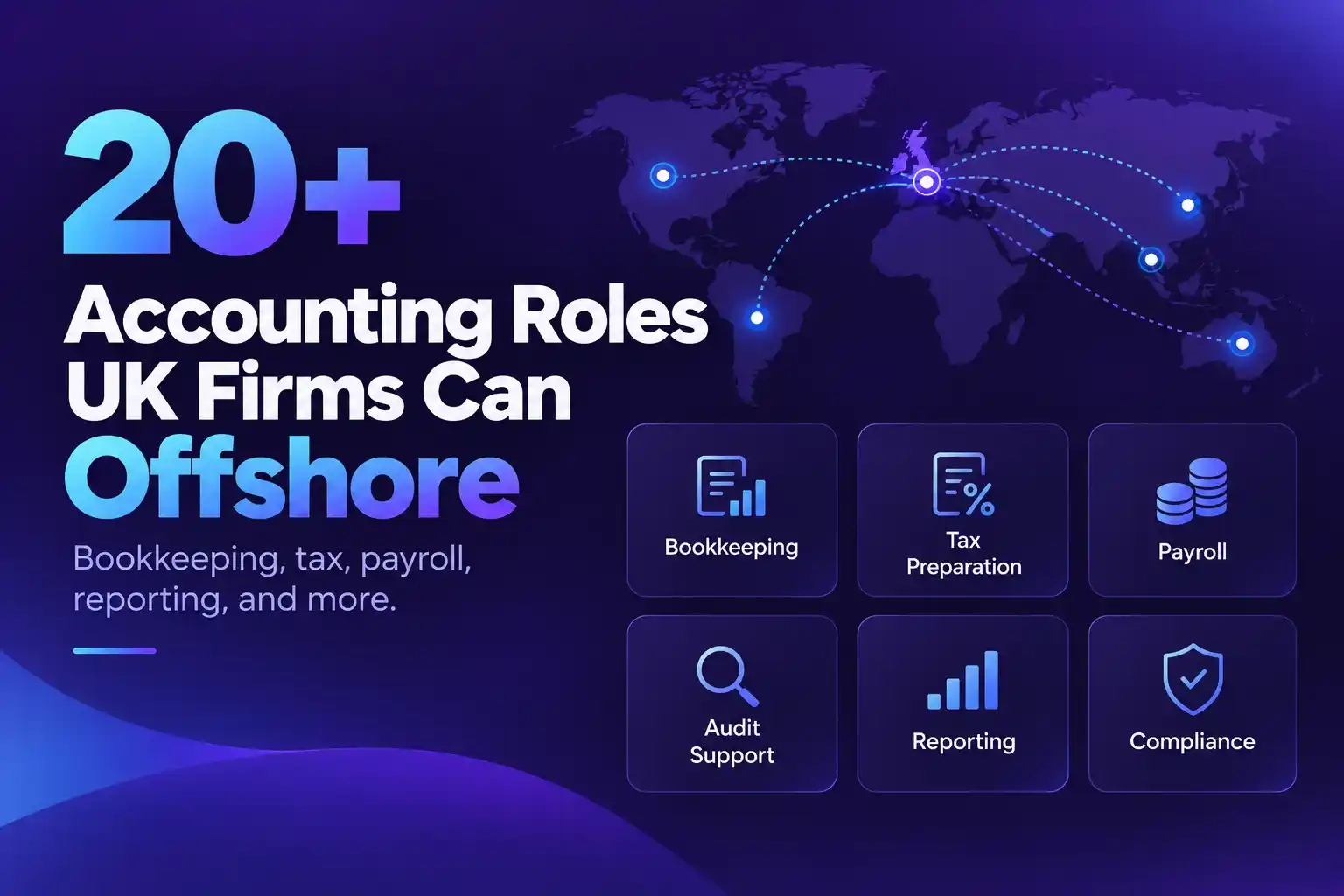
What Accounting Work Can UK Firms Offshore? 20+ Roles & Functions
 Amrit Singh





