
Scale your CPA & accounting firm with elite offshore talent trusted by 1,000+ firms.
Thank you for your interest. Our due diligence checklist will be shared with you within 48 hours.

Every UK audit practice knows the pattern. Year-ends cluster around 31 March, 30 June and 31 December, and the files all land at once. Experienced seniors are hard to hire and harder to keep. Graduate intake has not kept pace with workload, and the regulatory load keeps growing. The result is partners reviewing files late into the evening and managers doing work well below their pay grade.
Audit support outsourcing is one of the most practical responses. It means engaging a trained external team, usually offshore, to carry out the preparation-heavy parts of your auditing and assurance services under your firm’s methodology, supervision and review, while your firm keeps the judgement, the sign-off and the client relationship.
This guide covers what can and cannot be outsourced, how UK regulation applies, how to protect client data, what it costs, which risks to manage, and how to choose a partner. It is written for sole practitioners, small and mid-tier firms, and regional groups.
Audit support outsourcing means using staff who are not employed by your firm or your network to carry out parts of an audit engagement within your audit methodology, templates and software. ICAEW uses this same definition and notes it can be onshore or offshore.
It is different from outsourcing the audit itself. The provider does not accept the appointment, does not issue the report, and does not hold the client relationship. Your firm does.
In practice, UK firms use four models:
| Model | Best for | Notes |
|---|---|---|
| Dedicated team | Firms with steady year-round volume | associate or senior who works only for you learn your methodology and clients on your agreed hours. |
| Project-based | Specific files or one-off workloads | Defined scope and fee per file |
| Seasonal / peak support | Firms with busy-season extra hands from September to December and again around March year-ends | Scale up and down; plan onboarding ahead of the peak |
| White-label | Firms that want the offshore team to appear as their own | Requires strong confidentiality and transparent client disclosure |
The pressure on UK audit practices is structural, not seasonal. Four trends explain why audit outsourcing for UK firms has moved from a big-firm tactic to a mid-tier and small-practice option.
The FRC's Key Facts and Trends 2026 report shows registered audit firms fell by 9% to 3,421 in 2025. That follows a 24.9% drop between 2020 and 2024. Firms leaving the market are often citing the cost of meeting the quality bar with a small team. Firms that stay need more capacity per Responsible Individual.
The same FRC data shows around 1,800 people obtained the Audit Qualification in 2024, a slight fall on the prior year. Audit seniors with three to five years of experience remain the hardest hire for most UK practices, and they are exactly the people who carry fieldwork.
For financial years beginning on or after 6 April 2025, the small company limits rose to £15 million turnover and £7.5 million balance sheet total. Many smaller clients have dropped out of statutory audit. The audits that remain tend to be larger, more complex, and more time-intensive per file, which raises the cost of under-resourcing.
The government dropped the Audit Reform and Corporate Governance Bill in January 2026, so ARGA will not replace the FRC for now. That does not lighten the load. The FRC remains the regulator, ISQM (UK) 1 still applies, and the FRC's Annual Review of Audit Quality 2026 specifically flagged supervision of offshore teams doing judgement-heavy work.
ICAEW has also reported that more audit work than tax work is now outsourced or offshored, and that some firms now see these models as critical to audit quality as well as cost.
Compliance is where most audit support outsourcing projects succeed or fail. Work through these five areas before any client data moves.

ISQM (UK) 1 requires your firm to set quality objectives for human, technological, and intellectual resources obtained from service providers, and to judge whether those resources are appropriate. ICAEW stresses that the firm remains solely responsible for its system of quality management even when resources come from outside. Document the provider's training, supervision structure, and quality controls in your SoQM.
Under ISA (UK) 220 (Revised), individuals who perform audit procedures on the engagement are part of the engagement team, wherever they sit. The engagement partner must be satisfied with the nature, timing, and extent of direction, supervision, and review. Build offshore review time into every budget.
Because outsourced staff join the engagement team, they must meet the FRC Ethical Standard. Get written independence confirmations per client, per year, and restrict access to files where a conflict exists.
Remote access from outside the UK can count as a restricted transfer under UK GDPR. For countries without UK adequacy regulations, such as India, use the ICO's International Data Transfer Agreement (IDTA) or the UK Addendum to the EU SCCs, plus a transfer risk assessment. Many firms keep data on UK-hosted systems and let offshore staff work through a secure portal or virtual desktop, which ICAEW notes is the common set-up.
Check your Recognised Supervisory Body's guidance (ICAEW, ACCA, or ICAS) on using outsourced staff. Treat confidentiality as non-negotiable, and consider stating in your engagement letters that parts of the work may be performed by supervised third-party staff.

A simple rule works well: Outsource the preparation, keep the judgement. If a task follows your methodology and produces evidence a UK reviewer can check, it is a strong candidate. If it requires the engagement partner's professional judgement or direct client authority, keep it in the UK.
| Audit area | Good to outsource | Keep with UK team |
|---|---|---|
| Planning | File set-up, roll-forward, PBC request lists, trial balance mapping | Risk assessment, materiality, audit strategy sign-off |
| Fieldwork | Vouching, sample testing, payroll, fixed assets, accruals, bank reconciliations | Response to significant risks, fraud considerations, estimates |
| Confirmations | Preparing bank, debtor, and creditor confirmation workings | Control over sending and receiving confirmations |
| Accounts | Draft FRS 102 (including Section 1A) and FRS 105 accounts, disclosure checklists, consolidation workings | Accounting policy judgements, going concern conclusion |
| Completion | Tick-and-tie, casting, cross-referencing, review-point clearing | Final review, EQR, audit opinion, management letter |
Most providers also work directly inside common UK audit platforms such as CaseWare, Inflo, and Data Snipper-enabled Excel workflows. Confirm platform access and licensing before the first file.
Use this checklist when you assess offshore audit support providers for your UK practice.
| Criteria | What to ask | Red flag |
|---|---|---|
| Expertise in UK audit | Are staff trained on ISA (UK), FRS 102, and FRS 105? | Only US GAAP or IFRS experience. |
| Quality controls | How many review layers before work reaches you? | No internal review |
| Information security | ISO 27001, VDI access, no local downloads? | Staff working on personal devices |
| Data protection | Will you sign an IDTA and a DPA? | Reluctance to sign UK terms |
| Independence | Do staff sign per-client confirmations? | No independence process |
| Staff continuity | What is attrition, and who covers leave? | New staff on every file |
| Working hours | How much overlap with UK hours? | No overlap for review calls |
Audit support outsourcing gives UK accounting firms a practical way to protect audit quality while the talent pipeline stays tight. The firms that do it well treat the outsourced team as part of the engagement team: trained on their methodology, covered by their SoQM, and reviewed with the same rigour as UK staff.
MYCPE ONE provides dedicated offshore audit staff trained on UK audit standards, working inside your systems with UK GDPR-ready contracts and secure access controls. Talk to our team to plan a pilot on your next audit cycle.
Before filing season arrives, require structured CPD and brief them on each Budget and Finance Act update, with refreshed checklists
Offshoring team can submit only through your firm’s HMRC agent credentials. But supervision is a must. Offshore staff should prepare returns while a UK-qualified reviewer approves and files them.
Before year start or at the time of onboarding prepare and agree upon a shared holiday calendar upfront. Arrange appropriate cover during festivals to protect deadlines.
Generally, no. Route all communication through your firm to preserve the client relationship, maintain professional boundaries, and maintain confidentiality.
Yes. Use UK-hosted virtual desktops or cloud platforms so files remain in the UK while the offshore team accesses them remotely.

Nemin Vora, a CA and Tax Attorney, leads Client Relations at MYCPE ONE. With 7+ years of experience at Big 4 and top public accounting firms across America, he helps U.S. firms scale globally through remote talent, offshoring, and cloud operations. Known for his sharp tax insights and practical approach to firm growth, Nemin is a dynamic speaker. He breaks down complex topics such as leadership, AI, global staffing, and practice expansion into relatable lessons that professionals actually enjoy learning. Beyond the strategy decks, Nemin is a learner at heart, a stage actor, and a tech enthusiast.


How to Scale CAAS (Client Accounting & Advisory Service) + VCFO with Offshoring!


How To Scale CFO And Advisory Services With Offshoring

Bursting myths around Offshoring for an Accounting firm
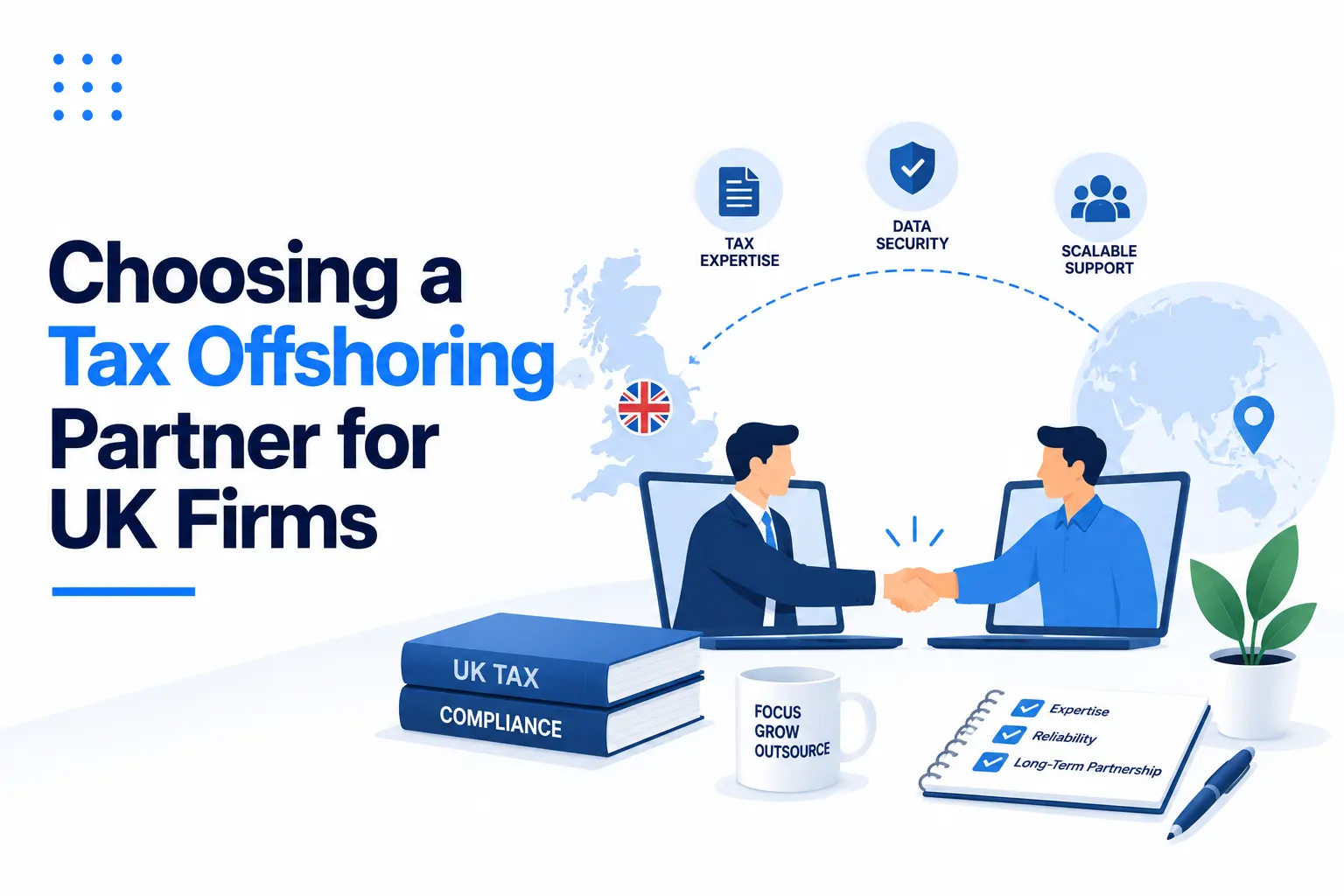
How to Choose the Right Tax Offshoring Partner for Your UK Accounting Firm
CA Nemin Vora

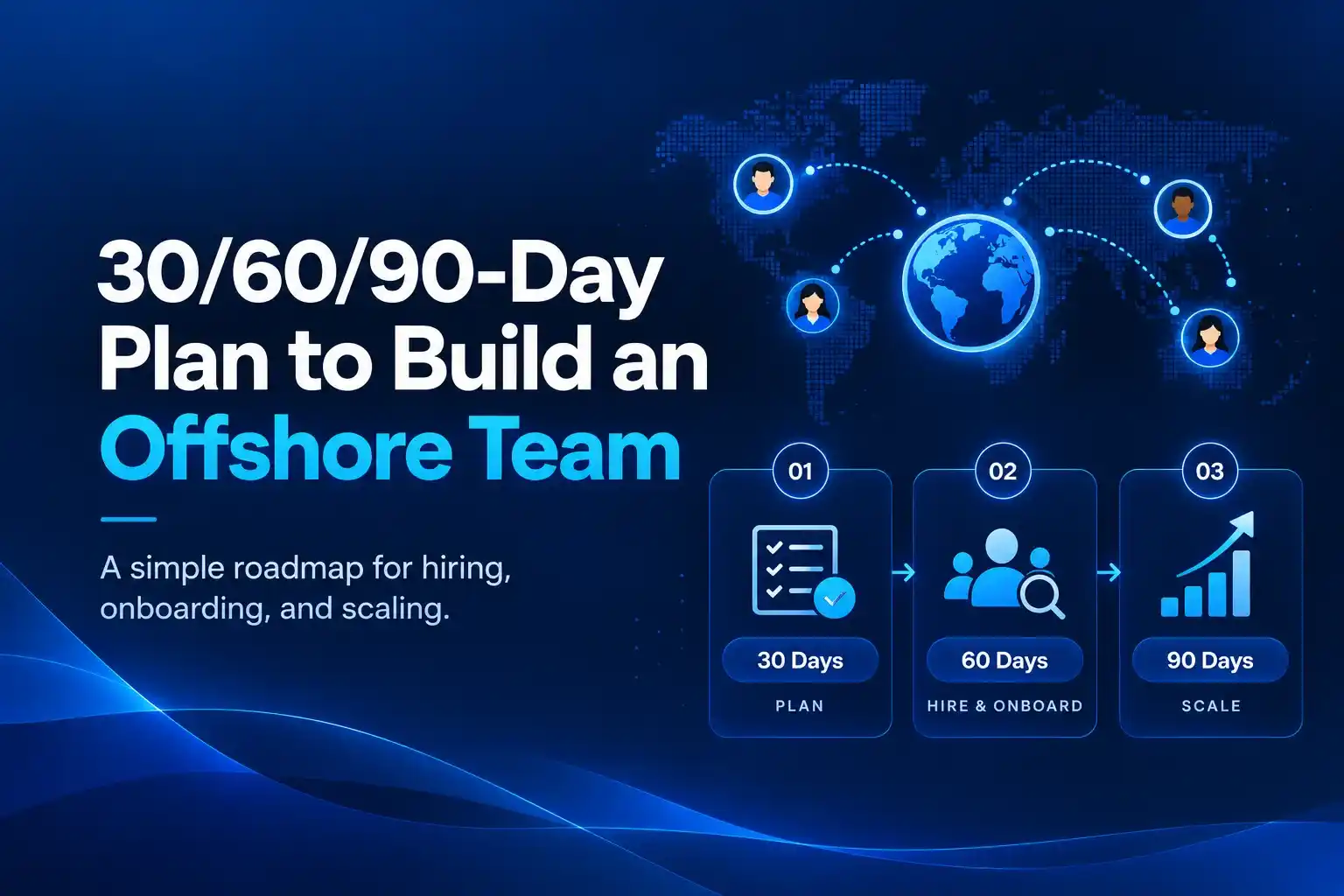
How UK Accounting Firms Should Build an Offshore Team: 30/60/90-Day Playbook
CA Nemin Vora