

Scale your CPA & accounting firm with elite offshore talent trusted by 1,000+ firms.
Thank you for your interest. Our due diligence checklist will be shared with you within 48 hours.

Many firms are heading into tax season with rising labor costs, capacity gaps, and pressure to deliver faster turnaround times. This blog breaks down how Offshore Tax Accountants help solve those challenges by providing qualified support at a fraction of onshore costs - often reducing overall tax prep expenses by up to 60%. It explains why offshoring has become a practical strategy for firms struggling with staffing shortages, seasonal spikes, and expanding client needs. You’ll learn how offshoring improves workflow efficiency, strengthens review processes, and frees senior staff to focus on higher-value work. The goal is to give firm leaders a clear, practical understanding of when and how offshoring makes economic and operational sense.
Do you know, according to AICPA’s 2023 National Map Survey, it is revealed that over 60% of US accounting firms are offshoring the roles. The question that arises is: Why are More CPA Firms turning to Offshore Tax Accounting?
Every tax season, firms across the U.S. face the same challenge: increased workload, staffing shortages, and rising operational costs. For many, offshore tax accountants have become the strategic answer.
By leveraging tax preparation outsourcing, CPA firms can reduce costs, scale faster, and maintain accuracy even during the busiest filing months. This model isn’t just about saving money; it’s about building an agile, technology-driven firm that thrives year-round.
Offshore tax accounting involves partnering with qualified tax professionals based in different regions who manage tax compliance, filing, and reporting for your firm’s clients. These experts integrate seamlessly into your existing systems and software, becoming an extension of your in-house team.
Thanks to advancements in cloud-based accounting and secure digital workflows, collaboration is smoother than ever. Firms can now access top-tier global talent without geographic limitations.
A strategic decision to outsource tax preparation is a great way for firm owners to save time while reducing expenses. Offshore models have evolved from short-term cost savers to long-term growth enablers. They provide the flexibility, technical expertise, and reliability modern CPA firms need to stay competitive.

One of the most compelling advantages is cost efficiency. Offshore professionals deliver the same level of accuracy and compliance at a fraction of the cost. Firms typically report a 40–60% reduction in tax preparation expenses. Lower labor costs, reduced overhead, and the elimination of benefits and infrastructure expenses help firms achieve significant cost savings.
Accounting Today reports that firms adopting offshore staffing models outperform peers on both profitability and client satisfaction metrics.
Offshore accountants bring deep technical expertise across U.S. tax codes, international filings, and multi-state compliance. They’re trained on leading tools such as CCH Axcess, UltraTax, and Drake, ensuring seamless integration and faster results.
This helps US accounting firms respond quickly to changes in demand. And it is one of the reasons that many accounting firms are considering offshore staffing.

During tax season, workloads can easily double or triple. Offshore staffing allows firms to scale up instantly, without lengthy recruitment cycles. When the season ends, you can scale back just as efficiently, paying only for what you need.
Offshore teams convert time-zone differences into a strategic advantage. While your local staff signs off for the day, your offshore accountants continue processing returns overnight, keeping projects moving continuously.
Offshore tax accountants stay updated with IRS changes, multi-jurisdictional regulations, and reporting standards. Their process-driven approach minimizes errors and ensures filings meet every compliance requirement.
Handling sensitive client data requires robust safeguards. Reputable offshore providers maintain SOC 2 and ISO certifications, use multi-layer encryption, and implement strict NDAs to protect your firm’s information.
Choose the accounting firm that prioritizes Data Security the most.
Time-zone gaps are often a benefit rather than a barrier. Define overlap hours for communication, use shared dashboards like Trello or ClickUp, and establish clear workflows for review and approval.
Evaluate providers based on their tax expertise, client references, technology integration, and data protection policies. A strong partner should feel like an extension of your team, not an outsourced vendor.
MYCPE ONE, with over 10 years of history, as a strong offshore partner, is continuously helping CPA and accounting firms grow and thrive.
To make the most of your offshore tax team, firms should:
David Snider, in a W.T.F. Podcast with MYCPE ONE, shares how modern tax firms use scalable models and technology integration to move beyond compliance and build long-term advisory value, lessons that directly apply to offshore-enabled firms.
Is outsourcing limited only to tax roles? Not at all, there are over 100 tasks that you can outsource to offshore teams. Want to know all? Read here.
For many CPA firms, offshore staffing has become a competitive differentiator. It doesn’t just save costs, it unlocks time for advisory work, client strategy, and business development.
Industry data reinforces this trend; the global accounting outsourcing market is projected to surpass $60 billion by 2025, as firms increasingly adopt offshore and hybrid models to maintain scalability and profitability.
Partnering with offshore tax accountants is no longer just a seasonal fix; it’s a transformative strategy for sustainable firm growth. By embracing tax preparation outsourcing, you can scale effortlessly, improve compliance, and reduce costs by up to 60%.
Whether your goal is efficiency, scalability, or innovation, offshore staffing offers the flexibility and expertise your firm needs to stay ahead.
The firms winning this tax season are those that combine automation, collaboration, and offshore scalability, not just to survive tax season, but to build the accounting firm of the future.
MYCPE ONE is the trusted partner for over 3,000 CPA and accounting firms worldwide, empowering them to scale, innovate, and achieve operational excellence. With a decade of experience, a unified platform, and 3000+ team members across 40+ offices, MYCPE ONE delivers comprehensive offshoring, CPE and L&D, website solutions, digital marketing services, M&A advisory, and daily news insights - all designed to help firms attract top talent, maintain compliance, and drive sustainable growth.
Backed by SOC 2, ISO 27001, and GDPR certifications, MYCPE ONE ensures the highest standards of data security and client support for every firm.
Most firms save 40–60% in total tax preparation costs by reducing staffing, infrastructure, and administrative overhead.
Yes. Leading offshore partners use secure, encrypted systems, controlled access, and comply with U.S. data privacy standards like SOC 2 and ISO 27001.
Start with high-volume, lower-complexity tax returns such as 1040s and 1065s, then gradually expand to more advanced filings like 1120s or international returns.
Offshore models enhance efficiency. Time-zone overlaps ensure tax returns are processed overnight, cutting turnaround times significantly.
Look for CPA-certified teams, transparent communication, modern infrastructure, and a proven record of working with U.S.-based firms.

Shalin (Shawn) Parikh, CA, is the Co-Founder and CEO of MYCPE ONE, a global platform empowering 3,000+ CPA firms through innovative CPE solutions, offshoring, marketing, M&A, and beyond. With over 15 years of experience, Shawn helps accounting and tax professionals scale smarter, a visionary entrepreneur, value investor, and hardcore believer in using tech and education to drive change. Passionate about innovation and growth, he continues to inspire firms worldwide to embrace AI, strategic thinking, and long-term success. Beyond business, Shawn drives social impact through the Social Eye Foundation, advocating for accessible education and stronger communities.


How to Scale CAAS (Client Accounting & Advisory Service) + VCFO with Offshoring!


How To Scale CFO And Advisory Services With Offshoring

Bursting myths around Offshoring for an Accounting firm

Best Offshore Staffing Companies for CPA Firms in the Philippines (2026)
 Christopher Rivera
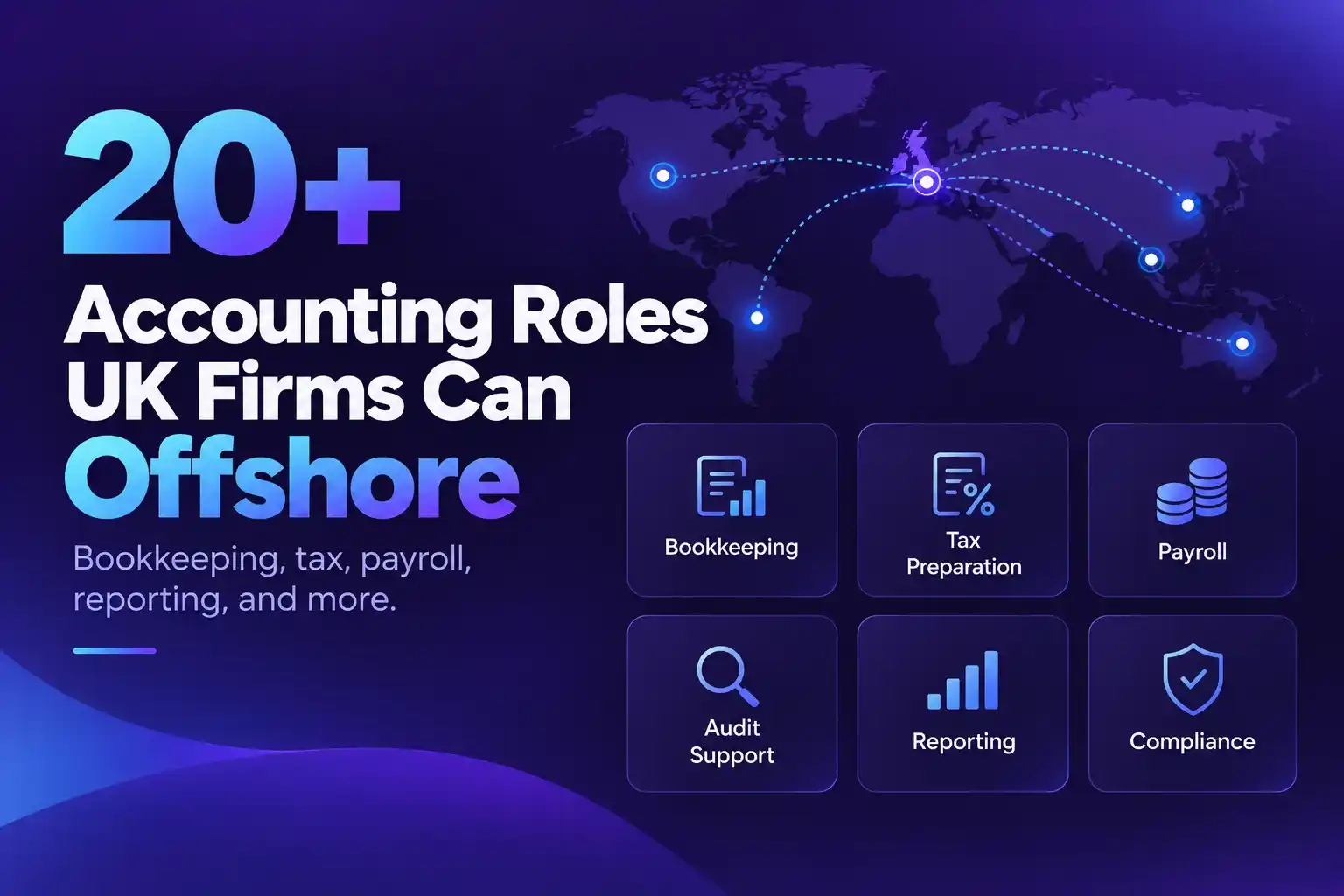
What Accounting Work Can UK Firms Offshore? 20+ Roles & Functions
 Amrit Singh





