

Scale your CPA & accounting firm with elite offshore talent trusted by 1,000+ firms.
Thank you for your interest. Our due diligence checklist will be shared with you within 48 hours.

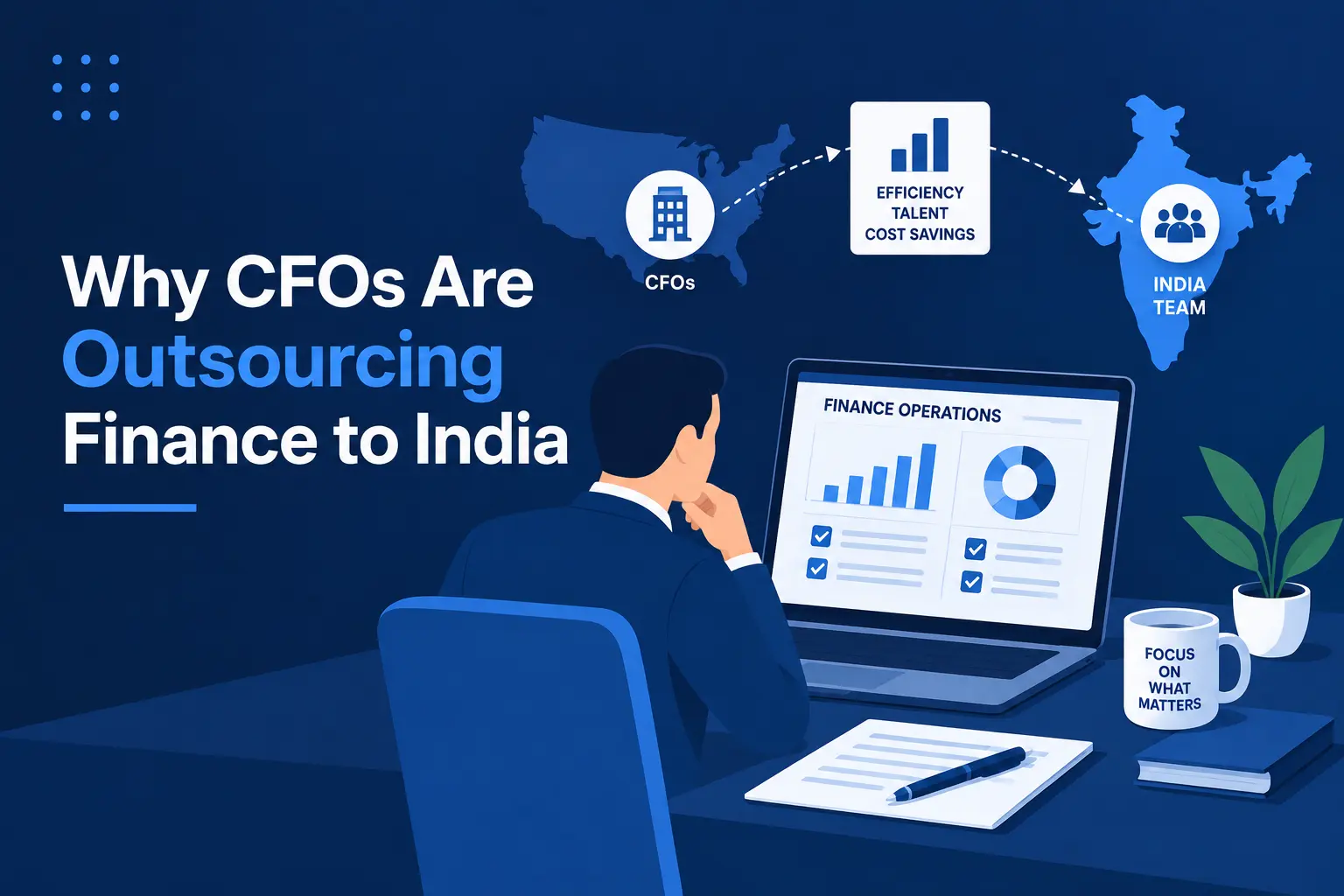
More businesses are choosing to build offshore teams, not as a backup plan, but as a deliberate growth strategy. This blog covers the six most compelling reasons driving this shift: significant cost savings, access to specialized talent, faster scalability, 24/7 operations, sharper focus on core work, and long-term competitive advantage. Whether you run a CPA firm, accounting practice, or a growing enterprise, understanding the real benefits of offshore teams can help you make a smarter hiring decision today.
The talent market is noisy right now.
Hiring costs are rising. Qualified professionals are harder to find. And businesses that can’t staff up fast enough are falling behind competitors who figured out something important early.
They stopped looking only in their backyard.
Today, thousands of CPA firms, accounting practices, and enterprises across the US are choosing to build offshore teams, not as a last resort, but as a calculated, strategic move. Leadership at every level is feeling this shift. According to a McKinsey Global Institute report, companies that tap broader, global talent pools consistently outperform those that limit their search domestically.
Finance and HR leaders in particular are reshaping how they think about team-building entirely - read more on that in our blog: How CFOs and HR Leaders Are Redefining Their Roles When Building Global Teams.
So what’s actually driving the shift? Here are six reasons that keep coming up.
Let’s start with the most obvious driver, and put real numbers to it.
When businesses build offshore teams, the savings are immediate and significant. CPA firms and accounting practices typically reduce staffing costs by 40–70% compared to domestic hiring, without compromising quality.
But salary is just the starting point. Stack up the full picture:
A firm hiring three domestic accountants at $70,000 each can easily spend $300,000+ annually. An equivalent offshore team costs a fraction of that, freeing capital for technology investment, client service, or new service lines.
Cost efficiency is the entry point. What businesses do with those savings is the real story. For a detailed breakdown of what offshore finance talent actually costs, see our deep-dive: The Real Cost of an Outsourced CFO: Why U.S. Companies Choose India.
The US is facing a genuine accounting talent shortage.
AICPA’s annual trends report shows a consistent decline in accounting graduates over recent years. CPA exam participation is down. Meanwhile, the Bureau of Labor Statistics projects continued demand for accounting and auditing professionals well through the decade, a gap that domestic pipelines simply cannot fill at current rates.
Think of Hidden Figures - NASA's most critical calculations were being done by mathematicians, nobody in the room was paying attention to. The talent was there all along. Someone just had to look in the right direction. Businesses that choose to build offshore teams in markets like India and the Philippines are making the same play.
These professionals are trained to international standards, fluent in US tax law, and experienced with platforms like QuickBooks, Xero, Drake, and Lacerte.

This isn’t settling for less. It’s finding more in places most firms aren’t looking yet.
Traditional scaling is slow. And expensive.
Post a job. Interview. Hire. Train. Onboard. Hope it works. If it doesn’t, you start over - six months and one bad hire later.
When businesses build offshore teams, they gain an elastic workforce that moves with their needs. Tax season ramping up? Add three accountants. Slower quarter? Adjust headcount. No long-term commitments. No excess overhead. No complicated severance. The SHRM Global Workforce Report consistently highlights workforce flexibility as one of the top drivers of business resilience, and offshore hiring is one of the most effective ways to build it.
For accounting firms managing seasonal surges - tax prep, audit cycles, year-end reporting; this flexibility isn’t a luxury. It’s a structural necessity. Not sure whether offshore is the right fit for your finance function? We break it down head-to-head in: In-House vs. Offshore: What CFOs Need to Know Before Building Their Finance Teams.
The firms scaling fastest today aren’t necessarily hiring the most. They’re hiring the smartest.
Most businesses assume time zone gaps are a problem to manage.
They’re actually an asset to leverage.
When your domestic team wraps up at 5 PM, your offshore team in India or the Philippines is starting their morning. Client deliverables processed overnight. Reports waiting in your inbox before your first coffee. This is the “follow-the-sun” workflow, and businesses running it are getting more productive hours per day than competitors who aren’t.
For time-sensitive processes - bookkeeping, payroll, tax filings, data entry - this round-the-clock capability reduces turnaround times and directly improves client satisfaction.
There’s a lot of noise around managing remote teams across time zones. But the signal is clear: businesses that set up the right structure get a genuine operational edge.
Not every task needs your best people doing it.
Data entry, reconciliations, payroll runs, and invoice management - these are critical tasks. But they’re also high-volume, process-driven, and time-consuming. Done in-house by senior staff, they pull attention away from the work that actually grows the business: client advisory, strategic planning, and relationship building.
When businesses build offshore teams to carry the operational load, they free their domestic teams to perform at their actual level. Harvard Business Review research consistently shows that leaders who delegate effectively, shifting routine work to capable hands, produce stronger outcomes, higher team morale, and better client results.
Your senior CPA shouldn’t be reconciling bank statements at 9 PM. That time has a much higher value elsewhere.
Delegation is a skill. Offshore hiring is one of the most effective ways to practice it at scale.
Here’s where the benefits of offshore teams really crystallize.
Businesses that invested in offshore hiring early didn’t just reduce costs. They built a structural advantage that grows over time, like compounding, quietly working in the background while competitors are still navigating traditional hiring cycles.
Firms with established offshore teams consistently report:
This is a marathon, not a sprint. The firms that made this move two or three years ago are now serving more clients, operating leaner, and growing faster than those who waited.
That gap isn’t closing anytime soon.
Real estate brokerages and property management firms are among the fastest adopters of offshore staffing, largely because tasks like listing coordination, tenant communication, and transaction paperwork are repetitive but time-sensitive. A real estate virtual assistant can absorb this volume at a fraction of onshore staffing costs, freeing agents and brokers to focus on closings rather than admin.
The decision to build an offshore team is no longer reserved for large enterprises with global budgets.
Today, firms of all sizes, from growing CPA practices to mid-market enterprises, are discovering that the benefits of offshore teams are real, measurable, and durable.
Lower costs. Access to stronger talent. Smarter scalability. Round-the-clock productivity. Sharper focus on core work. Compounding competitive advantage.
Six reasons. One clear direction: the businesses building this way today are the ones leading tomorrow.
Finding the right talent is increasingly difficult, especially in a world where firms need professionals who are not just technically strong but also AI-savvy and adaptable to modern workflows. At MYCPE ONE, we help CPA firms, accounting firms, businesses, and enterprises build high-quality offshore teams across accounting, tax, audit, advisory, back-office functions, digital marketing, sales, IT, and several other functions.
If you’d like to explore in detail, schedule a call here.
Businesses can fill a wide range of roles offshore - bookkeeping, tax preparation, audit support, payroll processing, financial reporting, accounts payable/receivable, and general back-office administration. Beyond accounting, offshore teams increasingly support digital marketing, IT, HR, and customer service functions. For CPA firms, staff accountants, tax associates, and audit assistants are among the most common offshore placements. The key is identifying which functions are process-driven and technically skilled, but don’t require physical presence at a domestic office.
Traditional outsourcing means handing a task to a third-party vendor with limited visibility or control. Building an offshore team is fundamentally different; you hire dedicated professionals who work exclusively for your firm, follow your processes, use your tools, and integrate into your culture. They function as a true extension of your in-house team, not as external contractors. This structure gives you consistency, accountability, and the ability to build long-term working relationships that improve over time.
For CPA firms, the benefits of offshore teams are most visible during peak periods like tax season. Offshore accountants trained in US tax law and experienced with tools like Lacerte, Drake, and QuickBooks can handle returns, reconciliations, and reporting efficiently. This reduces domestic team burnout, shortens turnaround times, and frees senior CPAs to focus on advisory work and client relationships. Firms with integrated offshore teams consistently report higher client satisfaction scores and stronger domestic staff retention year over year.
Quality with offshore teams comes down to three things: clear processes, consistent communication, and the right hiring partner. Businesses that document their SOPs, use shared project management tools, and hold regular check-ins consistently report strong performance from offshore professionals. Choosing a rigorous staffing partner - one that thoroughly vets candidates before placement and provides ongoing support significantly reduces quality risk. Most businesses find that after a 30–60 day onboarding period, offshore team members perform at par with their domestic equivalents.

Nemin Vora, a CA and Tax Attorney, leads Client Relations at MYCPE ONE. With 7+ years of experience at Big 4 and top public accounting firms across America, he helps U.S. firms scale globally through remote talent, offshoring, and cloud operations. Known for his sharp tax insights and practical approach to firm growth, Nemin is a dynamic speaker. He breaks down complex topics such as leadership, AI, global staffing, and practice expansion into relatable lessons that professionals actually enjoy learning. Beyond the strategy decks, Nemin is a learner at heart, a stage actor, and a tech enthusiast.

Medical Practice Accounting: A Complete Guide for Clinics and Provider Groups
CA Nemin Vora

How U.S. Companies Scaled Finance Ops with Offshore Teams in India
CA Nemin Vora
Top Reasons U.S. CFOs Are Moving Finance & Accounting Operations to India
CA Nemin Vora





