
Scale your CPA & accounting firm with elite offshore talent trusted by 1,000+ firms.
Thank you for your interest. Our due diligence checklist will be shared with you within 48 hours.

Building an offshore team is one of the smartest moves a growing business can make today. This guide walks you through how to build an offshore team the right way, from defining roles and choosing the right country to onboarding, managing, and retaining top talent. Whether you're a CPA firm, a startup, or an enterprise, this step-by-step breakdown gives you a clear, practical roadmap to build offshore team structures that actually work, save costs, and scale with your business goals.
We've all been there. The workload is growing. The hiring pipeline is slow. And the cost of bringing on full-time domestic talent is stretching the budget thin.
Offshore hiring isn't a shortcut. It's a strategy. And like any strategy, it only works when you do it right.
Here's your step-by-step guide on how to build an offshore team that performs, stays, and grows with your business.
Before we dive into the steps, let's get aligned on what "offshore team" really means.
An offshore team is a group of professionals based in another country, working as a dedicated extension of your business. They're not freelancers you hire for a one-off project. They're not outsourced vendors you hand work off to and forget. They are your team, just located somewhere else.
Think of it like The Avengers: different people, different locations, one shared mission. The distance doesn't matter. The alignment does.
The functions can range from accounting and tax to IT, digital marketing, HR, sales support, and back-office operations.
The numbers make the case clearly.
CPA firms and businesses reduce staffing costs by 40–70% when they build offshore teams compared to hiring domestically for the same roles. That's not a small margin. That's a business model shift.
But cost is only part of the story. Offshore teams also help you:
We've covered all six of these drivers in detail in our blog - Why Businesses Build Offshore Teams: 6 Reasons Driving the Shift - if you want the full picture before moving into execution mode.
The businesses winning right now aren't the ones avoiding offshore hiring. They're the ones who figured out how to build offshore teams that feel seamless.

Start with clarity. Don't offshore everything. Start with the right roles.
Ask yourself:
Common starting points for businesses:
Once you've identified the roles, document what success looks like for each one. Clear outputs. Clear KPIs. This is the foundation everything else builds on. SHRM's workforce planning framework is a useful reference for thinking through role design before you post a single job description.
Not all offshore locations are equal. The right choice depends on your industry, budget, and the type of work you're offshoring.
Key factors to evaluate:
India and the Philippines are the top two destinations for accounting, tax, and back-office functions. India leads in finance, IT, and engineering talent - NASSCOM estimates India produces over 1.5 million engineering graduates annually, making it one of the deepest talent pools in the world. The Philippines excels in customer-facing, administrative, and communication-heavy roles.
There are three primary models for how to build offshore teams. Pick the one that matches your control, cost, and risk preferences.
For most businesses starting out, managed offshore staffing is the clearest path to build an offshore team without getting buried in compliance and setup costs. For a deeper dive into all three models and how enterprises approach this decision, see our Offshore Teams for Businesses and Enterprises: The Complete Guide.
Offshore hiring is still hiring. Don't cut corners here.
A strong vetting process includes:
The signal you're looking for isn't just technical skill. It's someone who can work independently, communicate proactively, and raise a flag when something's off. That's the profile that makes offshore teams work.
Schedule a Call to Explore Offshore Staffing Solutions.
Most offshore team failures happen here. The work starts before the onboarding is ready.
A proper onboarding for an offshore hire should include:
Treat the first 90 days as the foundation of the relationship. What you build here determines how long and how well the person performs. Gallup research shows that strong onboarding improves new hire retention by over 82% - and that holds just as true for offshore hires as it does for anyone sitting in your office.
Distance is noise. Structure is the signal.
Build a communication rhythm that keeps everyone aligned without creating meeting overload.
Recommended stack for offshore teams:
Set expectations on response times, availability windows, and escalation paths. Write it down. Don't assume.
You can't manage what you don't measure. Build a simple but consistent performance framework.
The best offshore teams aren't managed. They're developed. Invest in their growth and you reduce attrition. It's that simple. Harvard Business Review's research on remote performance management reinforces this: clarity of expectations and regular feedback matter more than physical proximity.
Offshore attrition is real. The businesses that build offshore teams that last are the ones who treat retention as a strategy, not an afterthought.
Build retention into your model from the start:
An offshore hire who feels like part of the team will outperform and outlast one who feels like a vendor.
Schedule a Call to Build Your Dedicated Offshore Team.

Knowing how to build an offshore team isn't complicated. But executing it well requires intention at every step.
Define the right roles. Pick the right model. Hire carefully. Onboard thoroughly. Communicate consistently. And manage people, not just outputs.
The businesses that get this right don't just save money. They build a compounding advantage. One that grows stronger every quarter.
Finding the right talent is becoming more challenging than ever, especially in a world where firms increasingly need professionals who are not just technically strong, but also AI-savvy and adaptable to modern workflows. At MYCPE ONE, we help CPA firms, accounting firms, businesses, and enterprises build high-quality offshore teams across accounting, tax, audit, advisory, back-office functions, digital marketing, sales, IT, and several other functions. If you'd like to explore more, schedule a call with us.

Nemin Vora, a CA and Tax Attorney, leads Client Relations at MYCPE ONE. With 7+ years of experience at Big 4 and top public accounting firms across America, he helps U.S. firms scale globally through remote talent, offshoring, and cloud operations. Known for his sharp tax insights and practical approach to firm growth, Nemin is a dynamic speaker. He breaks down complex topics such as leadership, AI, global staffing, and practice expansion into relatable lessons that professionals actually enjoy learning. Beyond the strategy decks, Nemin is a learner at heart, a stage actor, and a tech enthusiast.

Medical Practice Accounting: A Complete Guide for Clinics and Provider Groups
CA Nemin Vora

How U.S. Companies Scaled Finance Ops with Offshore Teams in India
CA Nemin Vora
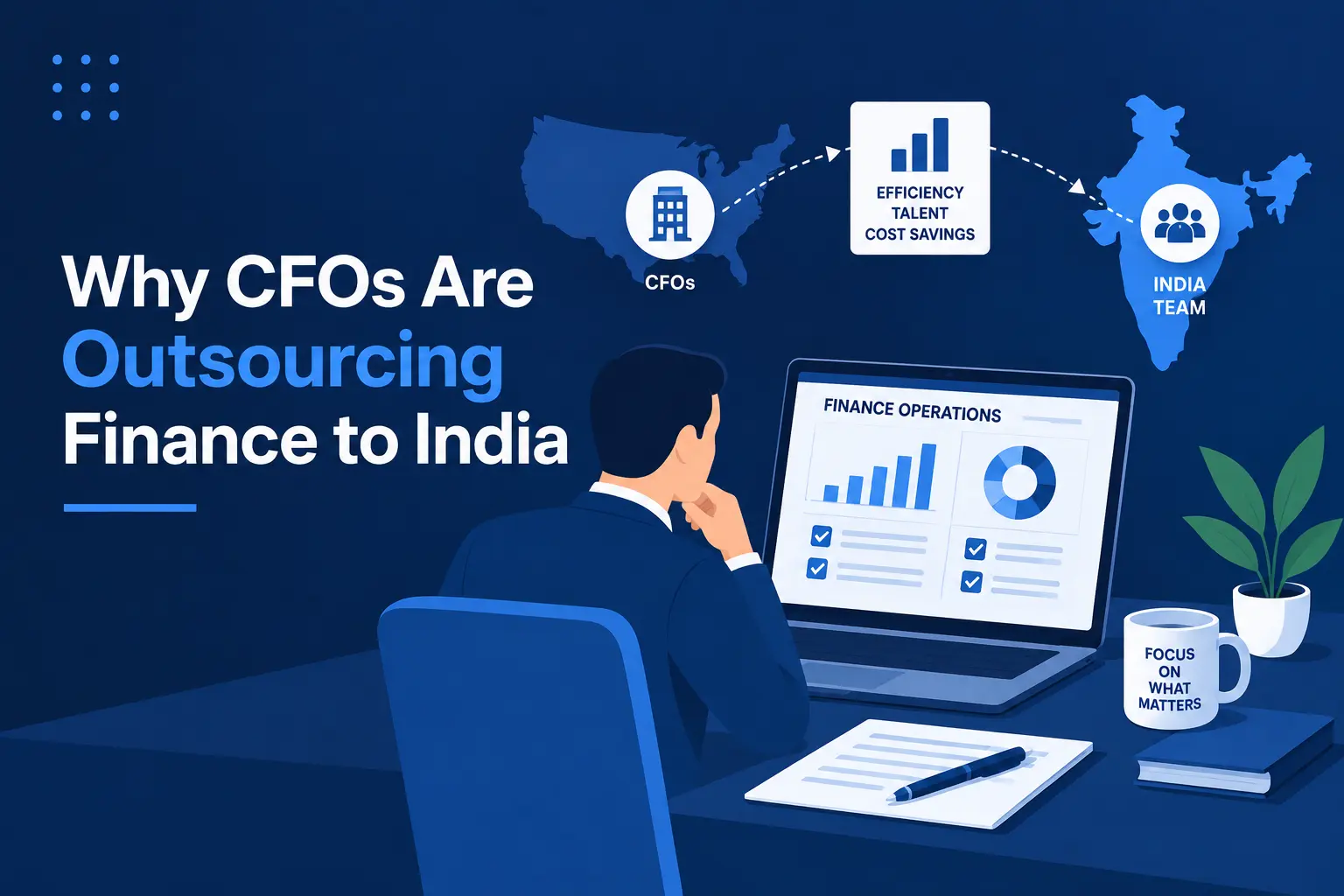
Top Reasons U.S. CFOs Are Moving Finance & Accounting Operations to India
CA Nemin Vora