
Scale your CPA & accounting firm with elite offshore talent trusted by 1,000+ firms.
Thank you for your interest. Our due diligence checklist will be shared with you within 48 hours.

Choosing a tax offshoring partner for UK firms comes down to five things: proven UK tax expertise, strict data security, workable overlap hours, transparent pricing, and a track record you can actually verify. Get those five right, and the rest of the relationship tends to fall into place.
At MYCPE ONE, we work alongside CPA and accounting practices across the UK, and we see the same story on repeat. Partner-level staff spend evenings buried in Self-Assessment returns. Recruiters can't fill open roles fast enough. Firms turn to offshoring, but the wrong partner turns a smart decision into a costly mistake.
This guide breaks down exactly what to look for, the questions to ask, and the mistakes that cost UK firms time and clients.
A tax offshoring partner is a firm or delivery centre, often based in India or the Philippines, that handles tax preparation, review, and compliance work for accounting practices.
The work ranges from Self Assessment and Corporation Tax computations to VAT filings and year-end compliance support. (For a closer look at how these delivery hubs stack up against each other, see our related post, India vs Philippines vs Mexico vs Argentina: Offshoring Accounting Comparison.)
UK accounting firms turn to offshoring for a simple reason. The talent gap is real. ICAEW and ACCA-qualified professionals are harder to recruit each year, and firms that rely only on local hiring during busy season end up short-staffed exactly when they need capacity most.
Most firms don't offshore because it sounds efficient. They offshore because something specific is breaking.
The solution isn't simply "hire cheaper labour somewhere else." It's finding a partner who solves the specific pain point your firm is facing, whether that's capacity, cost, or continuity.
Two of our related reads dig into this further: Outsourcing for CPA Firms: More Than Just Cost Savings and Offshore vs Local Accounting: Best Growth Strategy for CPA Firms.


Once a firm decides to offshore, the real work starts: picking the right partner. Here's what actually separates a good fit from a bad one.
Ask specifically about experience with HMRC filing systems, Making Tax Digital, and UK-specific compliance calendars. A team trained only on another country's tax code will need months of retraining before they're useful to a UK practice.
Your clients' financial data is crossing borders. Confirm the partner holds recognised security certifications (ISO 27001 is the standard to ask for), has clear data-residency policies aligned with UK GDPR, and can show you their access-control protocols in writing, not just in a sales pitch.
Watch video to know how MYCPE ONE maintains data security.
A delivery team that's fully offline during your working day is a bottleneck, not a resource. Look for partners who staff dedicated hours that align with UK business time, especially during peak filing periods. Look for offshore accounting partners who staff dedicated hours that align with UK business time, especially during peak filing periods.
Busy season isn't the time to discover your partner can't flex up. Ask how quickly they can add qualified staff to your account and whether they maintain a bench of trained professionals for exactly this situation.
Every return should go through a documented review layer before it reaches you. Ask what that review process looks like, who signs off, and how errors get caught and corrected.
Understand the full pricing model upfront: per-return, per-hour, or dedicated FTE. Ask what happens when volume spikes in January and February, and get that answer in writing.
Ask for references from firms of a similar size that have worked with the partner for at least a year. A partner confident in their work will connect you directly.
Choosing the right tax offshoring partner is one part of building an effective outsourcing strategy. For a broader look at the services UK accounting firms can outsource, key benefits, costs, and how to get started, read our Guide to Outsourcing Accounting Services for UK Firms.
Before committing, get clear answers on:
If a partner hesitates on any of these, treat that as your answer.
Finding the right talent is becoming more challenging than ever, especially in a world where firms increasingly need professionals who are not just technically strong, but also AI-savvy and adaptable to modern workflows.
At MYCPE ONE, we help CPA firms, accounting firms, businesses, and enterprises build high-quality offshore teams across accounting, tax, audit, advisory, back-office functions, digital marketing, sales, IT, and several other functions.
Curious what that looks like in practice? See What Sets MYCPE ONE Apart from the Competition? If you'd like to explore how this could work for your firm, schedule a call with us.
A tax offshoring partner is an external delivery team, typically based in India or the Philippines, that handles tax preparation, compliance, and review work on behalf of a UK accounting practice. The team works as an extension of your firm, following your processes and UK regulatory requirements, while you retain full oversight and client-facing responsibility.
Costs vary based on scope, seniority of staff, and pricing model, but firms typically see staffing cost reductions in the range of 30-50% compared to hiring locally for the same volume of work. Pricing is usually structured per return, per hour, or as a dedicated FTE, so it's worth comparing all three models against your actual workload.
It can be, provided the partner has proper GDPR-aligned data processing agreements, recognised security certifications such as ISO 27001, and clear data-residency and access controls. Always request this documentation in writing before sharing any client data.
Most reputable partners take four to eight weeks to fully onboard a UK firm, covering training on your specific software, client files, and internal review process. Firms that rush this stage tend to see more errors in the first busy season.

Nemin Vora, a CA and Tax Attorney, leads Client Relations at MYCPE ONE. With 7+ years of experience at Big 4 and top public accounting firms across America, he helps U.S. firms scale globally through remote talent, offshoring, and cloud operations. Known for his sharp tax insights and practical approach to firm growth, Nemin is a dynamic speaker. He breaks down complex topics such as leadership, AI, global staffing, and practice expansion into relatable lessons that professionals actually enjoy learning. Beyond the strategy decks, Nemin is a learner at heart, a stage actor, and a tech enthusiast.


How to Scale CAAS (Client Accounting & Advisory Service) + VCFO with Offshoring!


How To Scale CFO And Advisory Services With Offshoring

Bursting myths around Offshoring for an Accounting firm
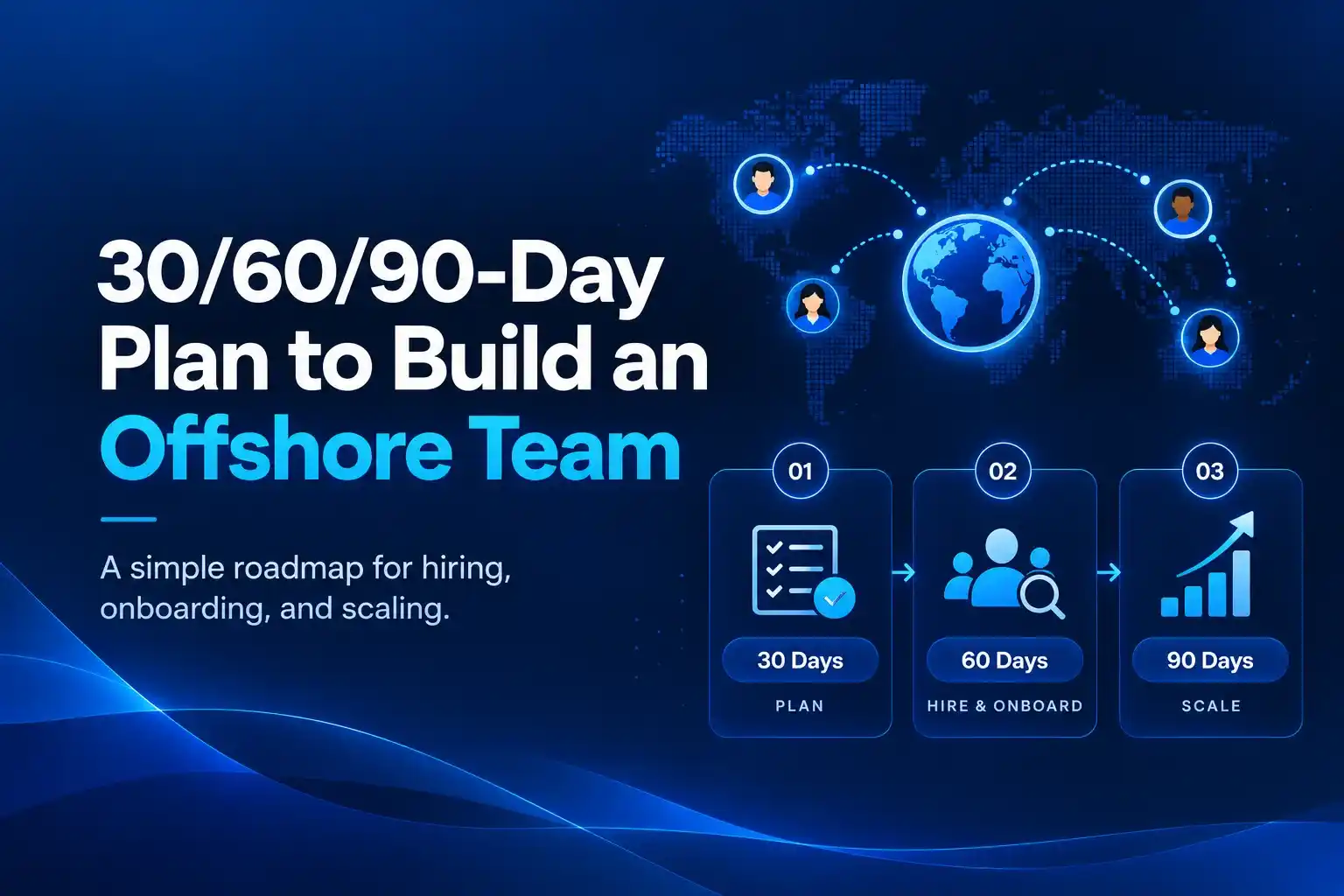
How UK Accounting Firms Should Build an Offshore Team: 30/60/90-Day Playbook
CA Nemin Vora