
Scale your CPA & accounting firm with elite offshore talent trusted by 1,000+ firms.
Thank you for your interest. Our due diligence checklist will be shared with you within 48 hours.

The offshore vs onshore debate is one every growing business faces. Offshore teams offer significant cost savings, access to global talent, and operational scalability, while onshore teams bring proximity, cultural alignment, and real-time collaboration. This blog breaks down the key differences between an offshore team vs in-house setup, examines when each model makes sense, and helps CPA firms, accounting businesses, and enterprises make the right staffing decision for long-term growth.
The offshore vs onshore debate is one every growing business faces. Offshore teams offer significant cost savings, access to global talent, and operational scalability, while onshore teams bring proximity, cultural alignment, and real-time collaboration. This blog breaks down the key differences between an offshore team vs in-house setup, examines when each model makes sense, and helps CPA firms, accounting businesses, and enterprises make the right staffing decision for long-term growth.
Let’s start simple.
An onshore team means hiring employees or contractors within your own country. Same time zone. Same culture. Often the same city.
An offshore team means building your workforce in another country, typically one with lower labor costs, like India, the Philippines, or Eastern Europe.
Both models have been around for decades. But the offshore vs onshore conversation has shifted dramatically. Remote work infrastructure is stronger. Talent pools are global. And the cost gap between hiring locally versus internationally has never been wider.
For CPA firms and accounting businesses especially, this is no longer a fringe decision. It is a core strategy. If you want to understand the full case for why businesses are making this shift, our blog on Why Businesses Build Offshore Teams: 6 Reasons Driving the Shift covers it in detail.
The most obvious reason is cost. CPA firms reduce staffing costs by 40 to 70 percent when hiring offshore accounting teams, compared to maintaining a fully in-house staff. That is not a rounding error. That is a structural advantage.
But cost is only one part of the story.
Think of it like Moneyball. The Oakland A’s did not just cut payroll. They found undervalued talent that the market was ignoring. Offshore hiring works the same way. You are not just saving money. You are accessing a deep pool of skilled, credentialed professionals who are eager, available, and well-trained, often at a fraction of the cost of equivalent local hires.
Beyond cost, offshore teams offer:
The finance and accounting outsourcing market is projected to reach $146 billion in 2025, with about 90% of CFOs already outsourcing some finance functions or actively planning to expand offshore capacity. The compounding momentum here is real, and firms that act early build the biggest advantage.
Schedule a Call to Build Your Dedicated Offshore Team.
Onshore is not dead. Far from it.
For certain functions, local presence genuinely matters. Client-facing roles, senior advisory positions, and leadership require cultural nuance, in-person availability, and real-time responsiveness that is hard to replicate across time zones.
Here is where onshore teams hold an edge:

If your business relies heavily on high-stakes client relationships or you operate in a regulated environment where local knowledge is critical, onshore is often the right anchor.
| Factor | Offshore Team | In-House / Onshore Team |
|---|---|---|
| Cost | 40–70% lower staffing costs | Higher salaries, benefits, overhead |
| Talent Pool | Global, large, specialized | Local, competitive, often scarce |
| Speed to Hire | Faster with the right partner | Slower due to local market constraints |
| Communication | Requires structured processes | Real-time, easy collaboration |
| Scalability | High, flexible | Lower, operationally complex |
| Cultural Fit | Needs deliberate onboarding | Natural alignment |
| Best For | Operational tasks, volume work, tech, back-office | Senior roles, client-facing, advisory |
There is no universal answer here. The smartest firms blend both. They build offshore teams for execution and operational capacity, and keep onshore teams for strategy, relationships, and leadership. For a deeper look at how enterprises structure this, read our Offshore Teams for Businesses and Enterprises: The Complete Guide.


You do not need to be a Fortune 500 company to benefit from offshore hiring. In fact, small and mid-sized CPA firms often gain the most because their margins are tighter.
Consider offshore when:
As CPAs and accounting professionals know, time is the one resource you cannot manufacture more of. Offshore staffing buys it back.
This is not just a cost conversation. It is a supply problem.
The 2025 AICPA/NASBA Trends Report shows a shrinking pipeline of new CPAs, with a workforce increasingly concentrated in later-career age groups. Accounting bachelor’s and master’s degrees dropped 6.6% in the 2023-24 academic year. Meanwhile, the Bureau of Labor Statistics projects more than 120,000 accounting and auditing openings every year.
The gap between supply and demand is not closing fast enough. According to the CFO Pulse Survey 2024, 83% of financial leaders said they could not find qualified accounting talent, up from 70% in 2022.
CPA roles now take an average of 73 days to fill, 41% longer than comparable non-CPA finance positions. That is three months of lost capacity per open role.
Offshore staffing is not a workaround for this problem. It is a direct solution. Firms that build offshore capacity now are not waiting for a domestic talent market that may not recover for years.
Quality will suffer.
It does not have to. With a rigorous onboarding process, clear SOPs, and the right hiring partner, offshore teams routinely match and sometimes exceed onshore quality benchmarks. The key is structure.
Communication will be a nightmare.
Time zone overlap is manageable. Many offshore teams in India and the Philippines work overlapping hours with US firms. Tools like Slack, Zoom, and Asana make collaboration seamless.
Data security is a risk.
This is a legitimate concern, and it deserves a serious answer. Reputable offshore partners operate under strict NDAs, ISO-compliant security frameworks, and SOC 2 standards. Vet your partner carefully. The risk is manageable, not unavoidable.
It will hurt our local team morale.
Only if it is framed as a replacement. When positioned as capacity expansion, offshore hiring typically reduces burnout and improves local team retention. Your senior staff stops doing junior work. Everyone wins.
Ask yourself these four questions:
The signal is simple: if the work can be done excellently from anywhere, and the cost savings are real, offshore deserves serious consideration. The noise around offshore hiring, the fears, the myths, is mostly a distraction. The math and the outcomes speak for themselves.
Schedule a Call to Access Pre-Vetted Global Talent.
The offshore vs onshore question does not have a single right answer. It has the right answer for your business, at your stage, with your constraints and goals.
The marathon of building a great team is not won in one hire. It is won through smart decisions made consistently over time, knowing when to go local, when to go global, and how to blend both into a model that grows with you.
Offshore teams are based in a different country from your business, typically in regions with lower labor costs like India, the Philippines, or Eastern Europe. Onshore teams are hired locally, within the same country. The offshore vs onshore decision typically comes down to cost, the type of work involved, and how much real-time collaboration is needed. Offshore setups offer significant cost savings and talent scale, while onshore brings proximity and cultural alignment. Most high-growth firms today use a hybrid of both models.
Yes, and often especially so. Small CPA firms feel the talent shortage acutely and carry tighter margins. Offshore staffing allows these firms to hire credentialed accounting professionals for bookkeeping, tax prep, and audit support at 40 to 70 percent lower cost than local equivalents. According to the 2025 AICPA/NASBA Trends Report, accounting degree output continues to decline while firm hiring demand stays strong. Offshore teams give smaller firms enterprise-level capacity without enterprise-level payroll. The key is choosing an experienced offshore staffing partner who understands the CPA industry specifically.
Offshore teams are best suited for structured, process-driven work. In accounting and finance, this includes bookkeeping, payroll processing, accounts payable and receivable, tax preparation, financial reporting, data entry, and audit support. In other functions, offshore teams handle IT support, digital marketing, content creation, customer service, and back-office administration effectively. Client-facing advisory roles, senior leadership, and high-context relationship management typically remain onshore. The strongest firms design their offshore team to handle volume and execution, freeing local talent for judgment-intensive work.
Effective offshore team management starts with clear SOPs, structured communication rhythms, and the right technology stack. Set overlapping working hours for daily check-ins. Use project management tools like Asana or Monday.com for task visibility. Invest in onboarding just as you would for a local hire. Assign a local point of contact who owns the offshore relationship internally. Define KPIs clearly and review them weekly. The firms that struggle with offshore teams almost always have a process problem, not an offshore problem. Structure is the difference between noise and a reliable signal.
The primary risks are data security, communication gaps, and quality inconsistency. Each is manageable. For data security, work only with offshore partners who operate under signed NDAs, ISO-compliant security protocols, and relevant compliance frameworks like SOC 2. For communication, build overlap hours into your engagement and invest in collaboration tools. For quality, implement clear SOPs, regular quality checks, and a structured review process. Choosing an experienced offshore staffing partner with a track record in your specific industry.

Christopher is the Director of Client Relations and Business Development at MYCPE ONE, a leader known for his energy and people-first approach. Chris leads from the front mentoring teams, driving growth, and building lasting client relationships. With over a decade of experience in sales, coaching, and business strategy, he has helped 5,000 CPAs nationwide overcome challenges and discover new opportunities. Chris is a familiar presence at major accounting conferences, representing MYCPE ONE and shaping meaningful industry partnerships. Passionate about leadership and professional growth, he continues to inspire teams and professionals to reach their highest potential.

Medical Practice Accounting: A Complete Guide for Clinics and Provider Groups
 CA Nemin Vora

How U.S. Companies Scaled Finance Ops with Offshore Teams in India
CA Nemin Vora
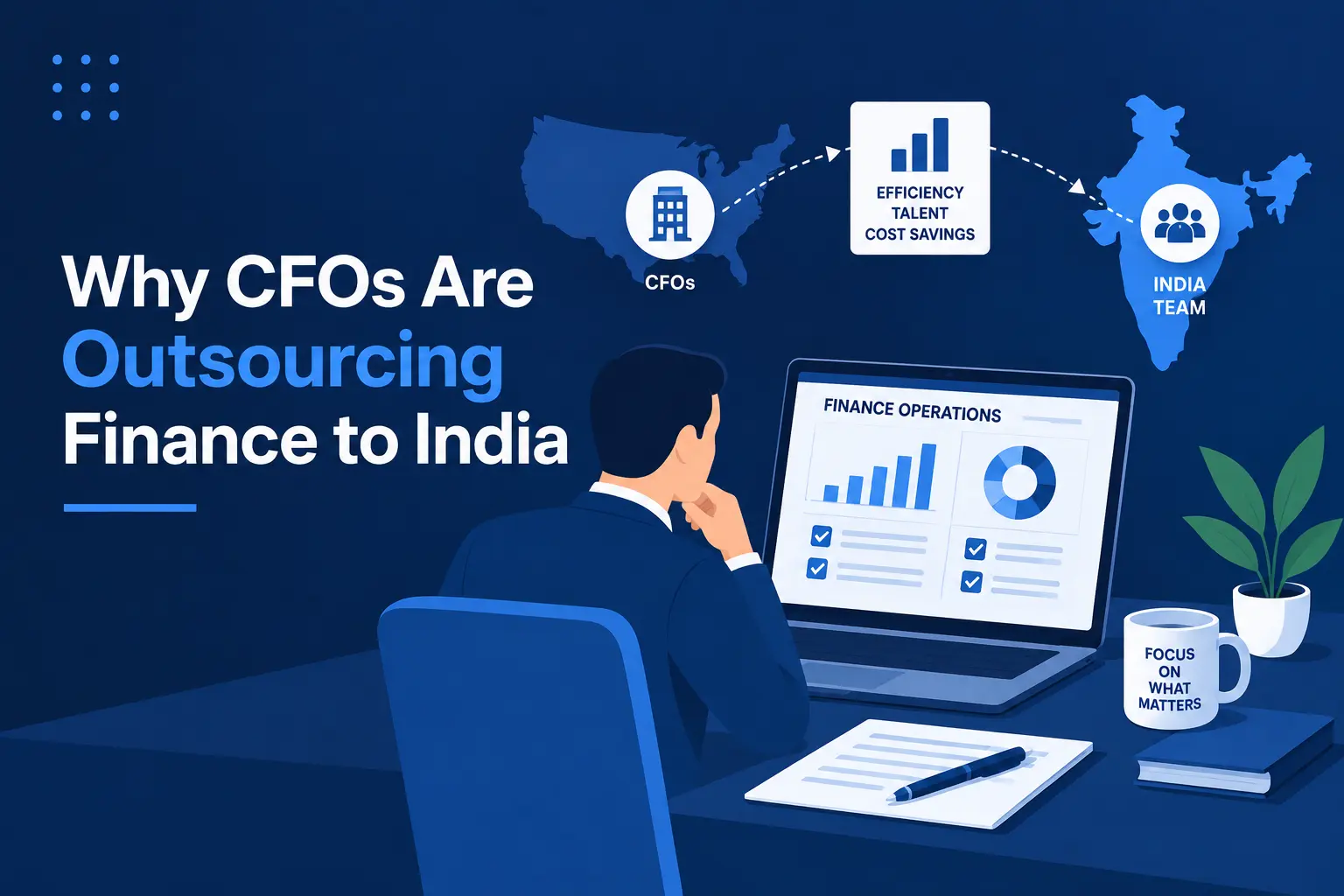
Top Reasons U.S. CFOs Are Moving Finance & Accounting Operations to India
CA Nemin Vora